
Bee headbutts Twinkle
Oncidium Twinkle.
The smallest orchid but it twinkles.
A small to medium-sized, epiphytic orchid. New growth appears from the base as swollen stems or pseudobulbs. They store water and nutrients.
Each pseudobulb is oval-shaped and slightly flattened with a pair of leaves. The plant typically flowers in autumn, but can flower anytime. New flowering stems arise from the base of maturing pseudobulbs. They carry numerous, small (2cm wide) sweetly scented flowers. The colours range from pale cream or pink to a soft red.
The plant often produces multiple, pendulous, simultaneously flowering stems for an impressive display.
My wee Twinkle has yet to perform a regeneration. This often occurs with my plants.
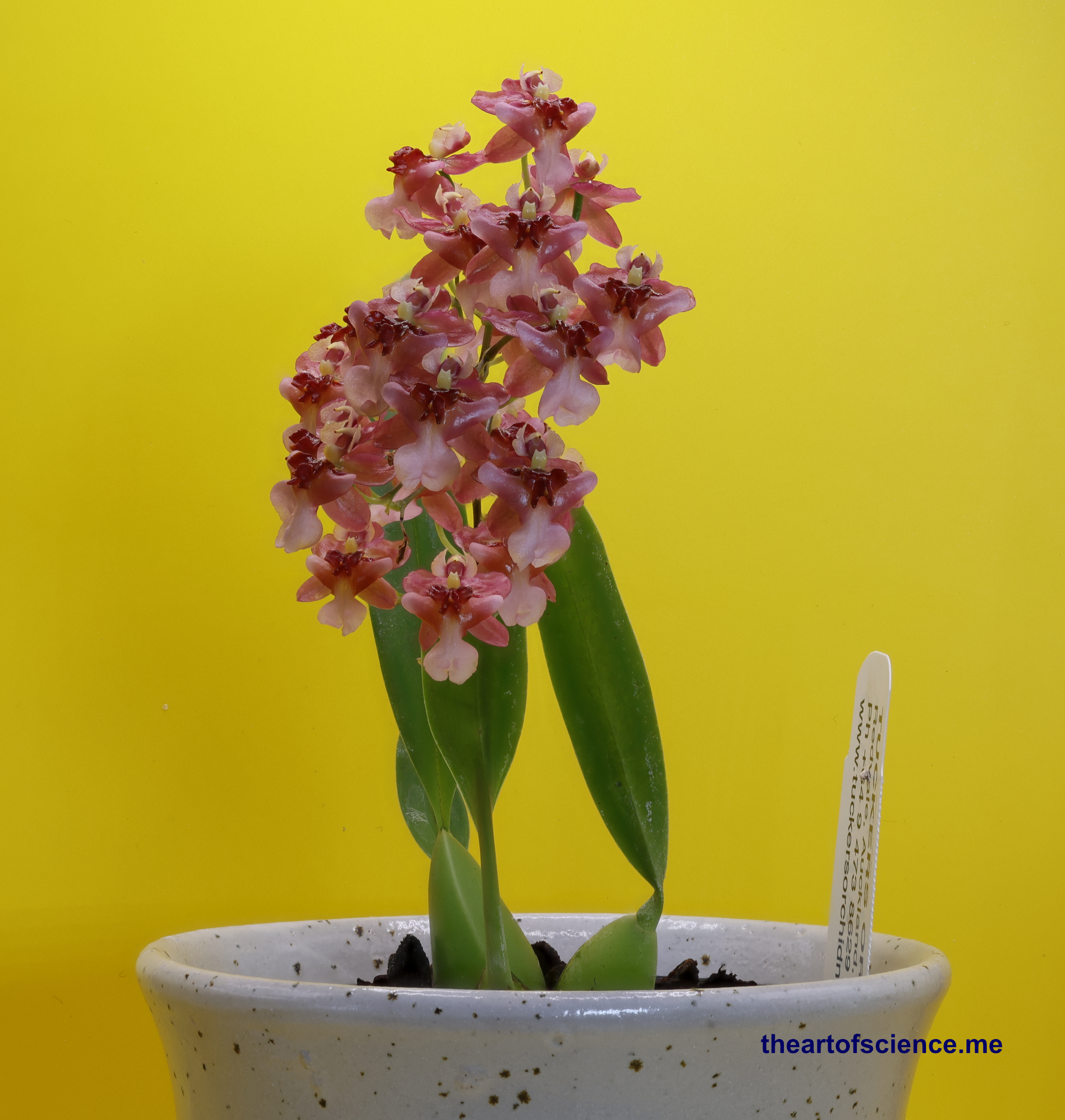
Pollination is difficult for Twinkles in their native habitat. There are few pollinators. Twinkle makes the most of any fly by traffic.
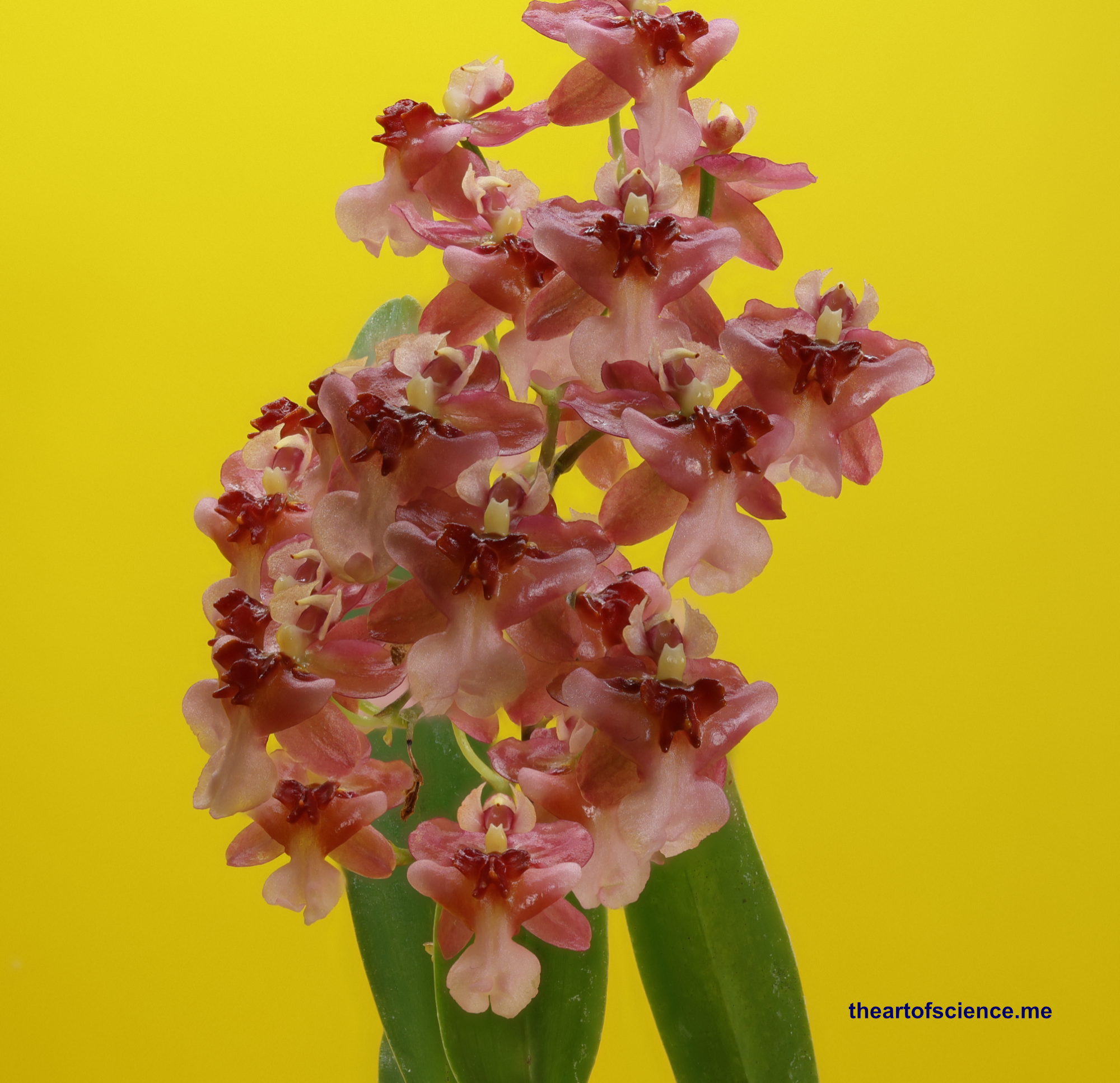
Pollinia pack a pollen punch.
Flowers, have lots of anthers. Orchids, by comparison, package their pollen in two bundles called pollinia. Pollen grains are glued together inside each pollinium bundle. Lucky insects leave with two pollen bombs.
Mechanical barriers prevent accidental release to the wrong type of insect. Insects with the right moves and sufficient force can free pollinia and fly off to the next plant wearing the bundles like ear muffs.
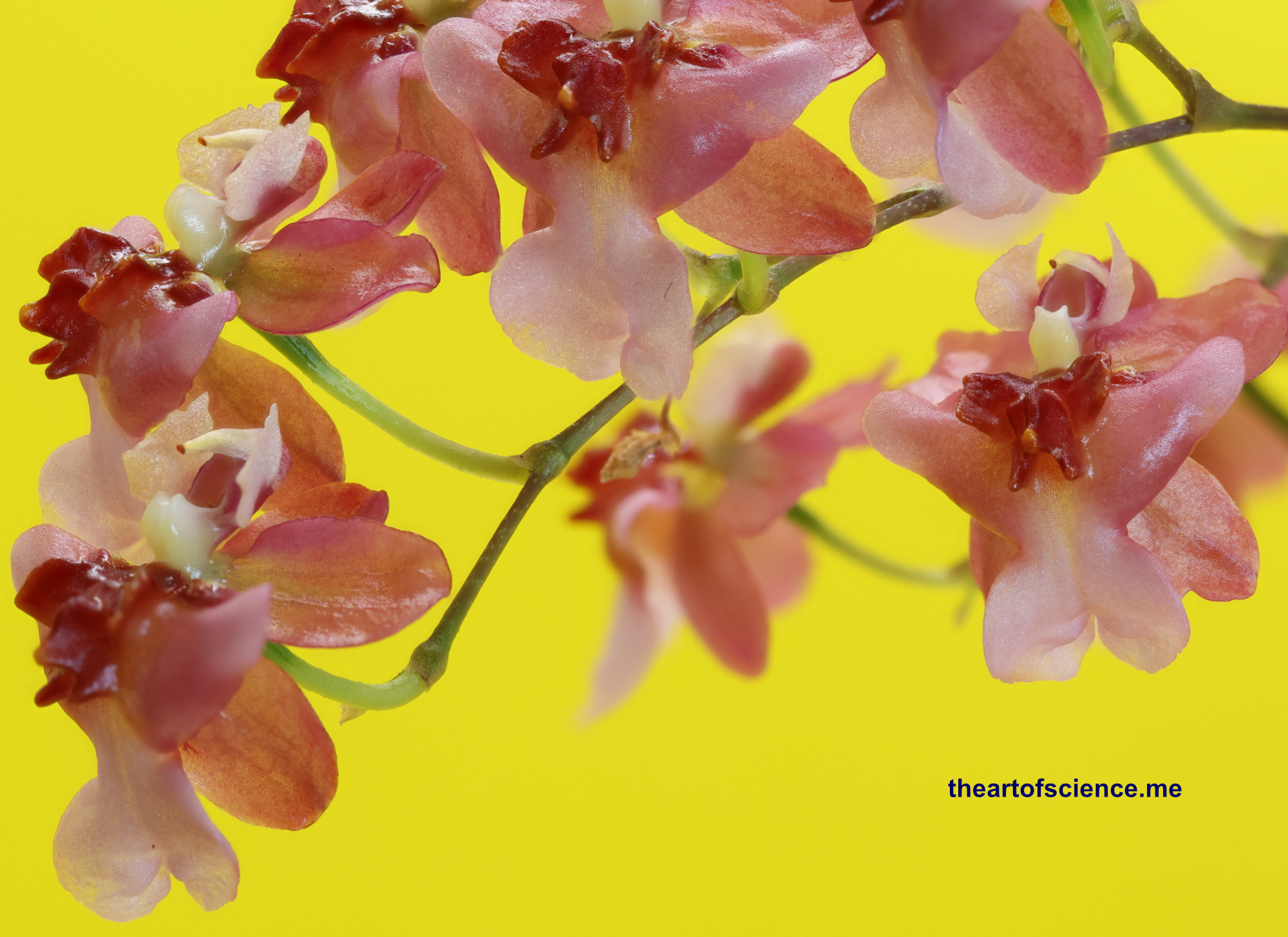
The wings on either side of the long pointy structure are covered with cells capable of producing oils. A red fleshy blob on the lower petal also carries oil cells. Oils give the flowers a shiny appearance. Bees love the oils apparently.
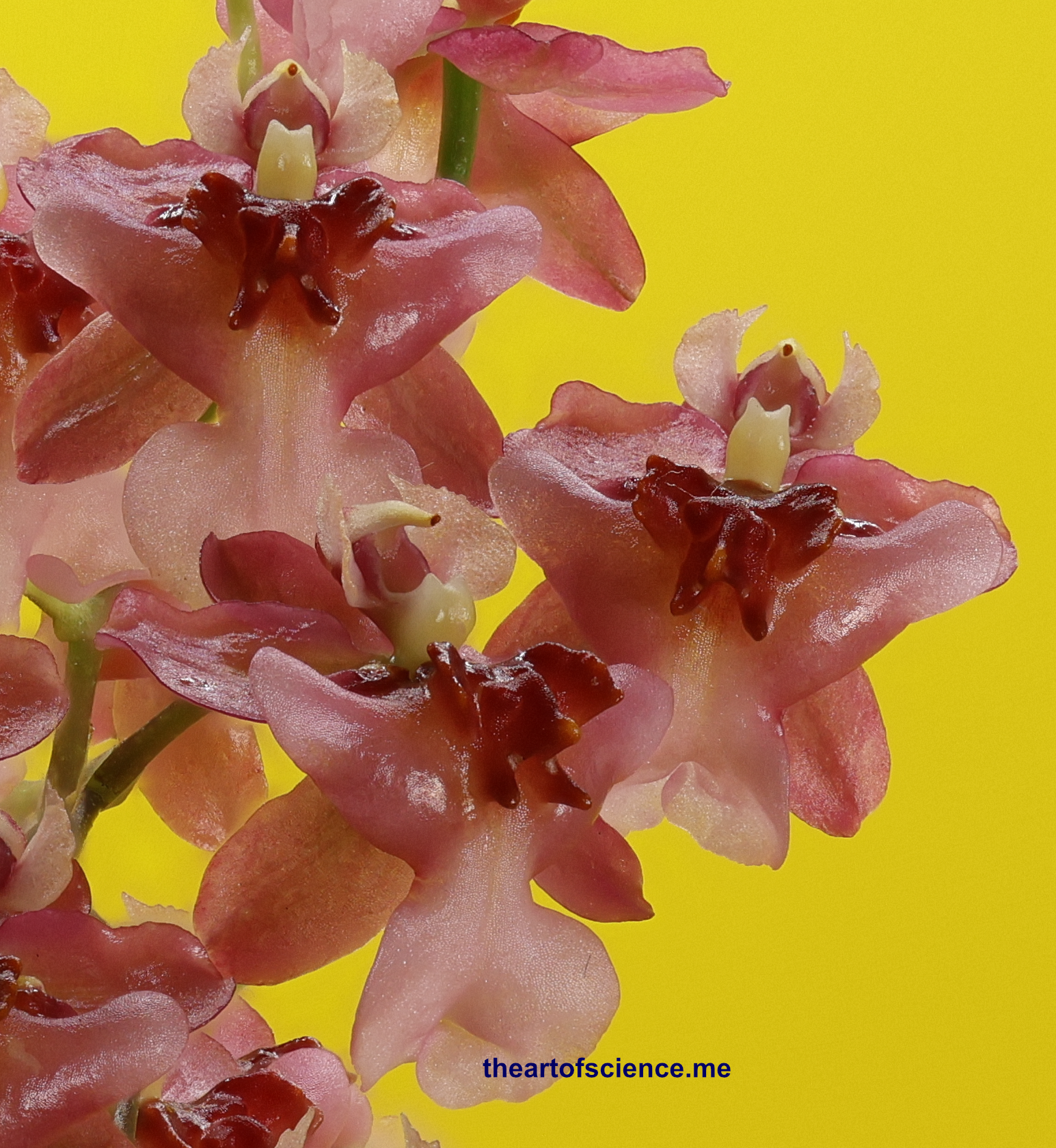
Twinkles colonise niches where pollinators are rare.
Twinkle gambles its existence on a single insect completing the job. It loads the odds in its favour by giving the pollinator both pollinia. It flies off to the next Twinkle plant with two sacks of pollen. A pollen love bomb to produce little twinkles
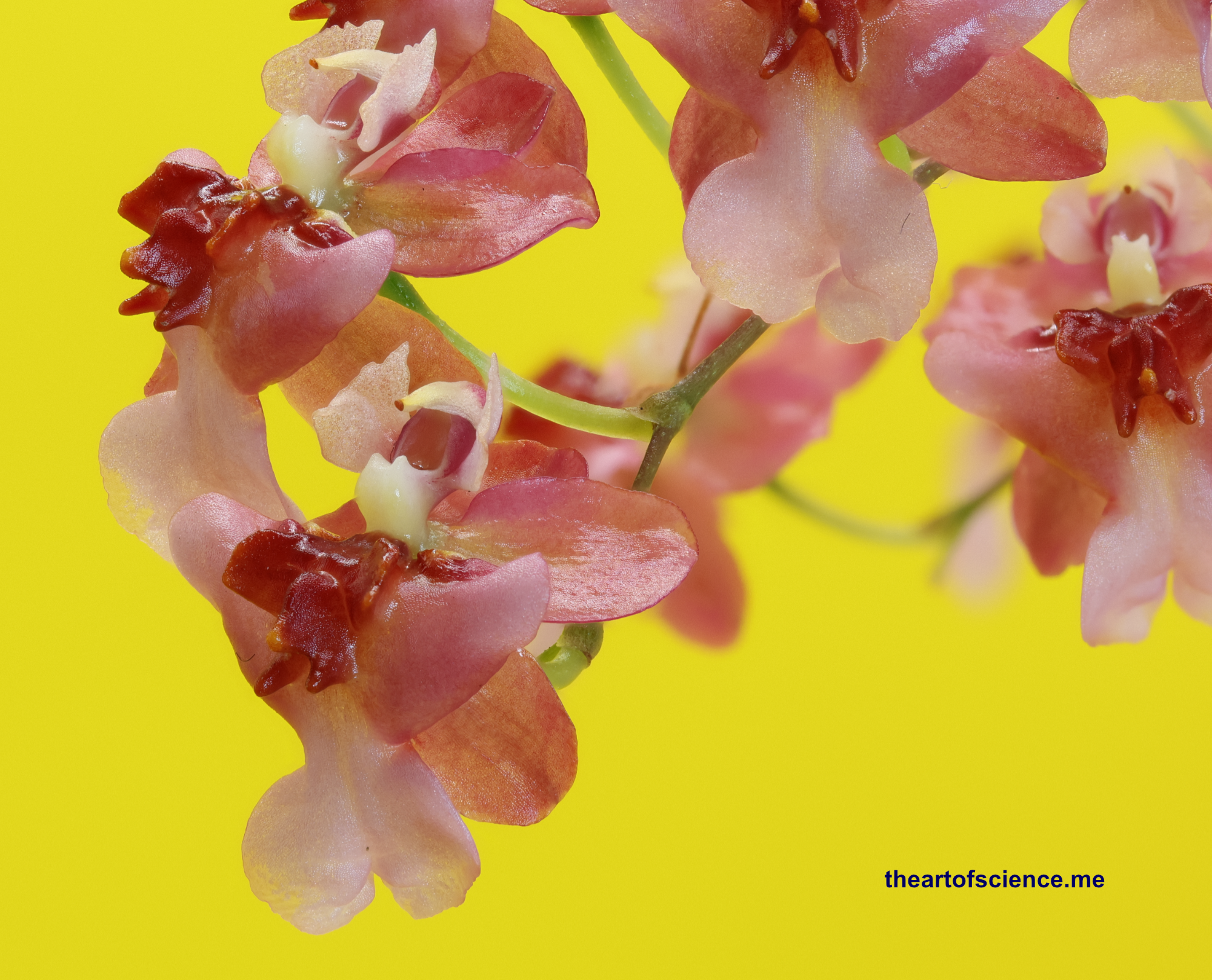
Bee headbutts Twinkle!
Bees land on the fleshy pad and grab the white lip with their mandibles. They shake it, forcing their way into the space behind in the hunt for nectar.
They charge head first into the viscidium, a kind of gluestick on the front of the Rostellum. (The red bit on the beaky bit). A number of things happen in sequence.
The viscidium is covered in viscous glue. When the bee lunges forward it headbutts the viscidium. The bee is now glued to the viscidium.
If the insect is large enough the collision can pop the anther cap off, assisting the removal of pollen bundles. Bees have the strength and the viscidium glue is very sticky.
The bee is now attached to the Viscidium. The viscidium is connected to pollinia through a long strap, the caudicle or stipe.
The bee, viscidium, stipe and pollinia are glued together.
With a final Herculean wrench the bee flies of with two bundles of pollen, a stipe and the viscidium. Exiting bees wear pollinia like ear muffs.
The full load is dropped on the next orchid.
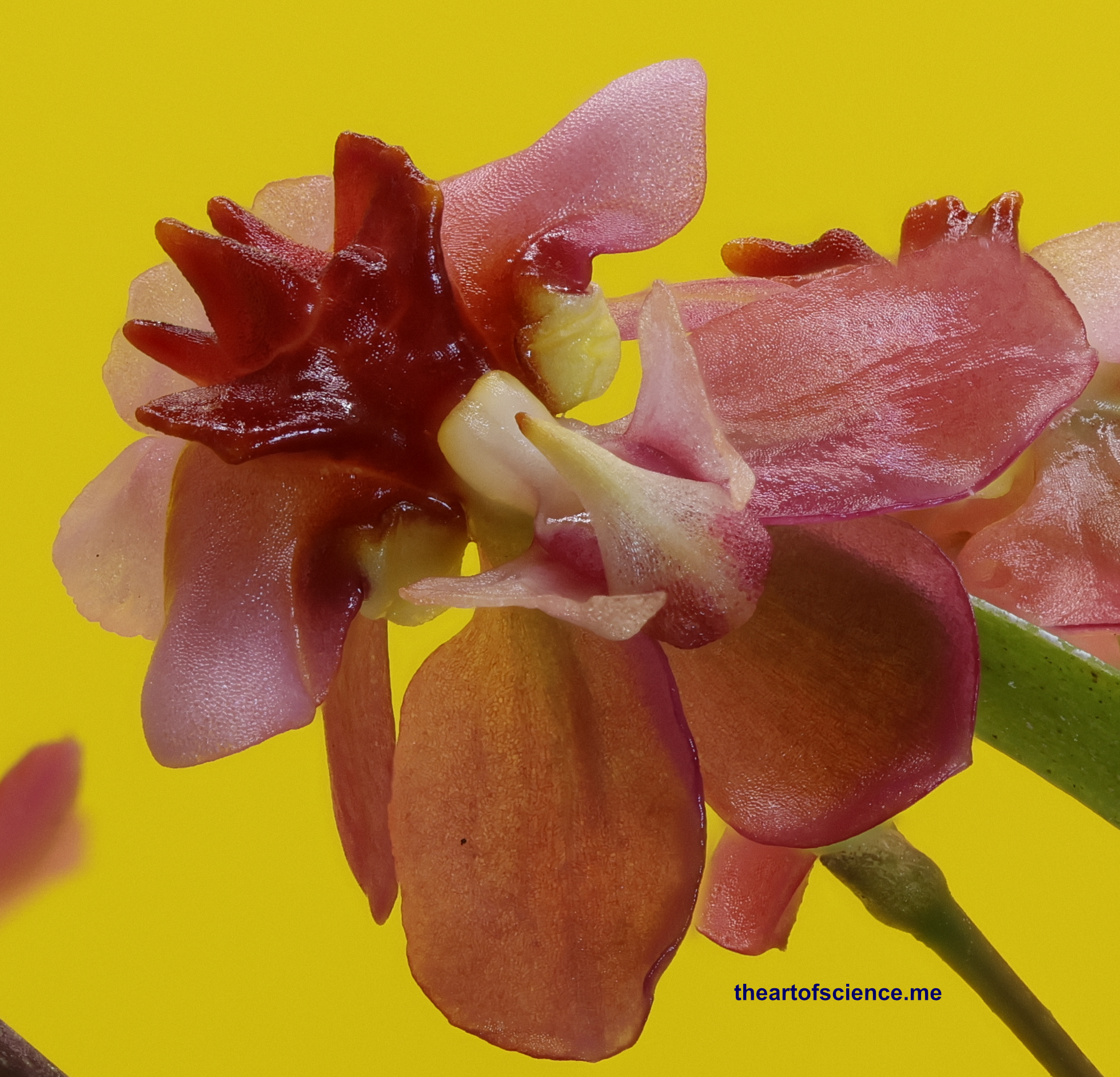
View of the anther cap from above. A chord just visible beneath the surface, connects the glue tip to two pollinia. The pollinia sit in two hollows towards the rear.
Centris spp or Trigona spp bees in particular are attracted to Twinkle orchids.
These insects exert a force between 10.8 and 12.6 mN on the viscidium to disengage the pollinaria from the beaky bit (Rostellum)
Not many people know this.