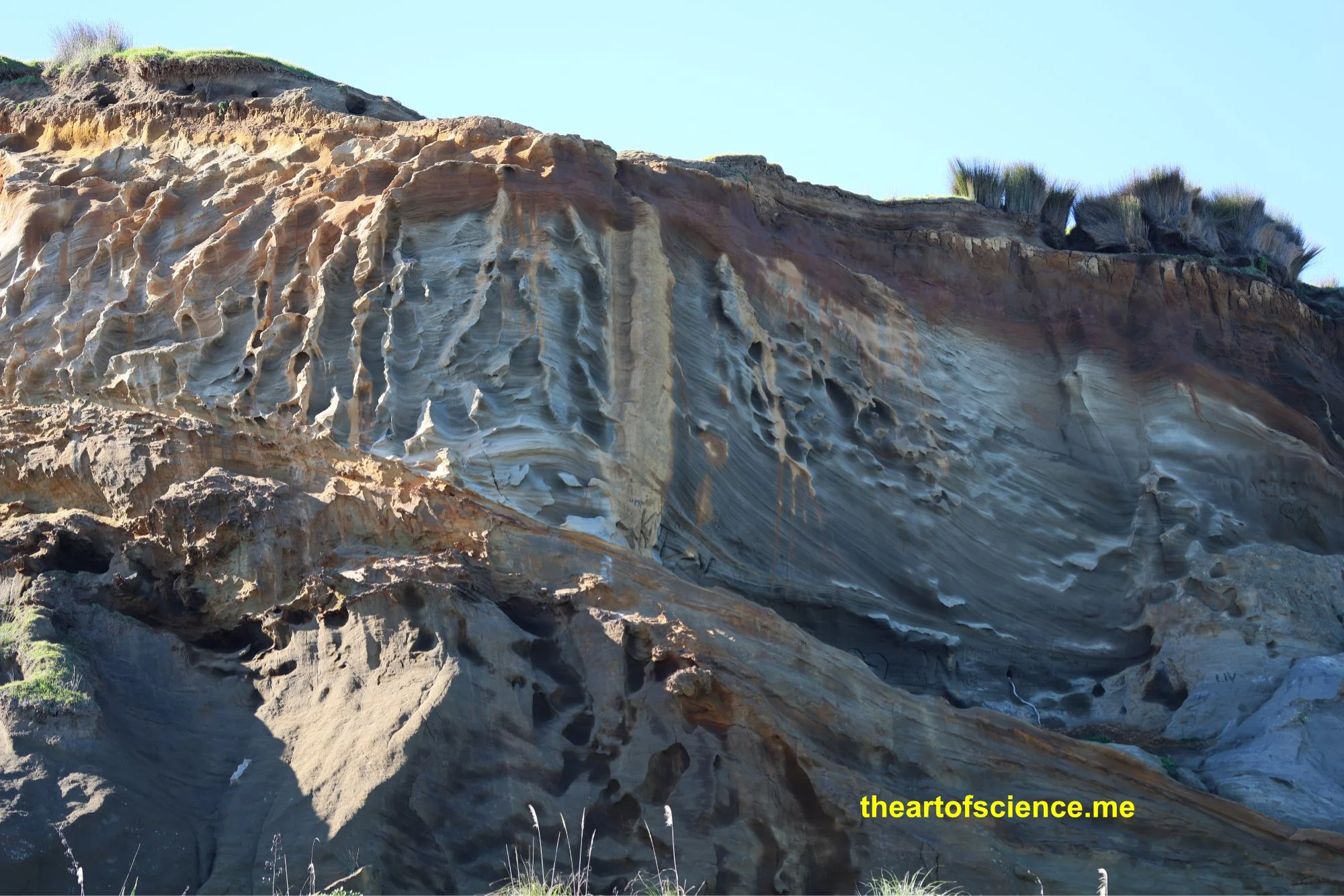
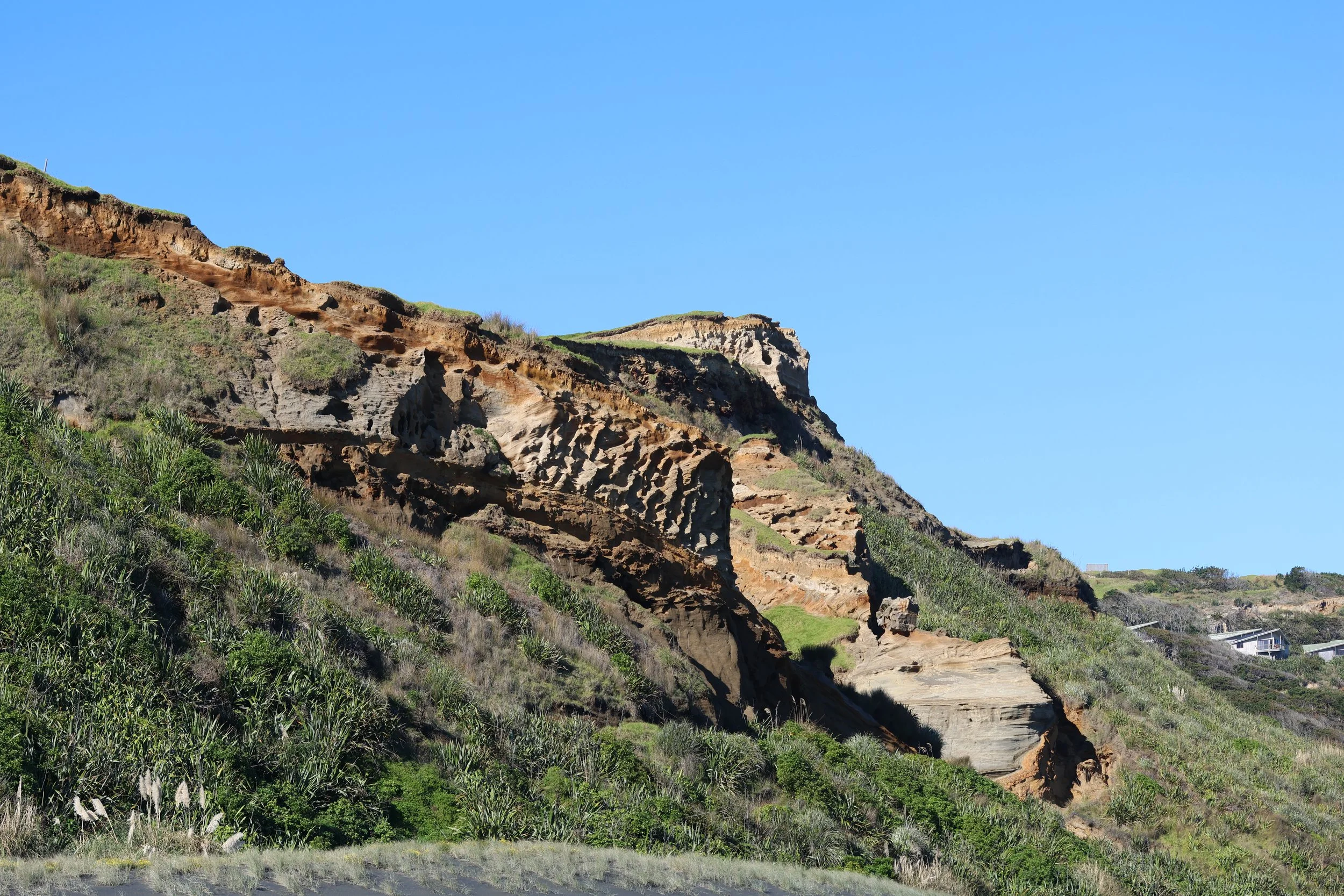
Green tea seepage left red stains on the Kariotahi cliffs.
I haven’t been here for ages but the beach at Kariotahi never fails to disappoint.
It lies in the southwest Auckland region, on the Awhitu Peninsula.
Polyphenols extracted from green tea leaves have medicinal properties. They remove harmful free radicals that speed up ageing.
A different variety of green tea soaked through the Kariotahi sandstones leaving deep red stains a long time ago.
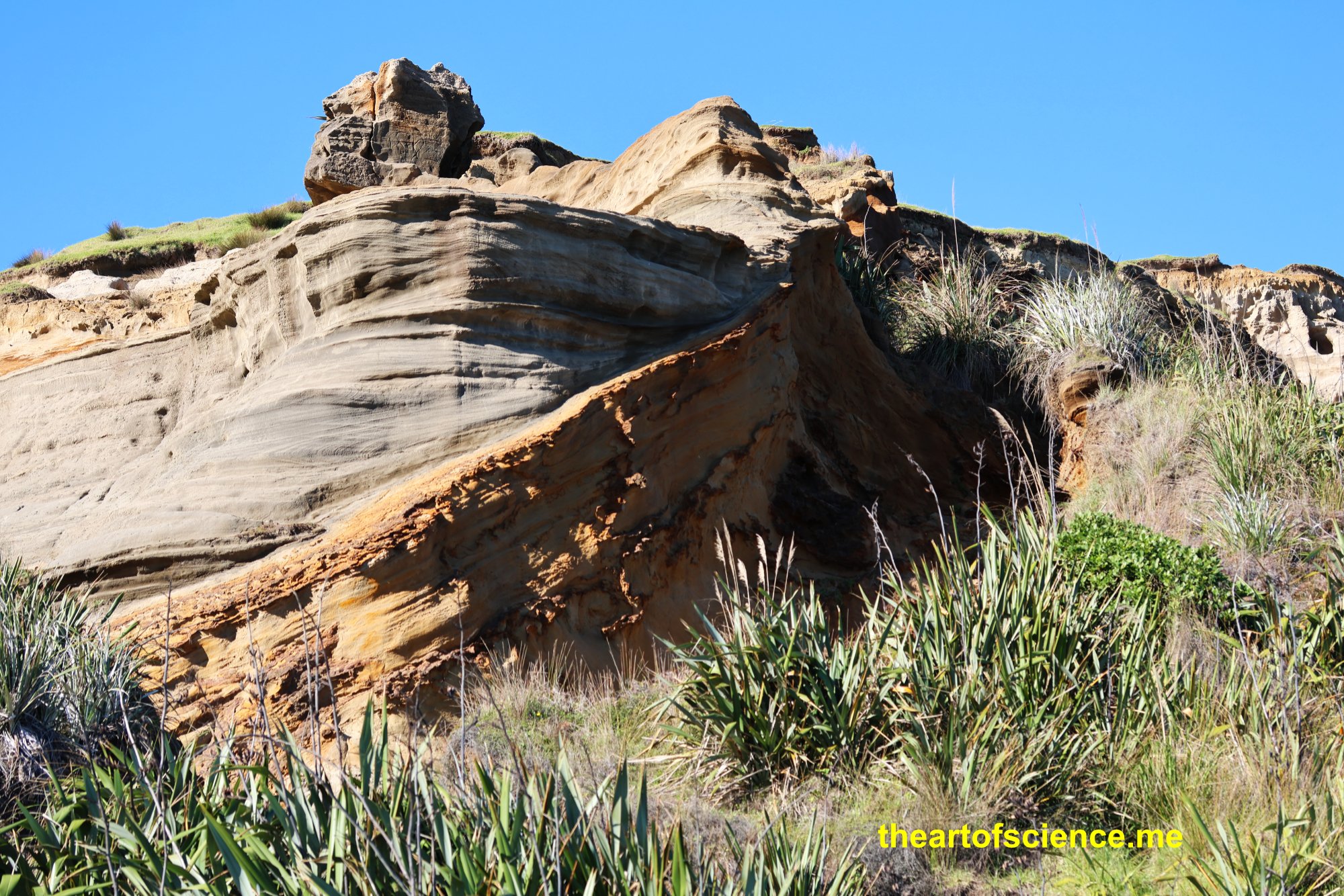
Wind blown, light coloured dune sandstones on top were deposited during the last 7000 years.
They are separated from older dune sandstones by a thin paleosol (small wedge shape middle left). This ancient soil indicates a period of stability before the upper dunes were deposited. A Beach forest probably grew here.
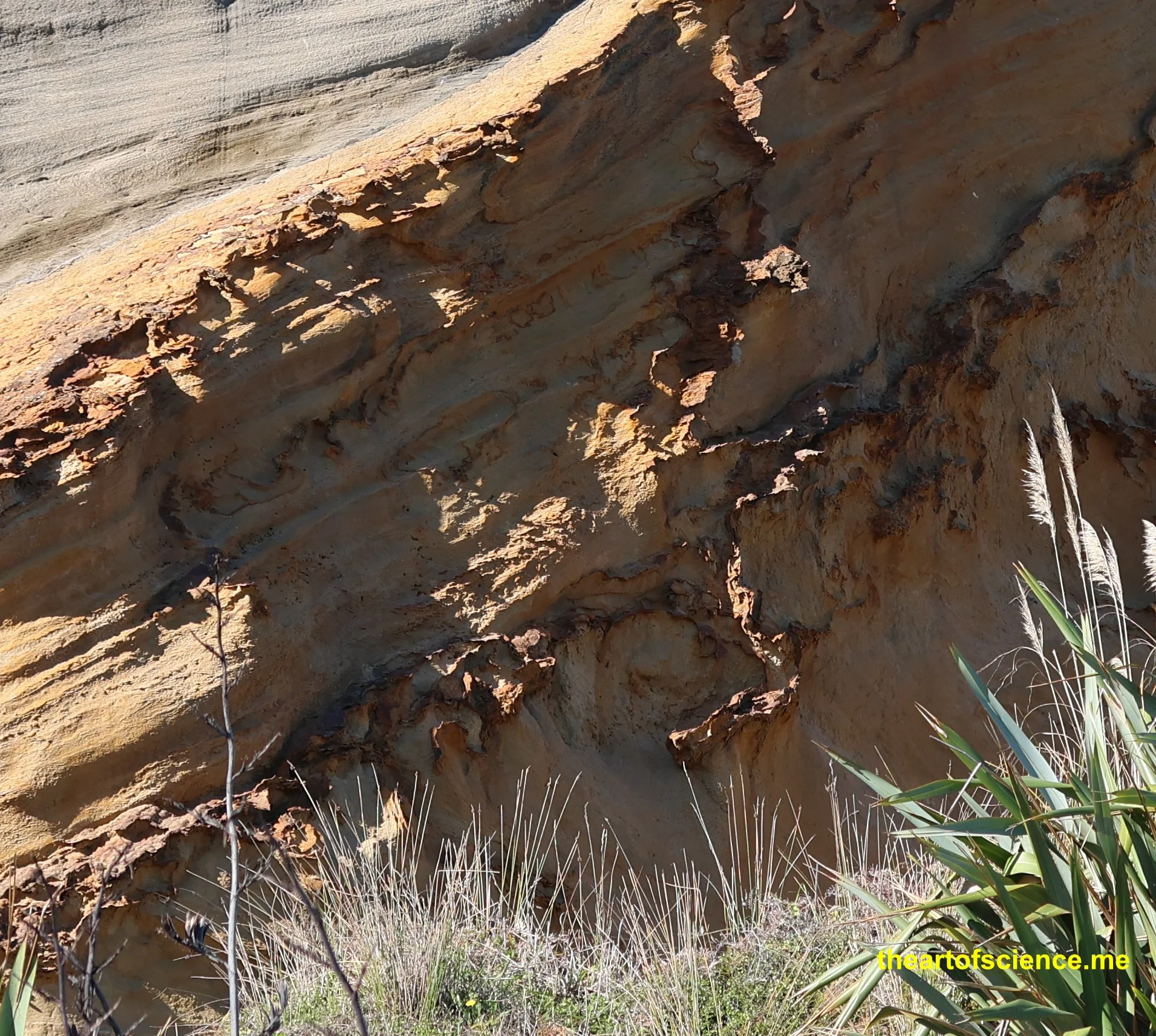
Irregular dark bands deposits reveal an interesting history.
Polyphenols in green tea are reactive molecules. They remove free radicals, that cause ageing, from our bodies. They also combine with, and extract iron from compounds found in soils and sandstones.
Leaf litters in Beach tree forests are rich in polyphenols. They are released when tree litters decompose, and wash into the soil. There, they extract iron from the soil and sandstone substrates as they percolate down. Iron is deposited as a limonite pan when it reaches the water table. Limonite is a mixture of hydrated iron oxides.
Enriched iron pans below the surface of a pale soil are known as a Podzol. They mark where a fluctuating water table was situated and postdate the Pleistocene sandstones they are trapped in.
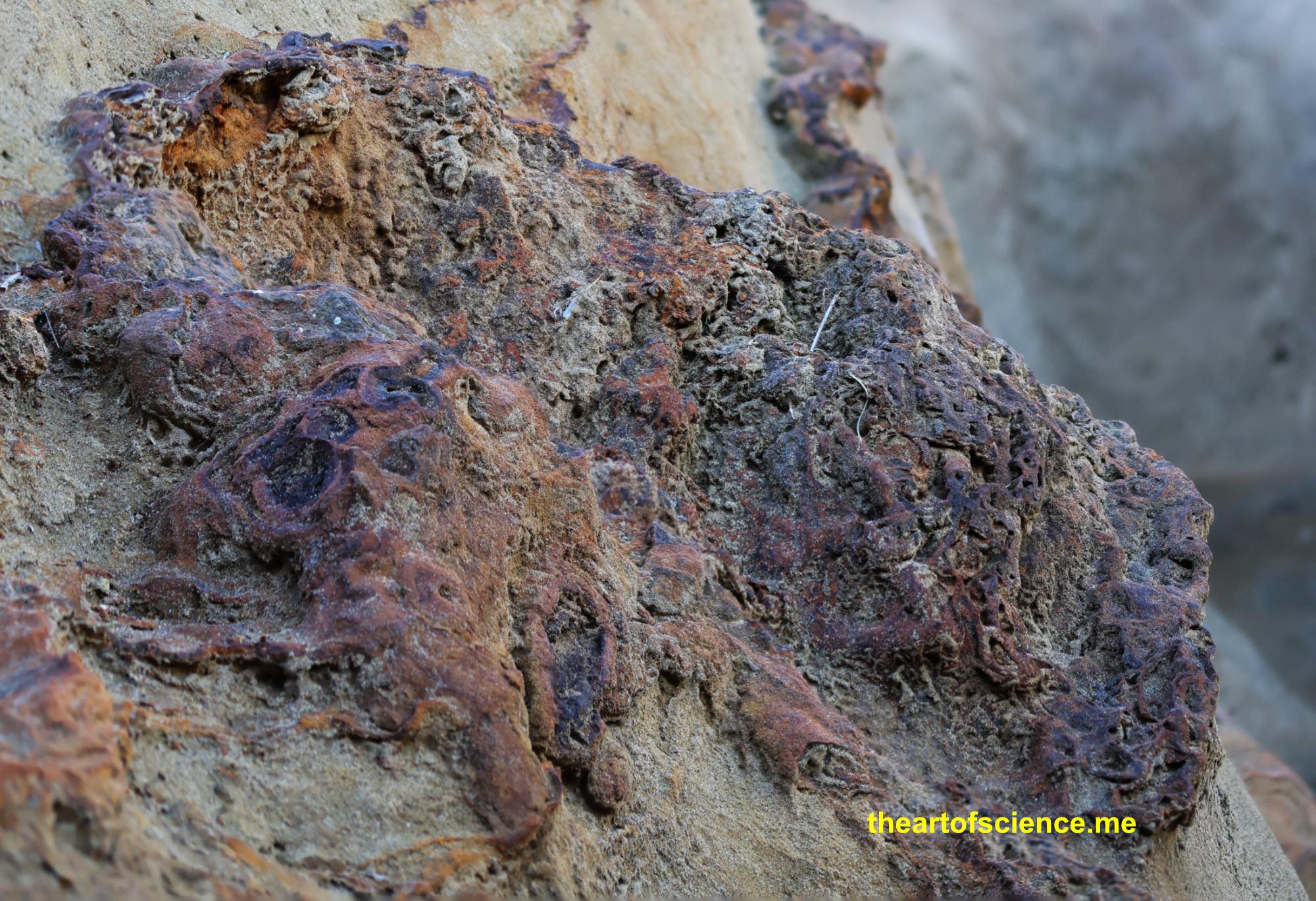
A section of a limonite deposit.

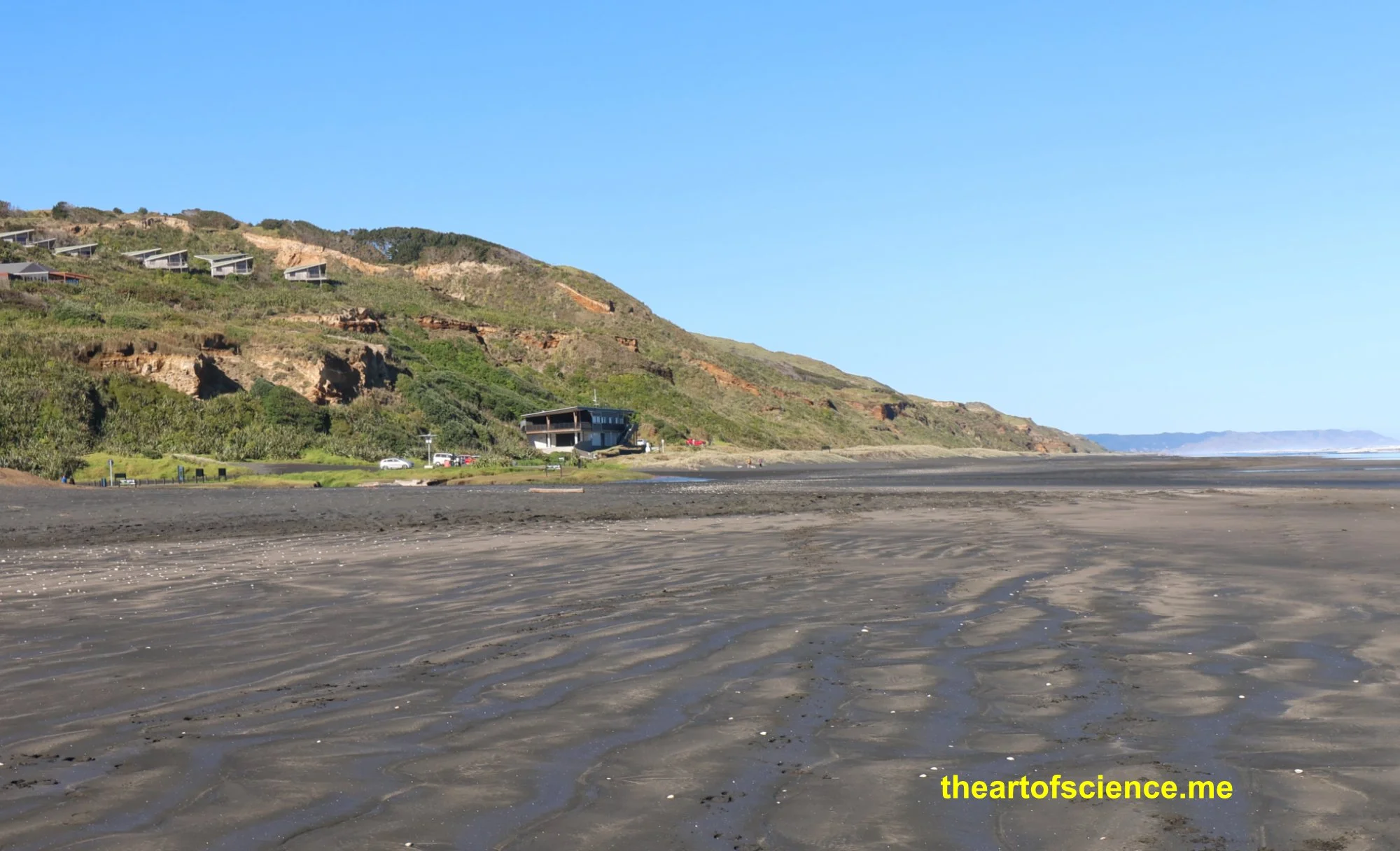
The unconsolidated sandstones at Kariotahi are easily eroded by a small stream. They look like this now, but a few thousand years later?

They look like this?