
Staffa isn’t a million miles from Muriwai.
Joseph Banks set sail to Aotearoa with Captain Cook on the Endeavour in 1767. He was a botanist and collected plants. He visited Staffa and wrote about it, spreading its popularity. Banks was so impressed with the rocks on Staffa he briefly lost interest in Botany.
I initially found rocks more interesting in Aotearoa. I mostly study flowers now. Life can be funny like that.
The British leave a legacy wherever they plant that flag, including Aotearoa. Māori signed a treaty with the British Crown in 1840 (The Treaty of Waitangi) and are still seeking to enforce terms and get justice. Te Pati Māori Co-Leader Rawiri Waititi, “We have been in opposition since 1840”.
My great grandfather opened his family business in Dunedin 30 years after the treaty was signed. He would have wanted the New Zealand Government to honour the Treaty.
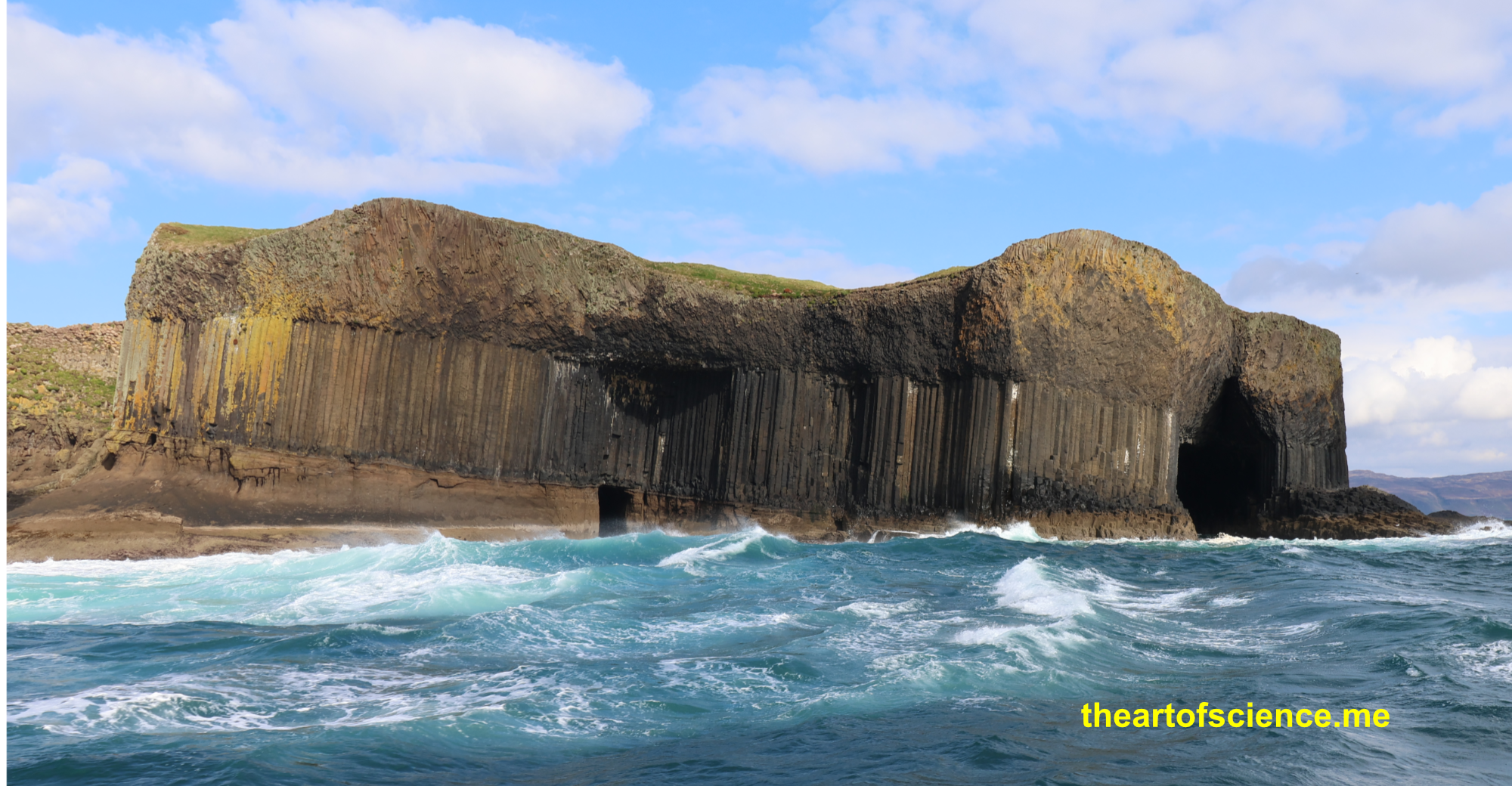
Earth's nuclear power plant.
Our planet runs on nuclear energy. It is not a renewable source and it will run out eventually.
Tectonic plates are moved considerable distances with this energy. Nuclear energy is increasing the separation between Greenland and the United States. This is a good thing.
It also brings molten basalt to the surface in places like Iceland forming new oceanic crust. Plates collide and new mountains are pushed up.
This is a good thing if you dont live too close to a plate boundary. Auckland is close to a plate boundary. It is the only city in the world built on a live volcanic field. This isn’t a good thing if you think about it. We live a short way off in Kumeu and tend not to think about it.
The Southern Alps of New Zealand’s South Island are being pushed up where the Australian and Pacific plates collide. I crossed the main street, in the town of Fox on the West Coast of the South Island, a few years back. I passed over a plate boundary before reaching the other side. This is incredible but nearly true.
Big atoms like Uranium Thorium and even potassium with wobbly nuclei can decay in the blink of an eye. Radioactive decay of these elements releases sufficient heat energy to power up plate tectonics and generate plumes of molten magma in the mantle.
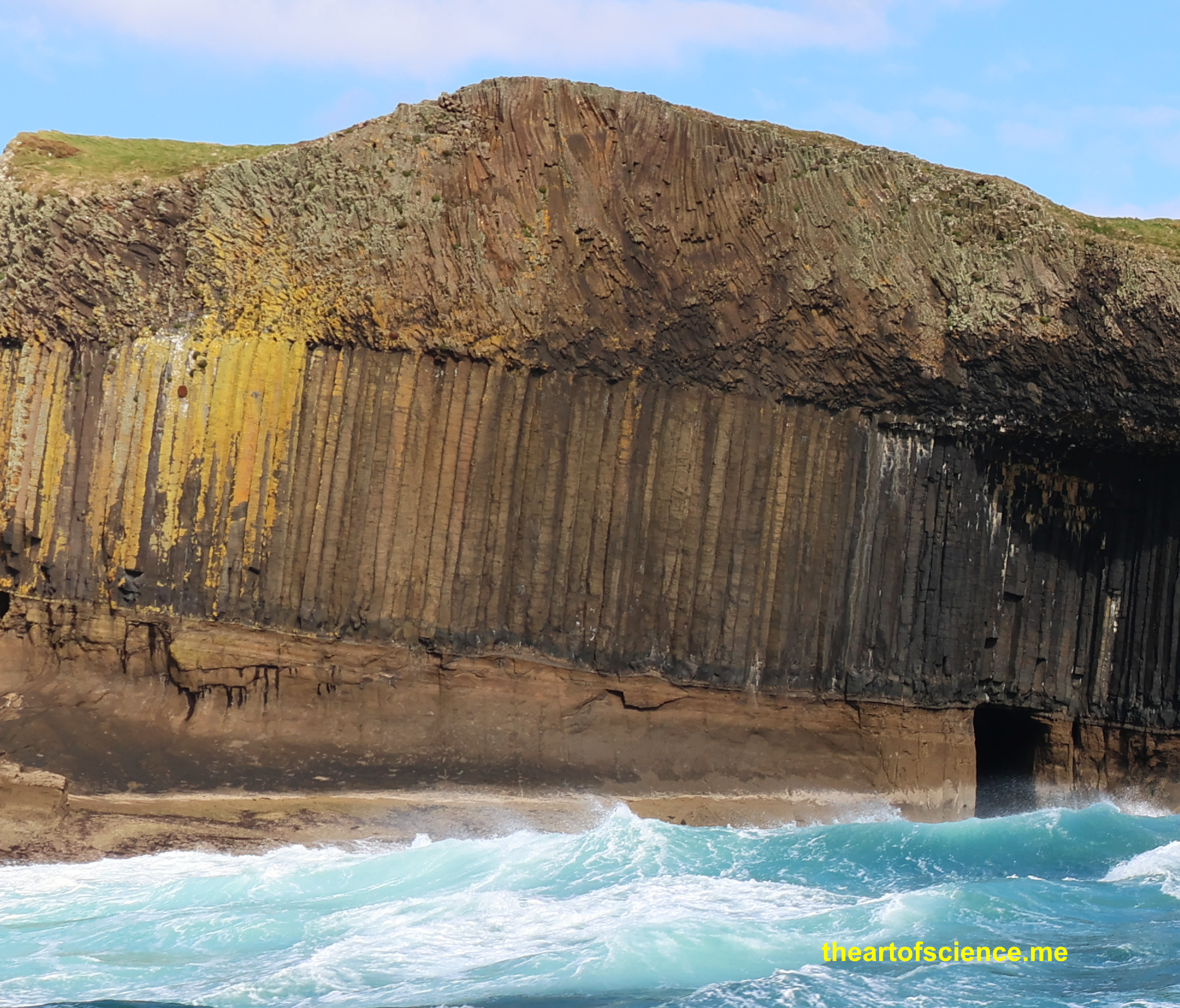
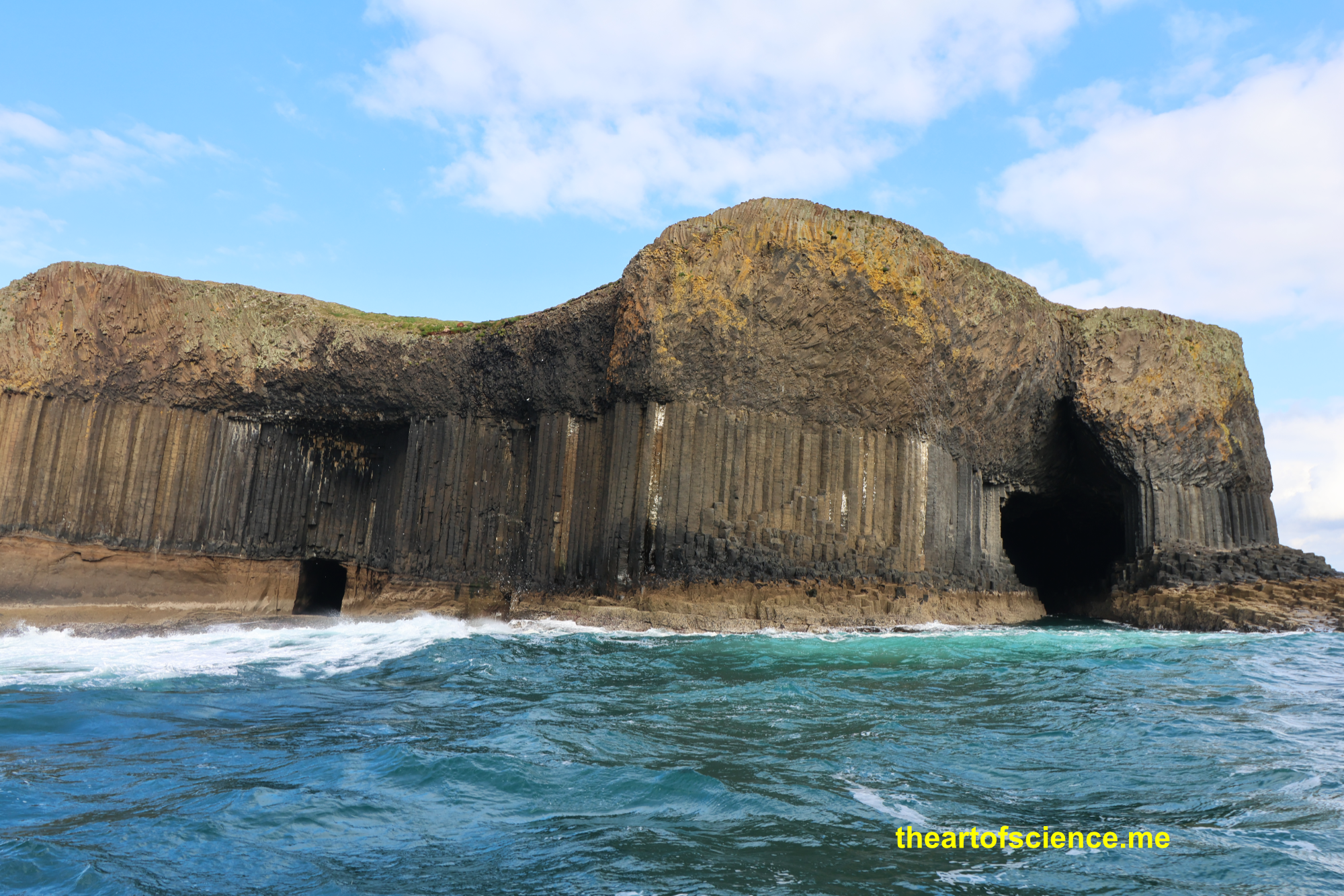
60 million years ago lava poured from linear vents in the Earth’s crust, rather like we see in Iceland today. The lava cooled and contracted leaving stacked hexagonal shaped columns. Geologists think that degassing left a frothy top.
The structure stands on volcanic ash, tuff blown from the fissure as it cleared a path for lava to escape onto the surface.
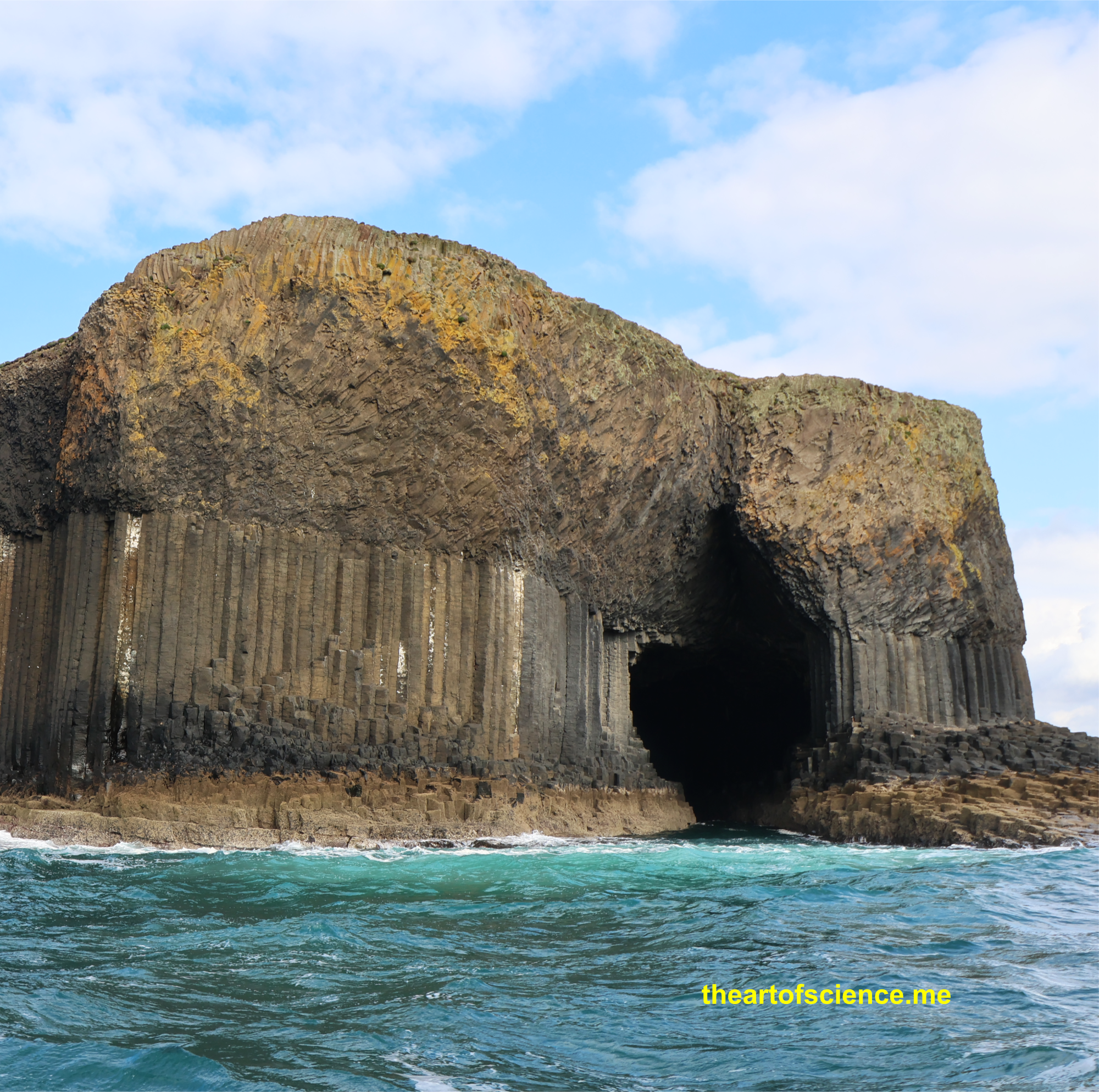
Fingal’s cave.
This is the closest we came to Fingals cave, sea conditions prevented a landing. Maybe it was for the best.
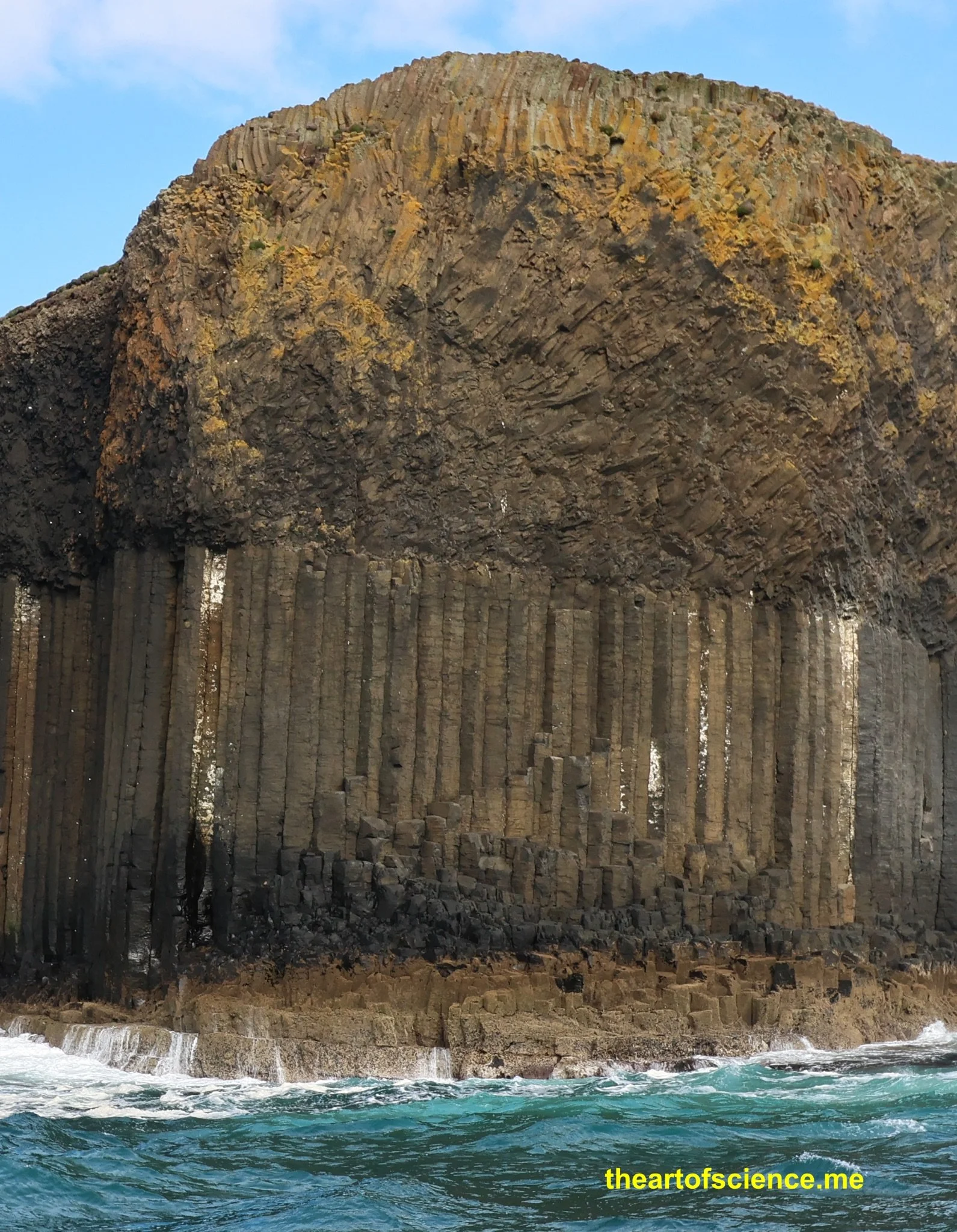
It is still happening today.
The Staffa lava flows formed after an eruption of the Mull volcano around 59 million years ago. The Atlantic had begun opening. A large plume of molten rock provided magma, as it pushed the Atlantic open.
Continents drift slowly but a lot can happen in 59 million years. The plume of magma that spilled lava all over Staffa and large areas of Mull is still active. It has moved North and is now visible in Iceland where it is still pushing the Atlantic open.
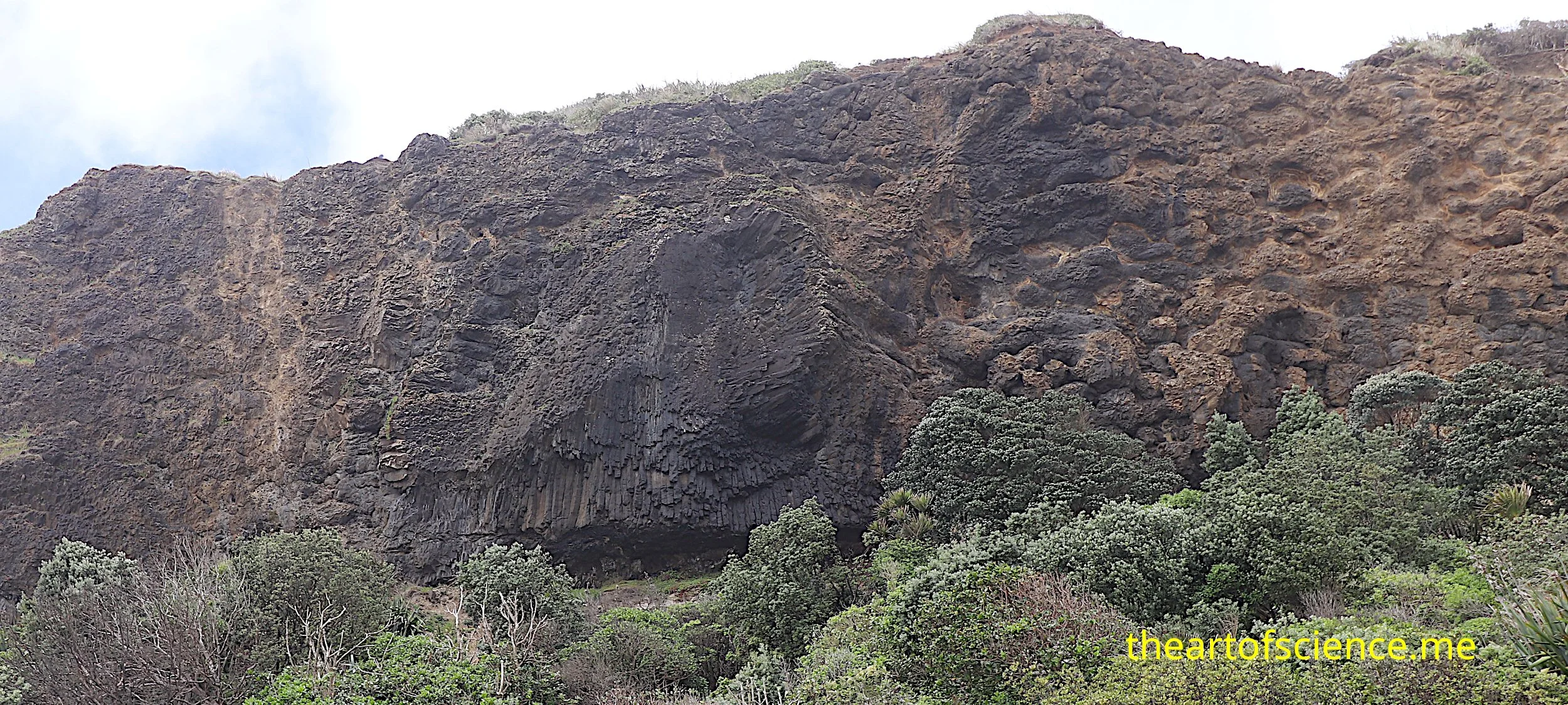
Meanwhile in New Zealand 10 million years ago.
Two large lava flows spilled onto the ocean floor from a vent in the side of the Waitakere volcano at Muriwai. Muriwai is on the west coast of the North Island of New Zealand, near Auckland.
The lava flows sit on top of marine sandstone.
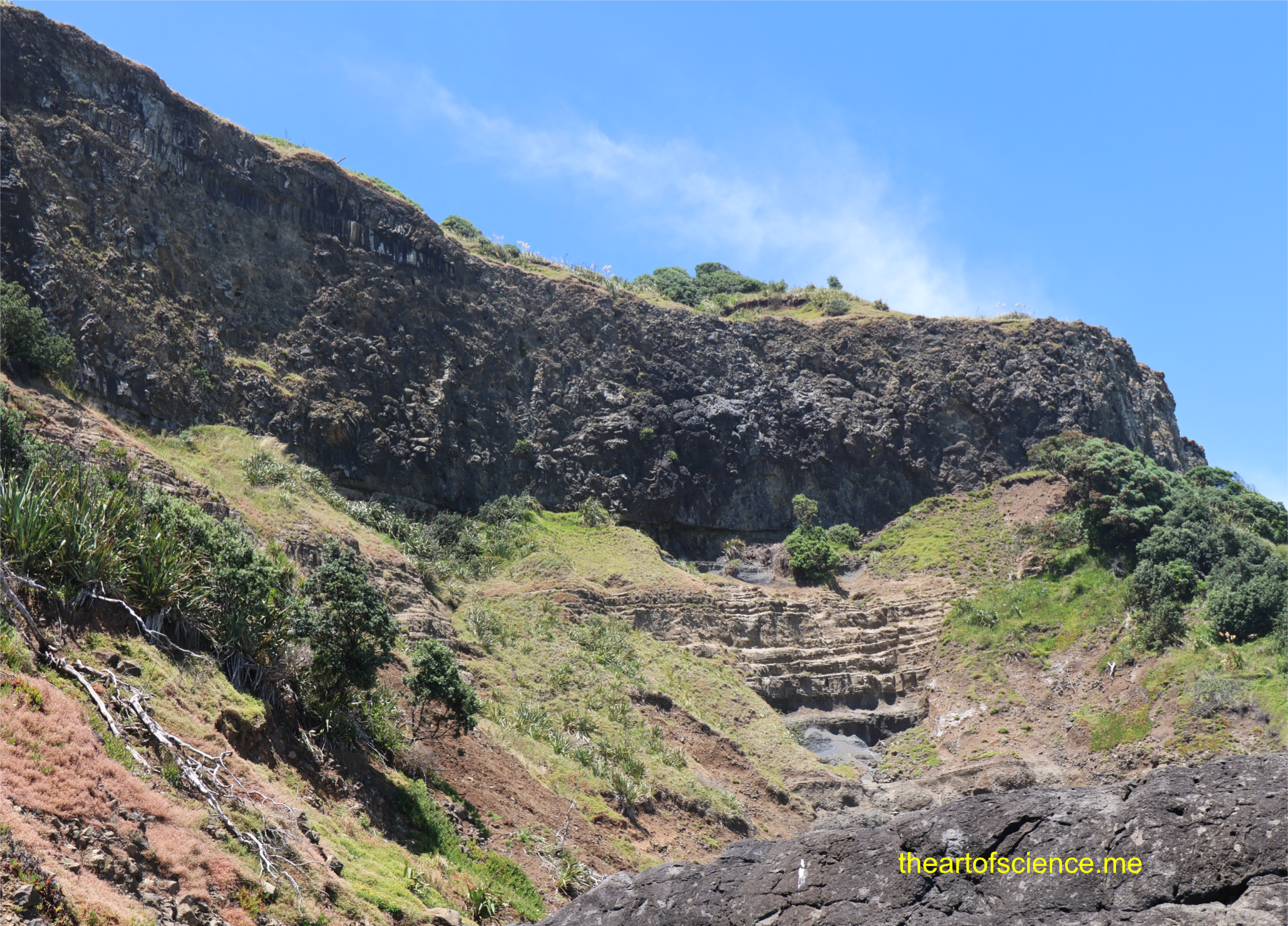
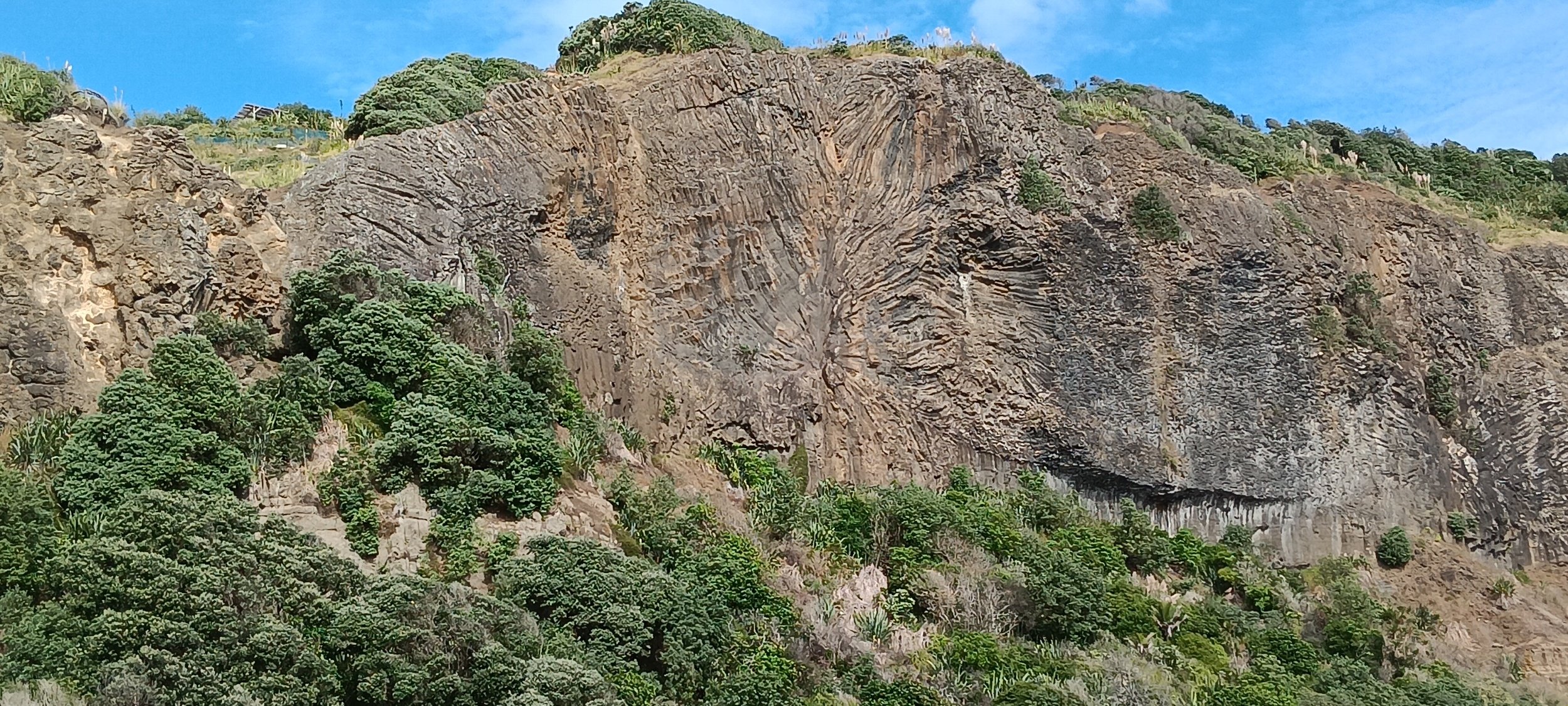
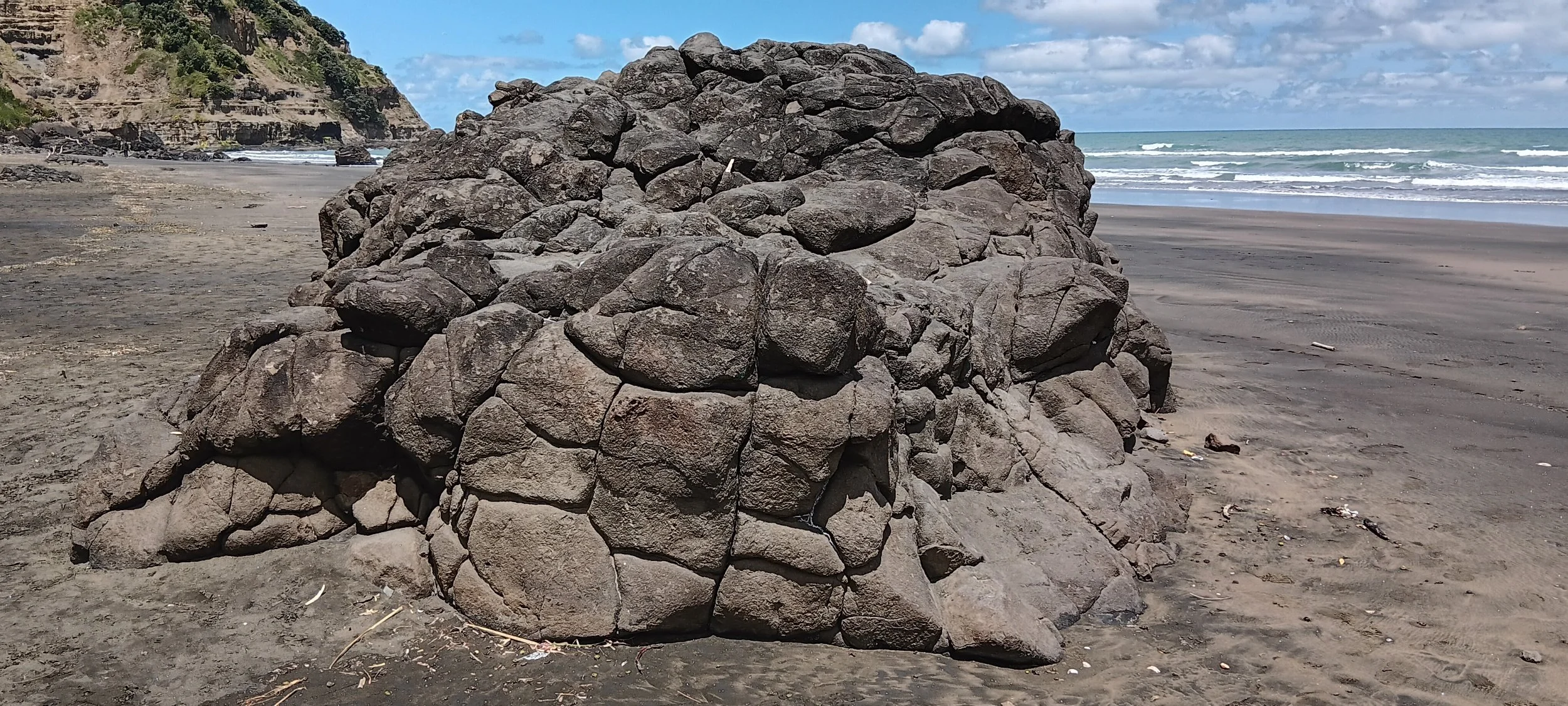
A close-up of jointed basalt without needing to climb the cliffs.