Echinocerius Reichenbachii cacti throw out large flowers for their size.
They require little attention and thrive happily on my small deck in Kumeu. They sit quietly while i take pics and live life in the slow lane. I know when buds are about to open and have plenty of time to set up a camera. They don’t mind going indoors for a bit, when it's too wet to work outside.
As for care, an occasional drench when they become parched is fine.
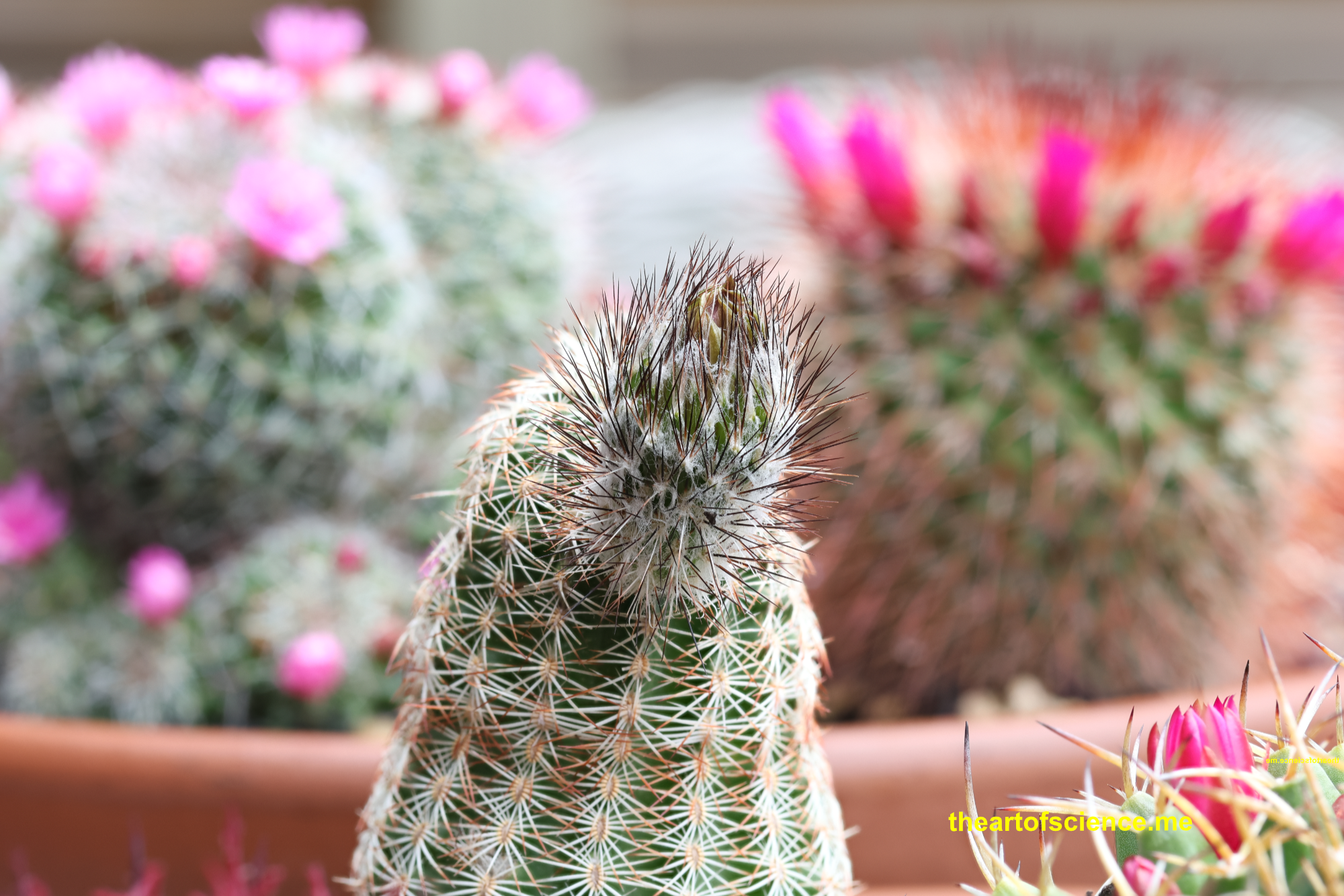
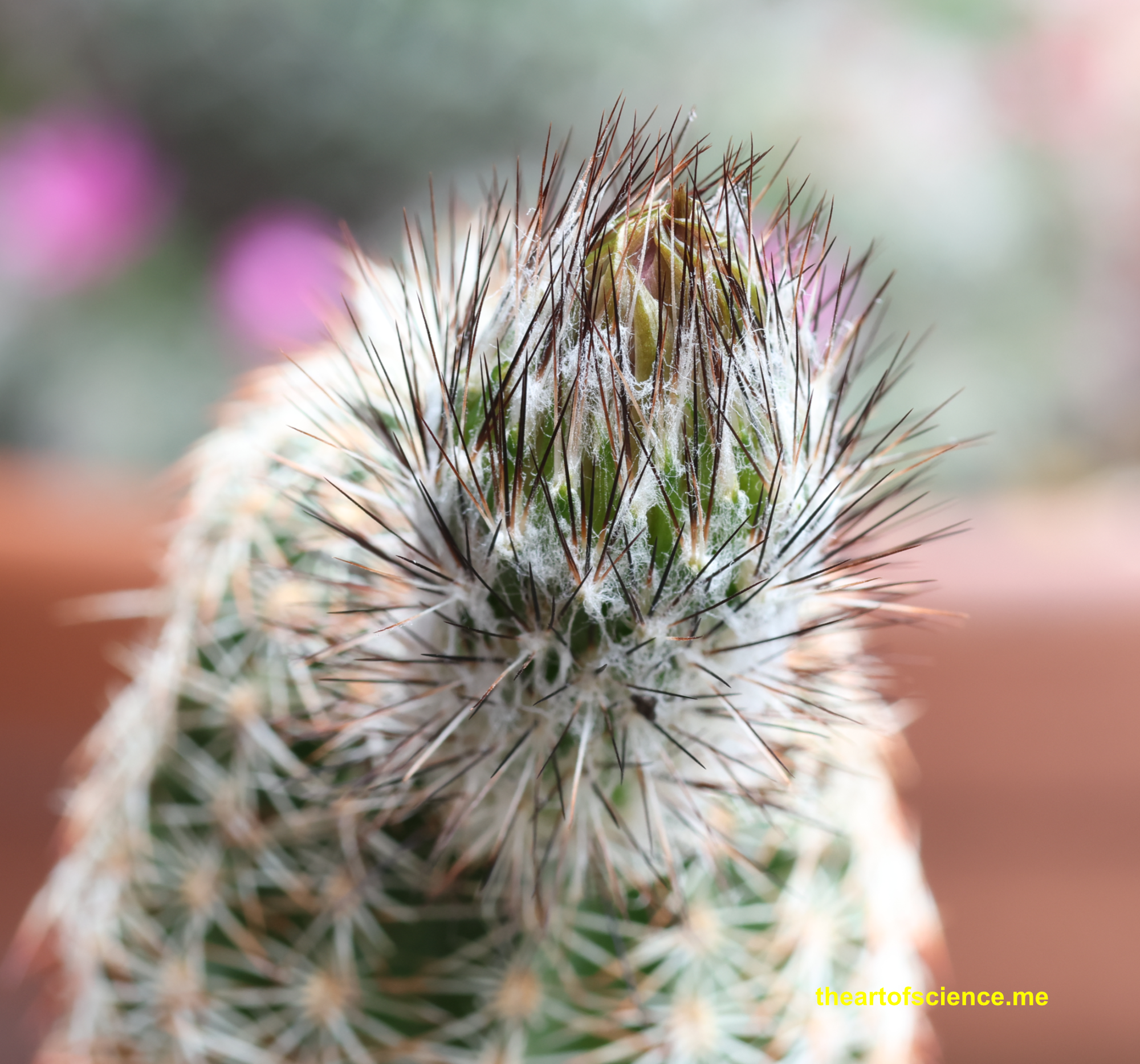
A large, spiky bud emerging from a cactus stem. Apparently, buds develop inside the stem before pushing aside the areole to take over the show.
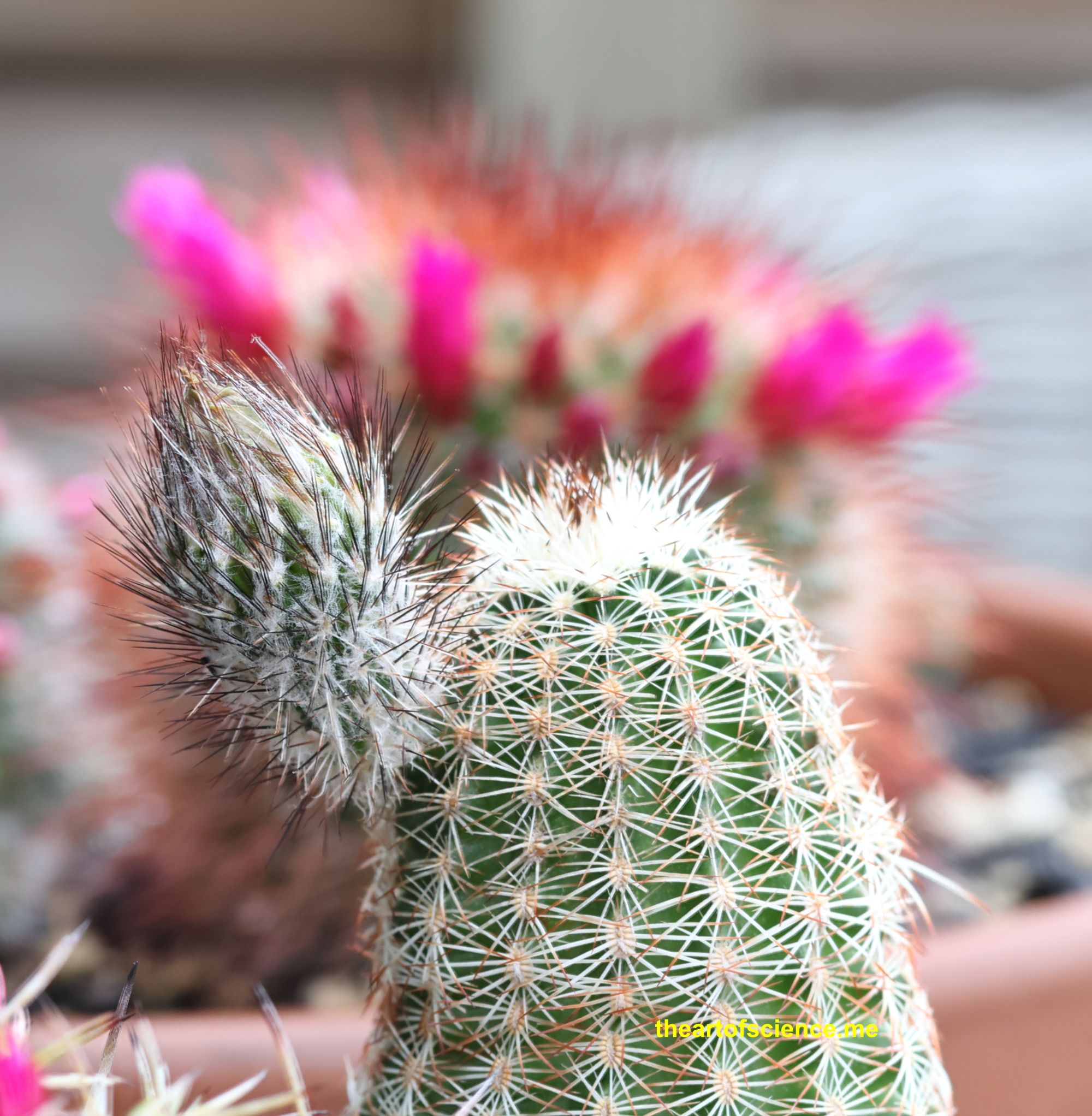
“Hello”.
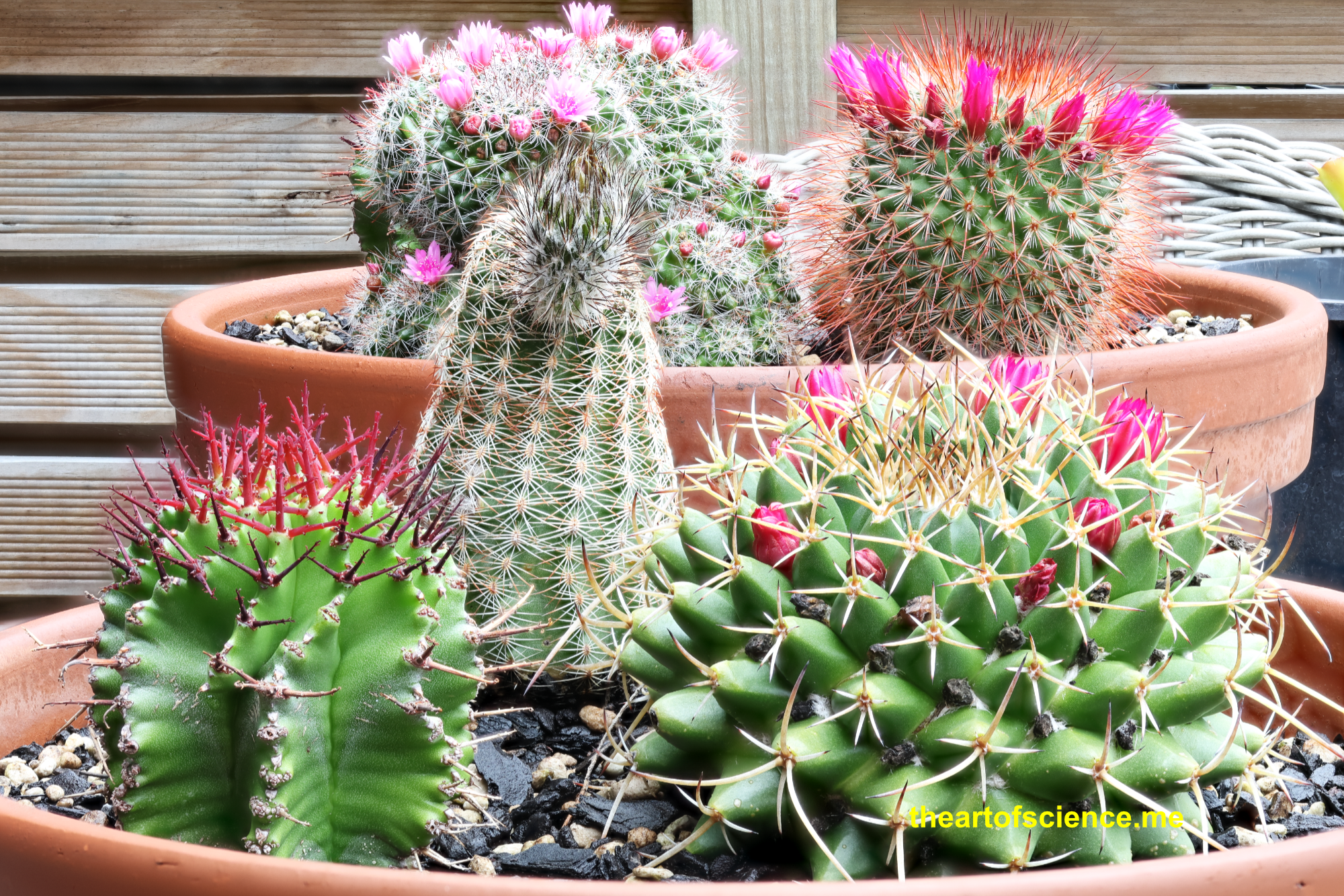
All the other cacti are cheering for Echinocerius. The bud is about to pop.
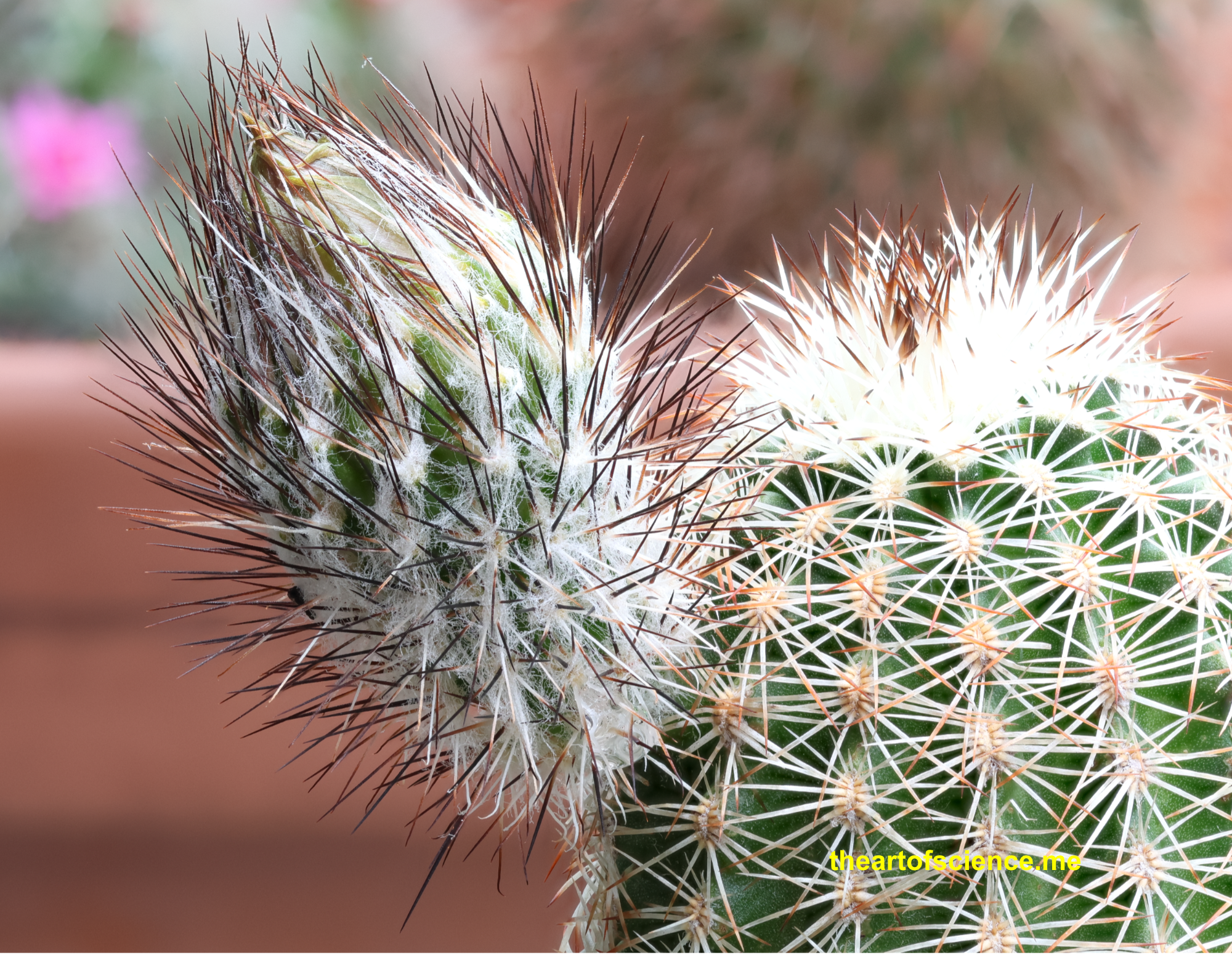
Perfection takes a bit longer.
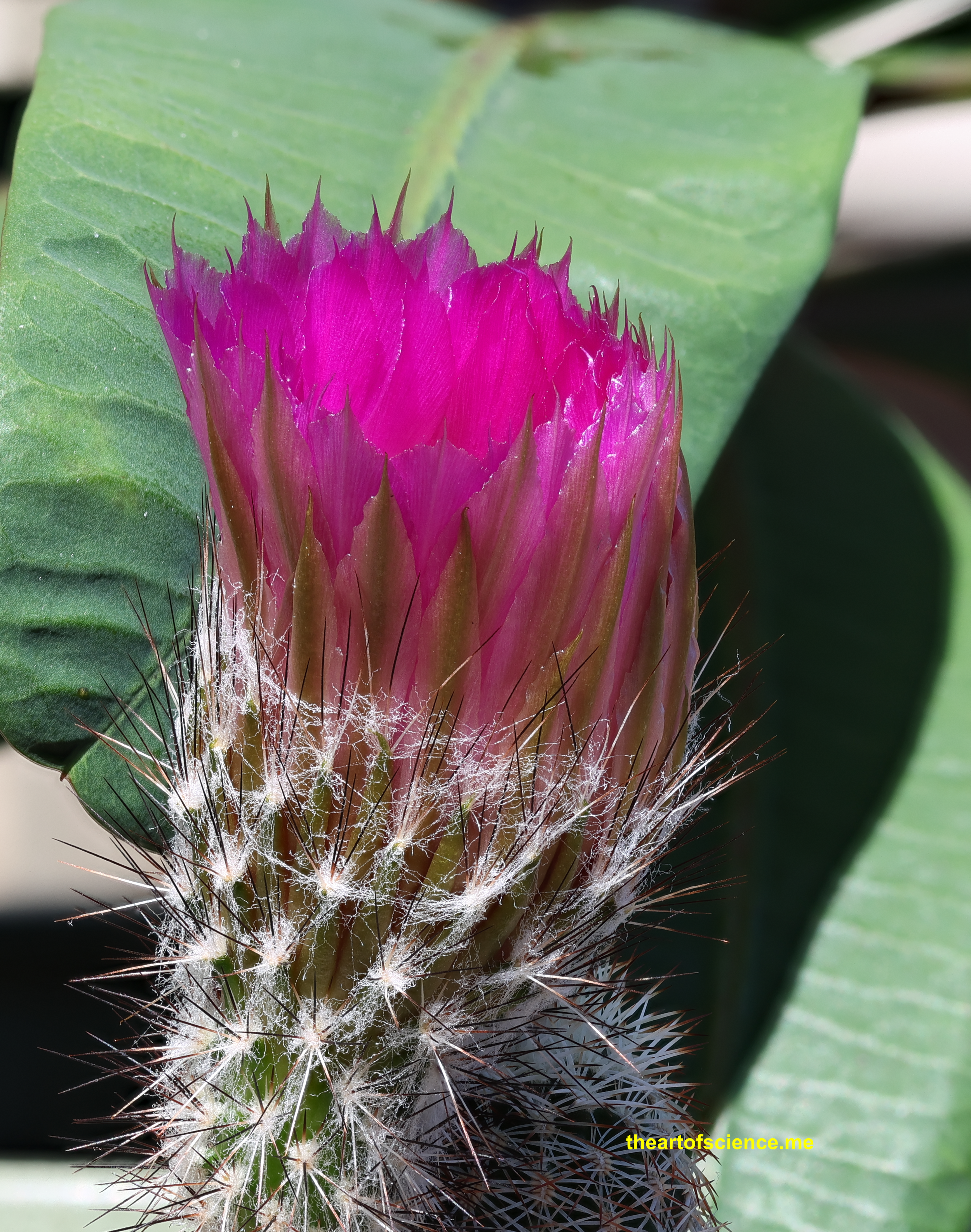
And we are off, after weeks of preparation. The bloom lasts for a few days.
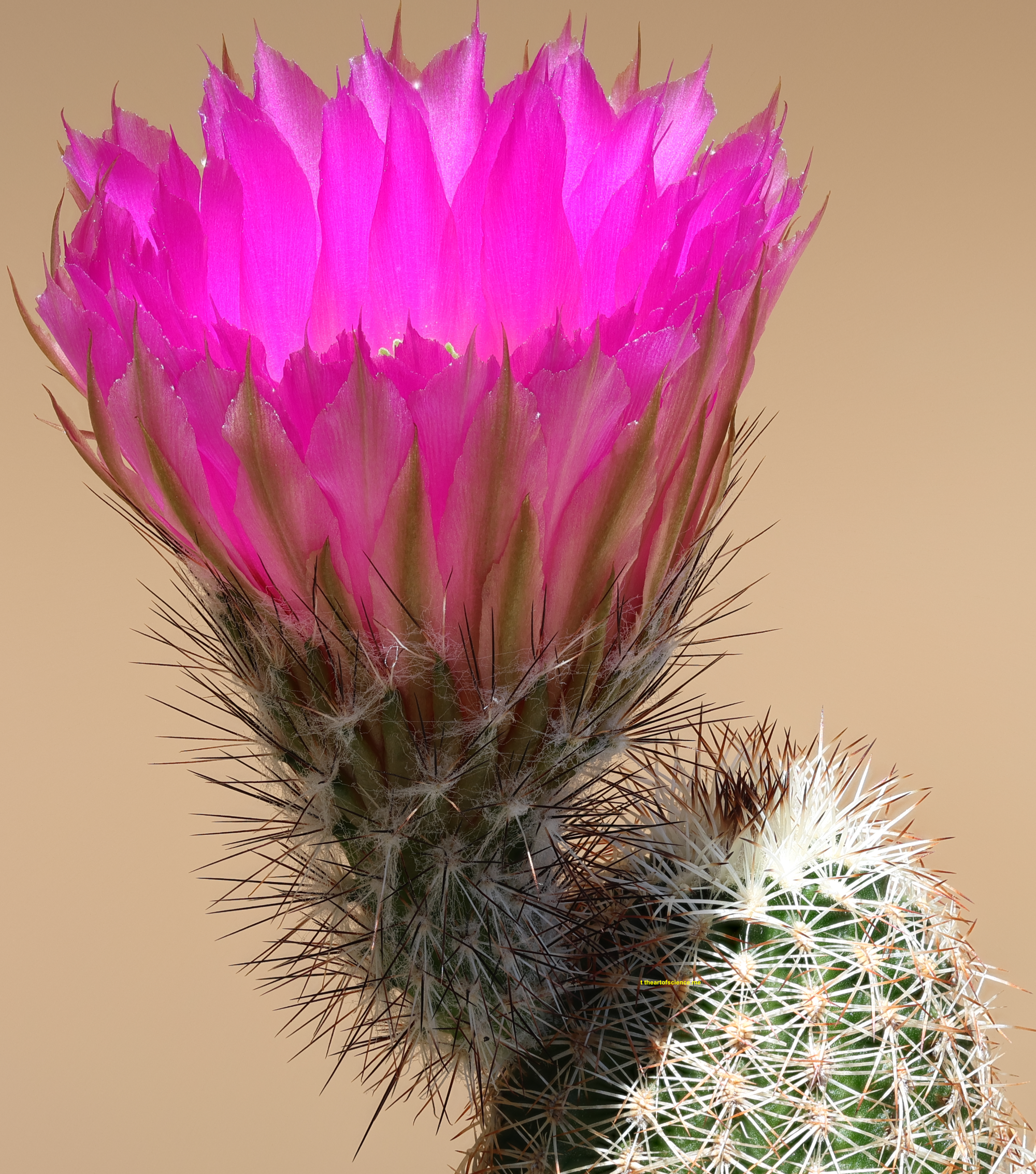
Bees love the deep, cup shaped flowers.
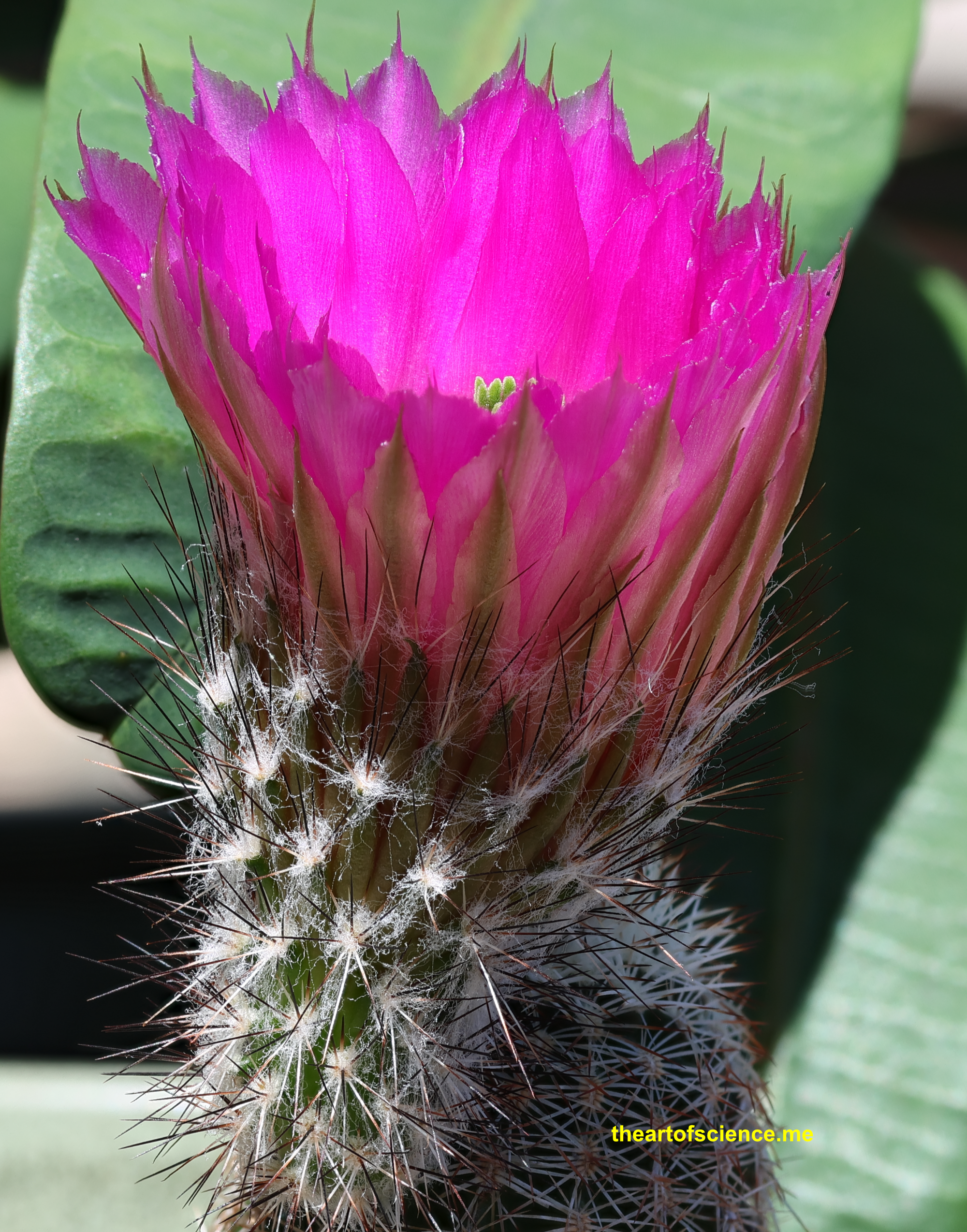
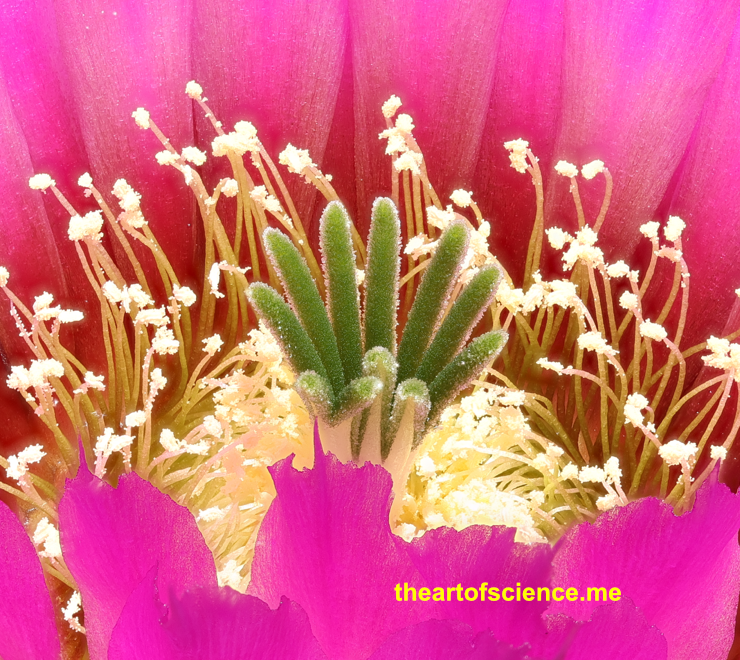
A warm warm sunny afternoon and the flower opens for business. Bundled up, green stigmatic lobes stand out against violet pink petals, complementary colours on the artist’s palette. Nature is mimicking art.
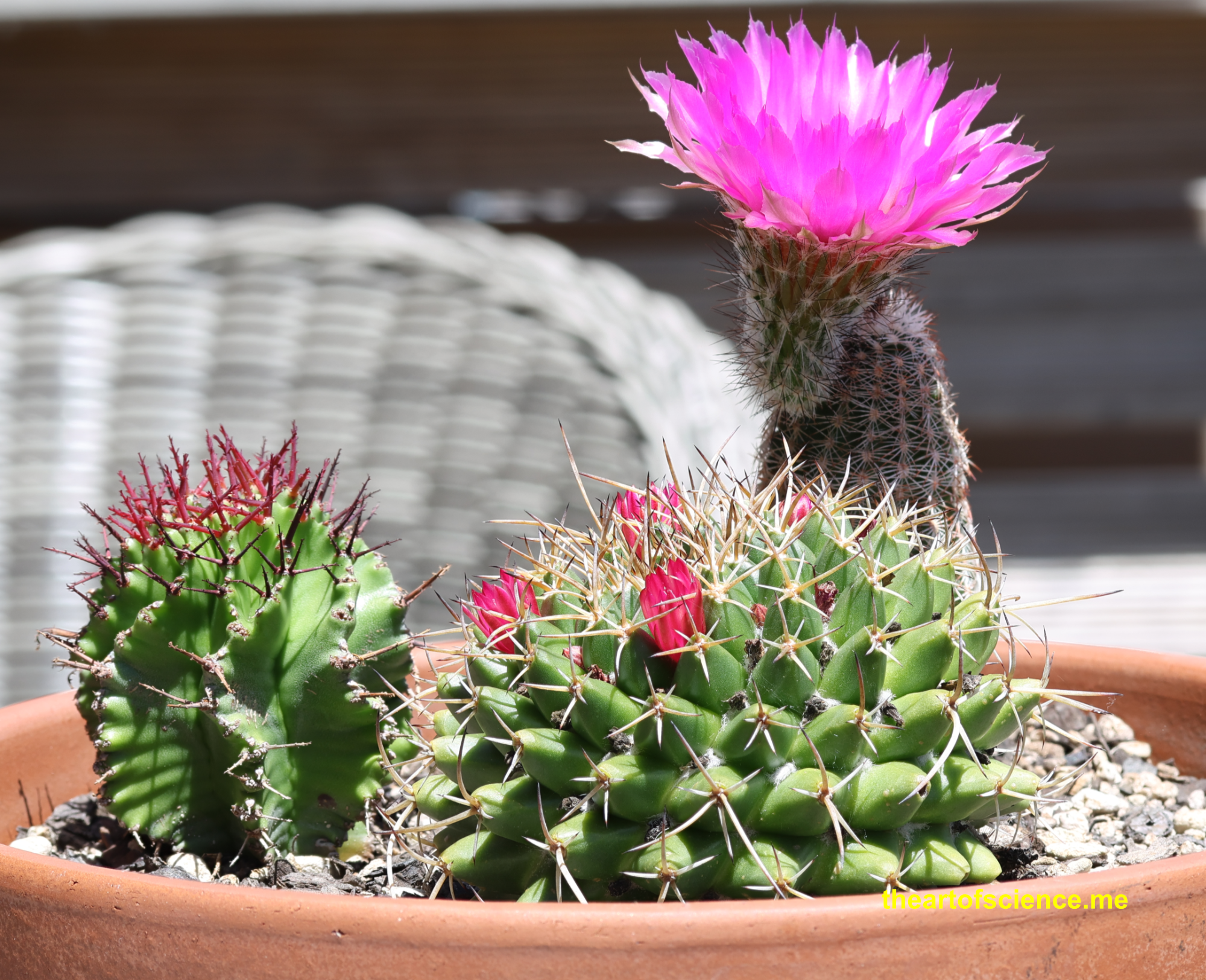
It’s late afternoon and the flower is fully open. The flower will close again in the evening. Colour is wasted at night.
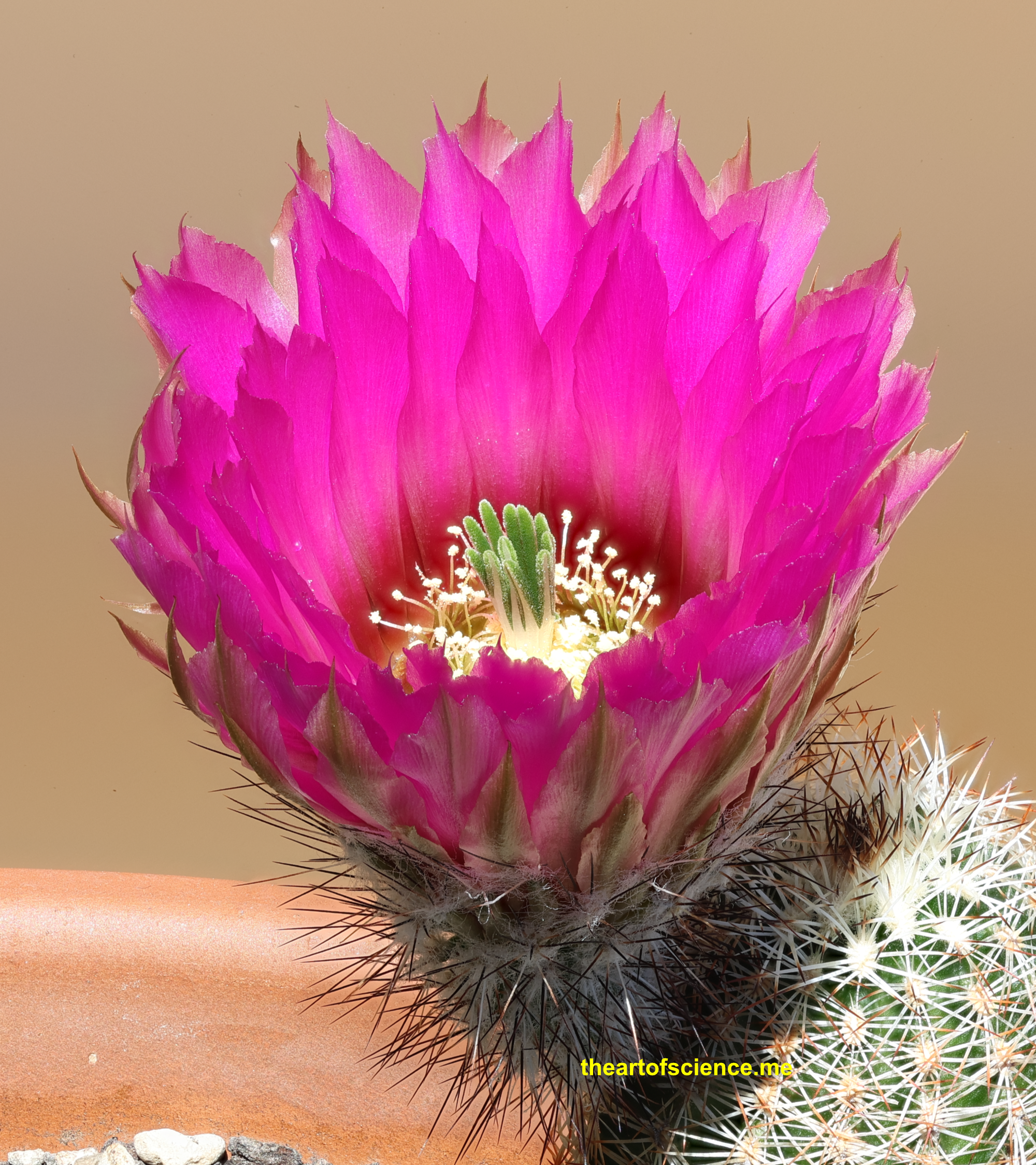
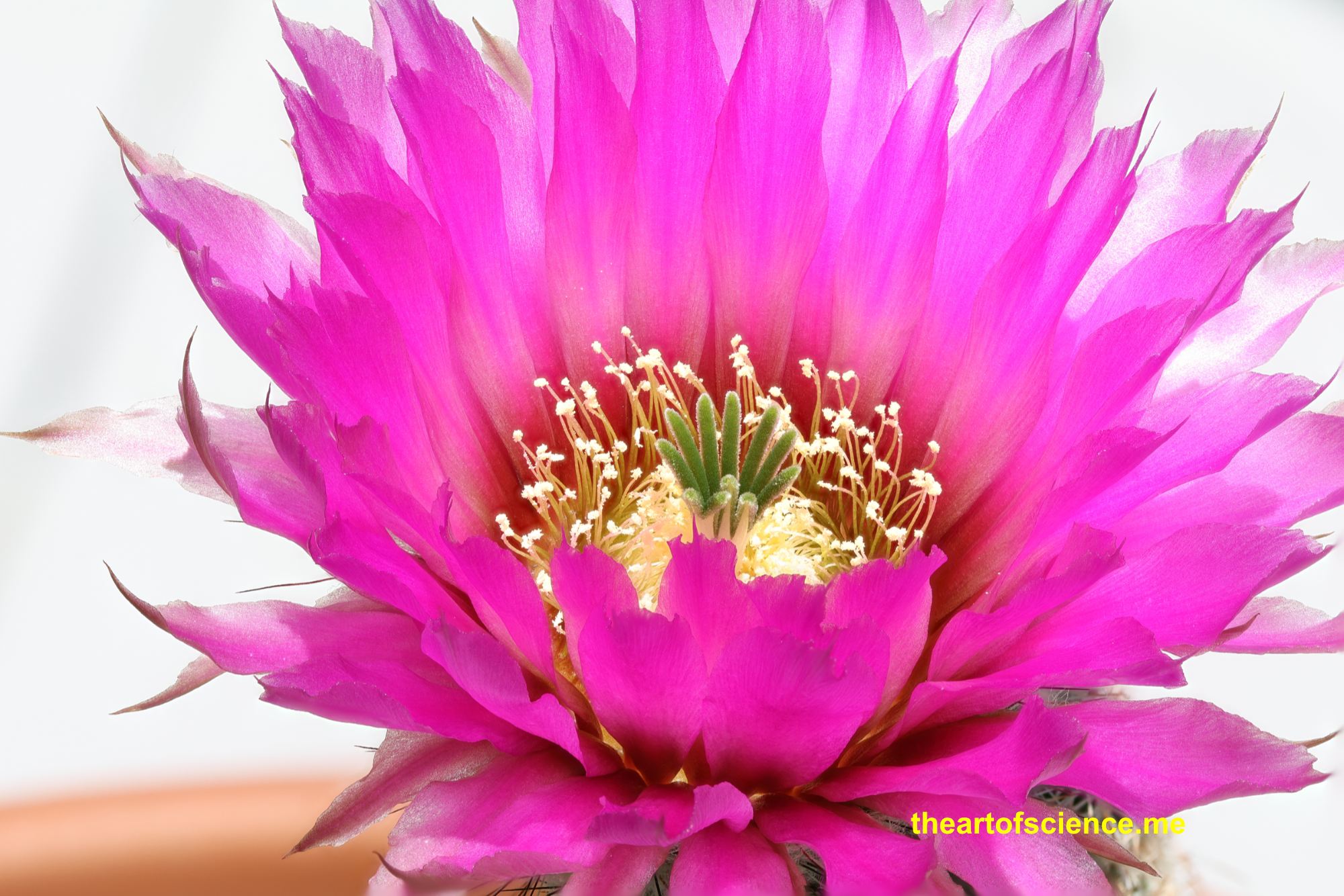
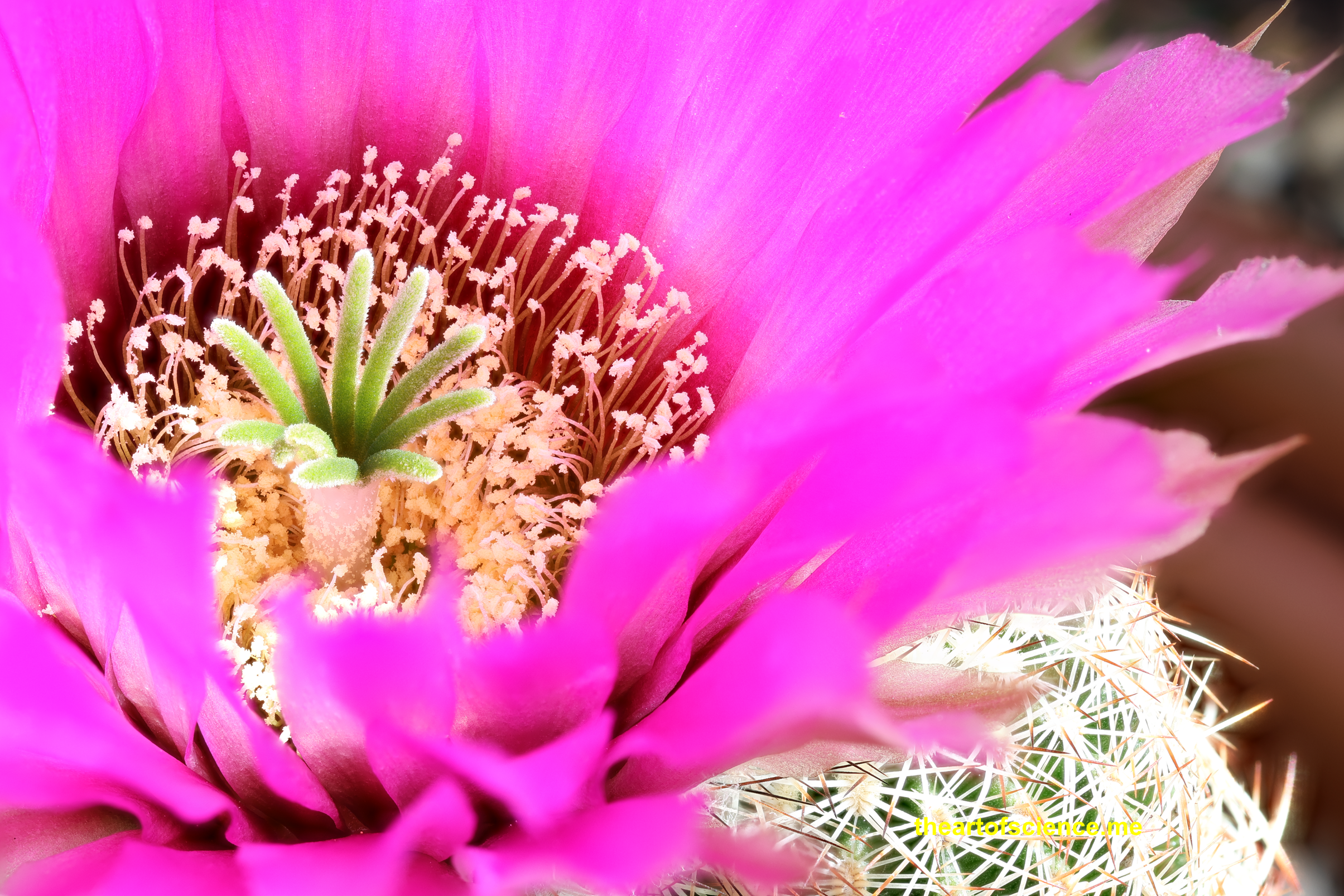
Eleven stigma lobes diverge and command space above an array of fully dehisced anthers. Incoming bees dust the lobes with pollen from other plants. After bouncing around the bed of anthers foraging bees will carry pollen from this plant to their next encounter of a floral kind.
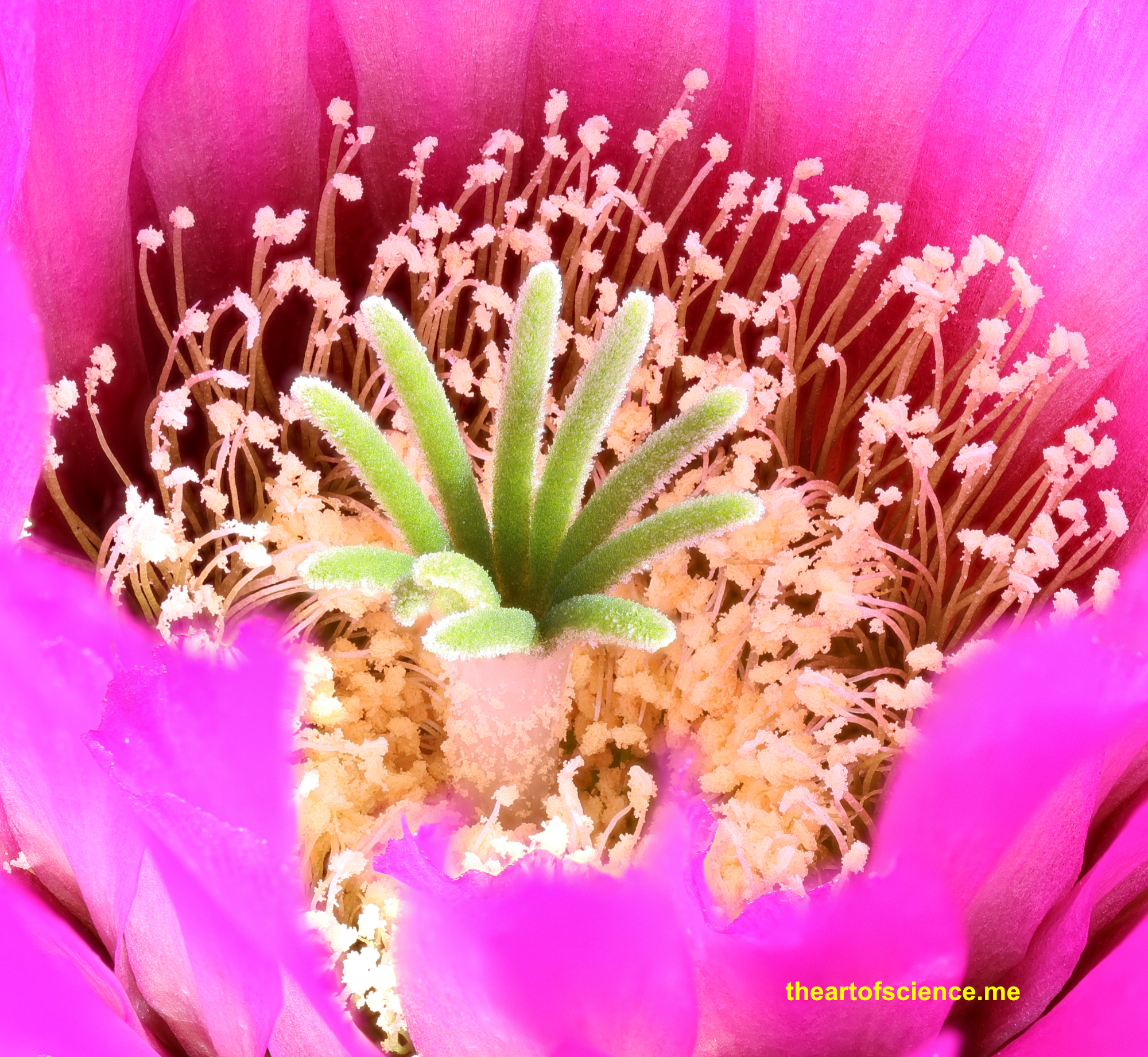
On closer inspection, the lobes are covered in fine hairs that trap pollen grains dropped by clumsy bees.
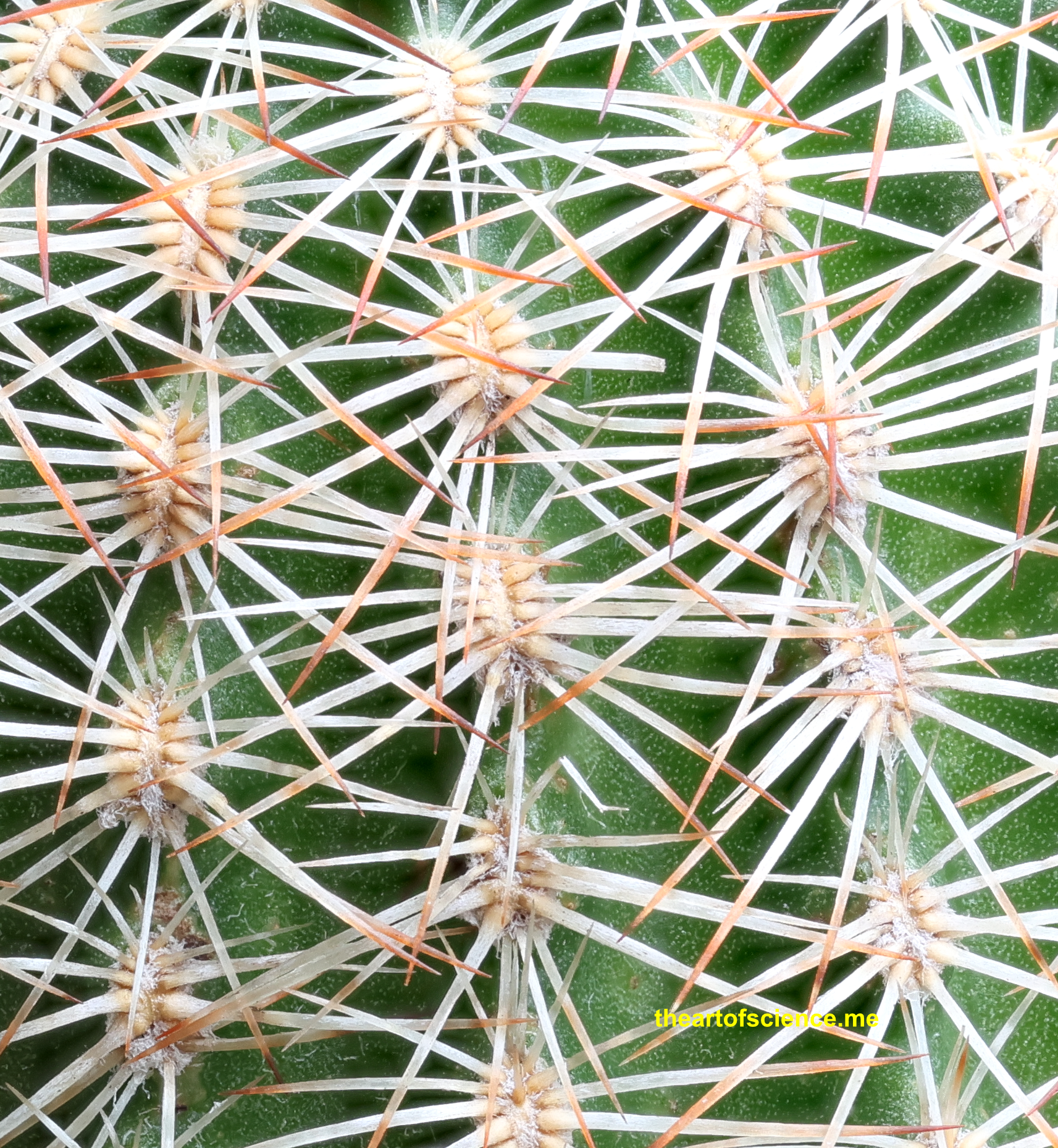
Areoles are aligned vertically along the ribs with spines splayed out horizontally.