
Life and death on a swan plant
Swan plants are busy places during summer months. Small creatures depend on this plant for survival.
Resources are finite and the plant struggles.
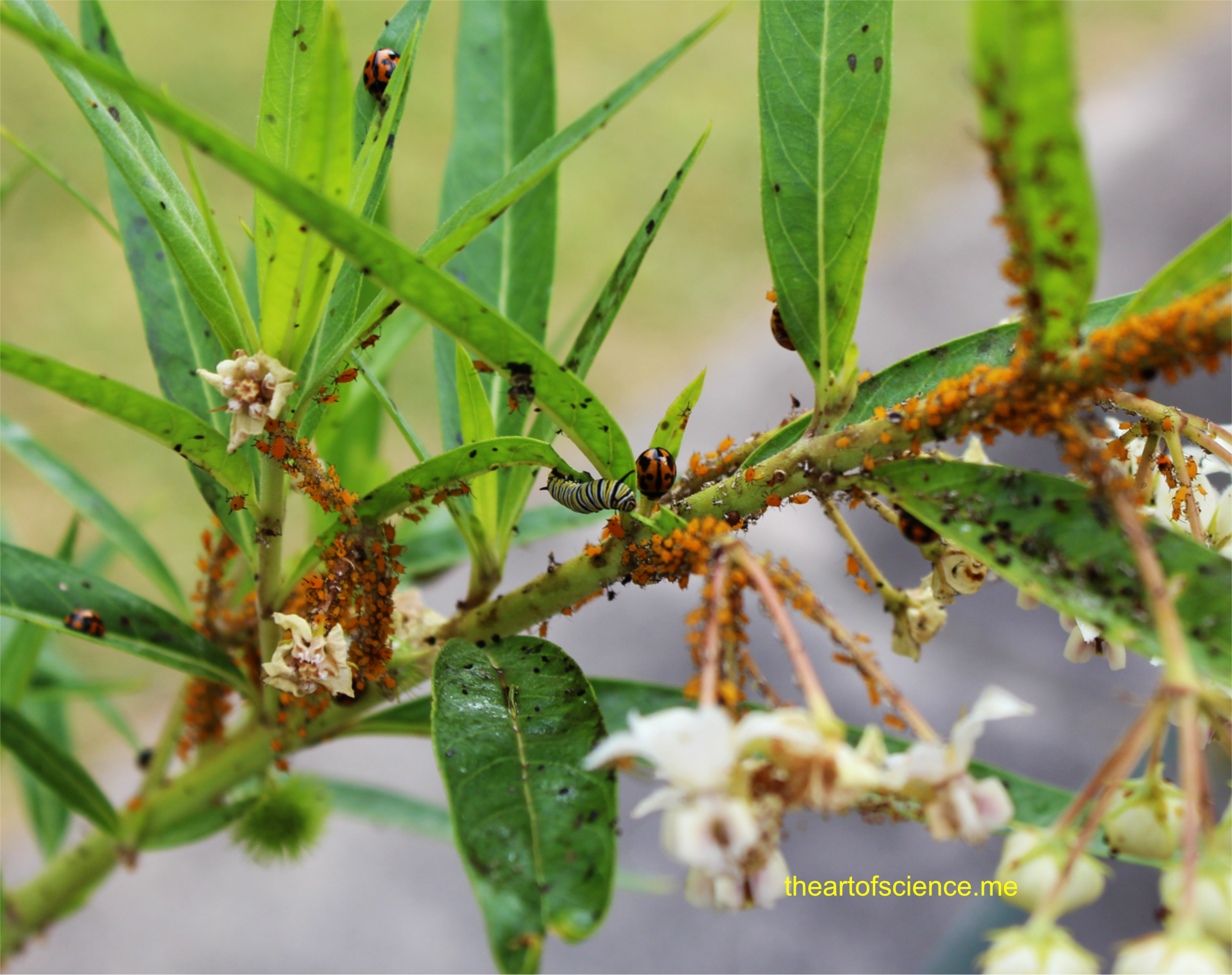
Aphids are generally a sign that the plant is in decline. Oleander aphids love swan plants.
The sharp, pointed, proboscis, anchoring the insect, behaves like a reverse hypodermic needle. Hydrostatic pressure from the swan plant’s phloem cells pumps fluid into the tiny insects.
It's a wonder that they dont blow up like tiny yellow water balloons.
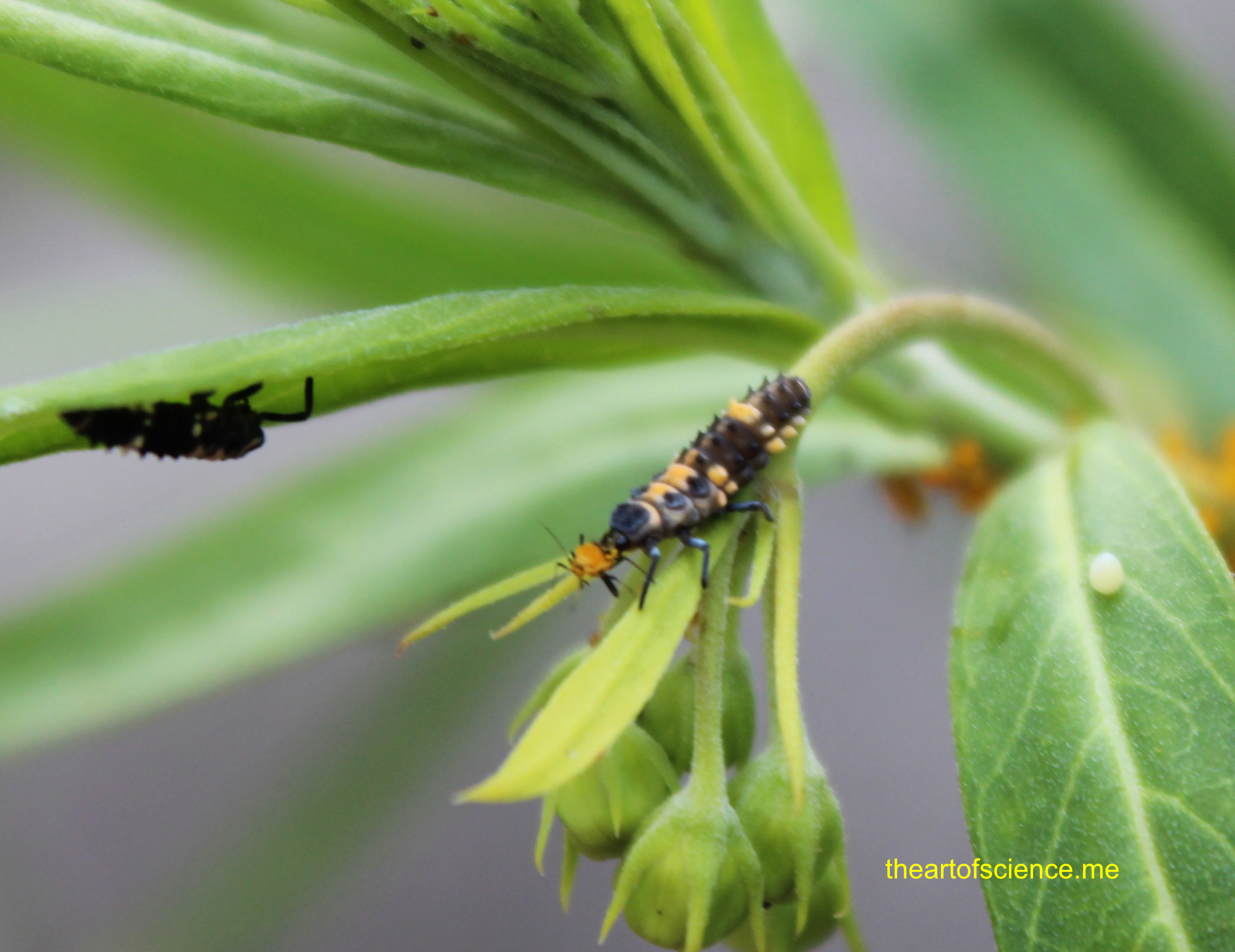
The alligator like insect with jaws clamped around its tiny victim, is a ladybird instar (larvae) Stranger things happen in the upside down world of a ladybird instar. Beneath the skin a winged creature is taking shape, capable of flying to a fresh swan plant.
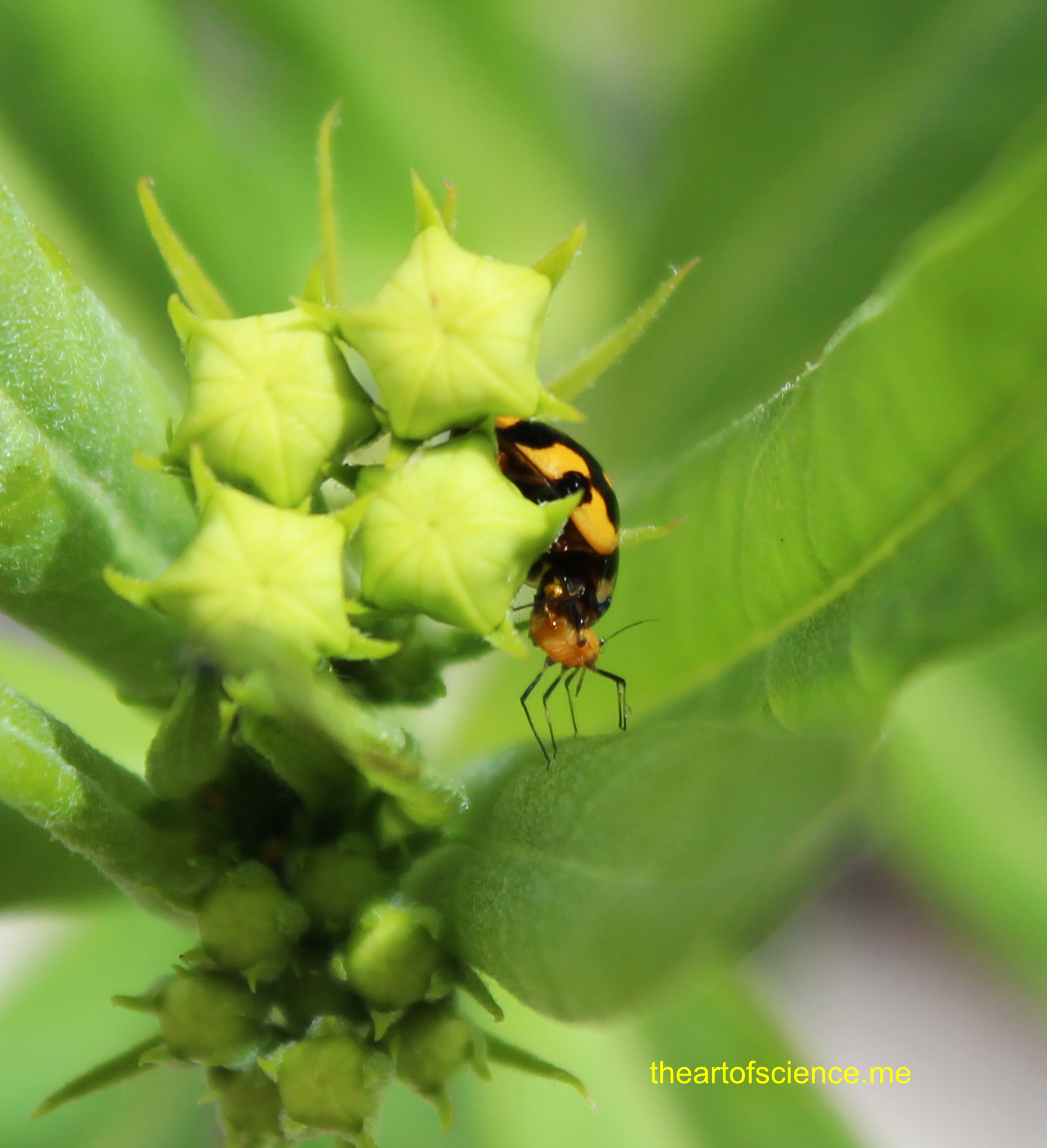
Crunchety crunch, ouch!! He bit my bottom off.
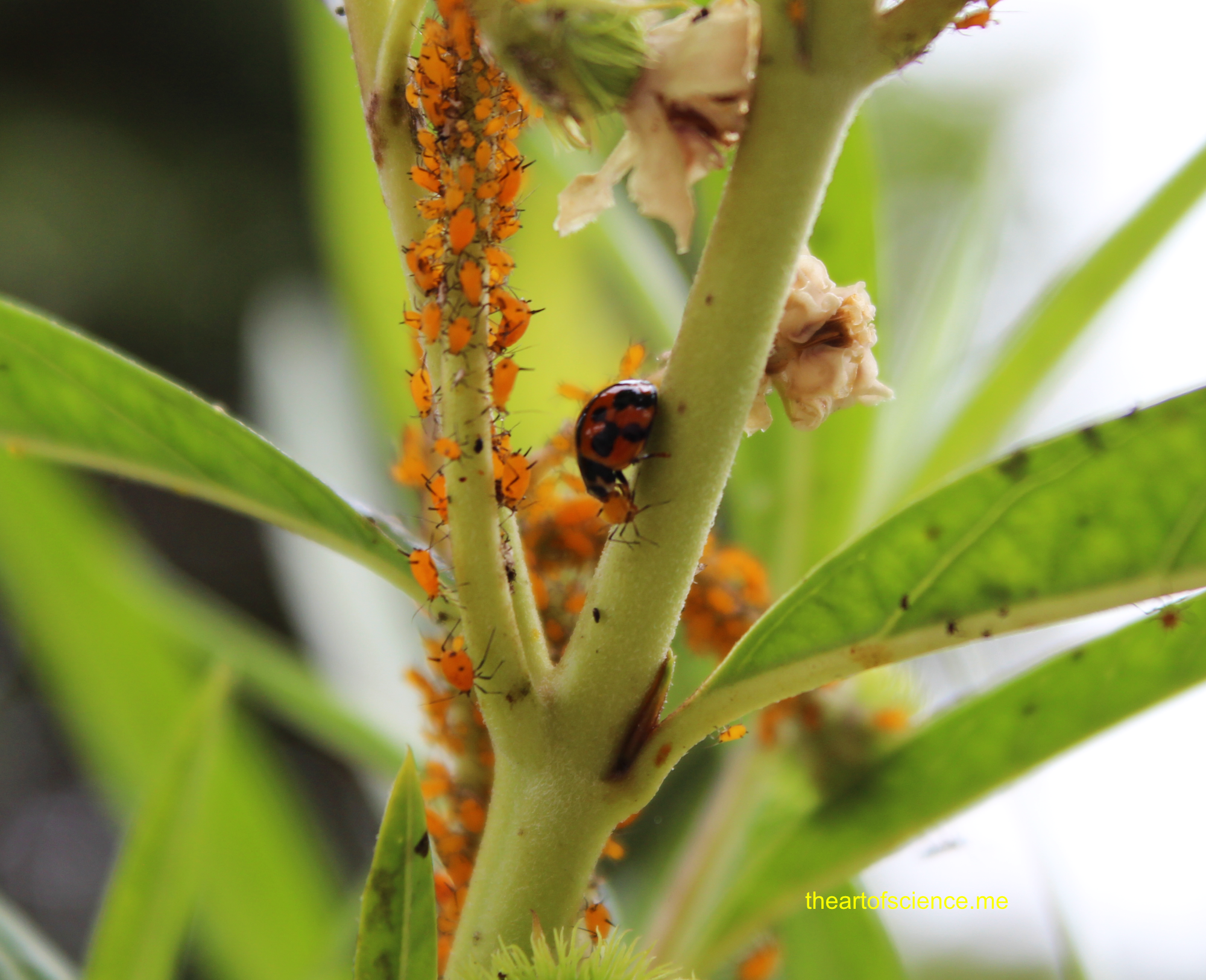
Oleander aphids, can’t run or hide. A fully grown ladybird will find them and it will eat them.
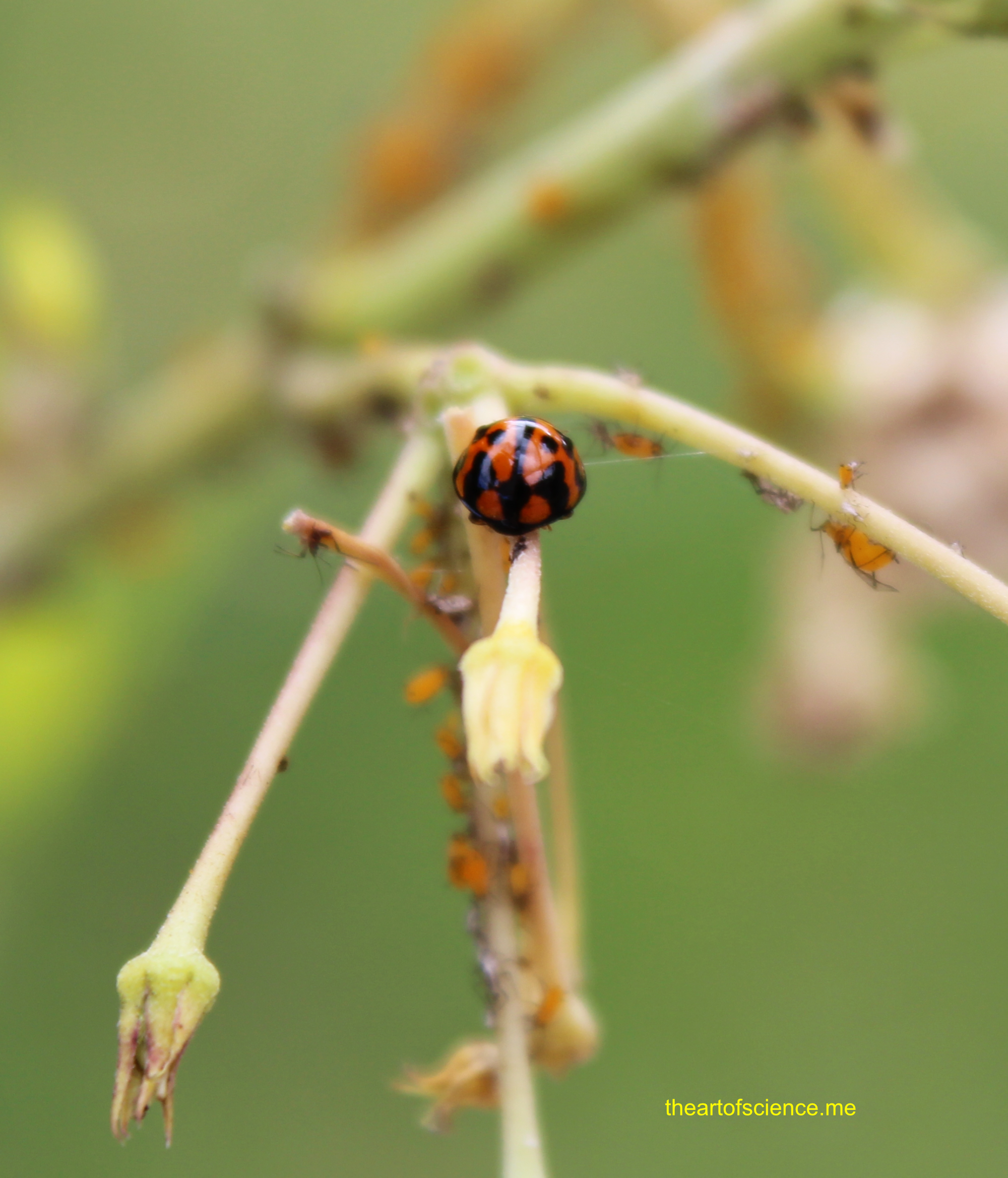
The plant is struggling, monarch caterpillars have devoured more than 90% of its leaves.
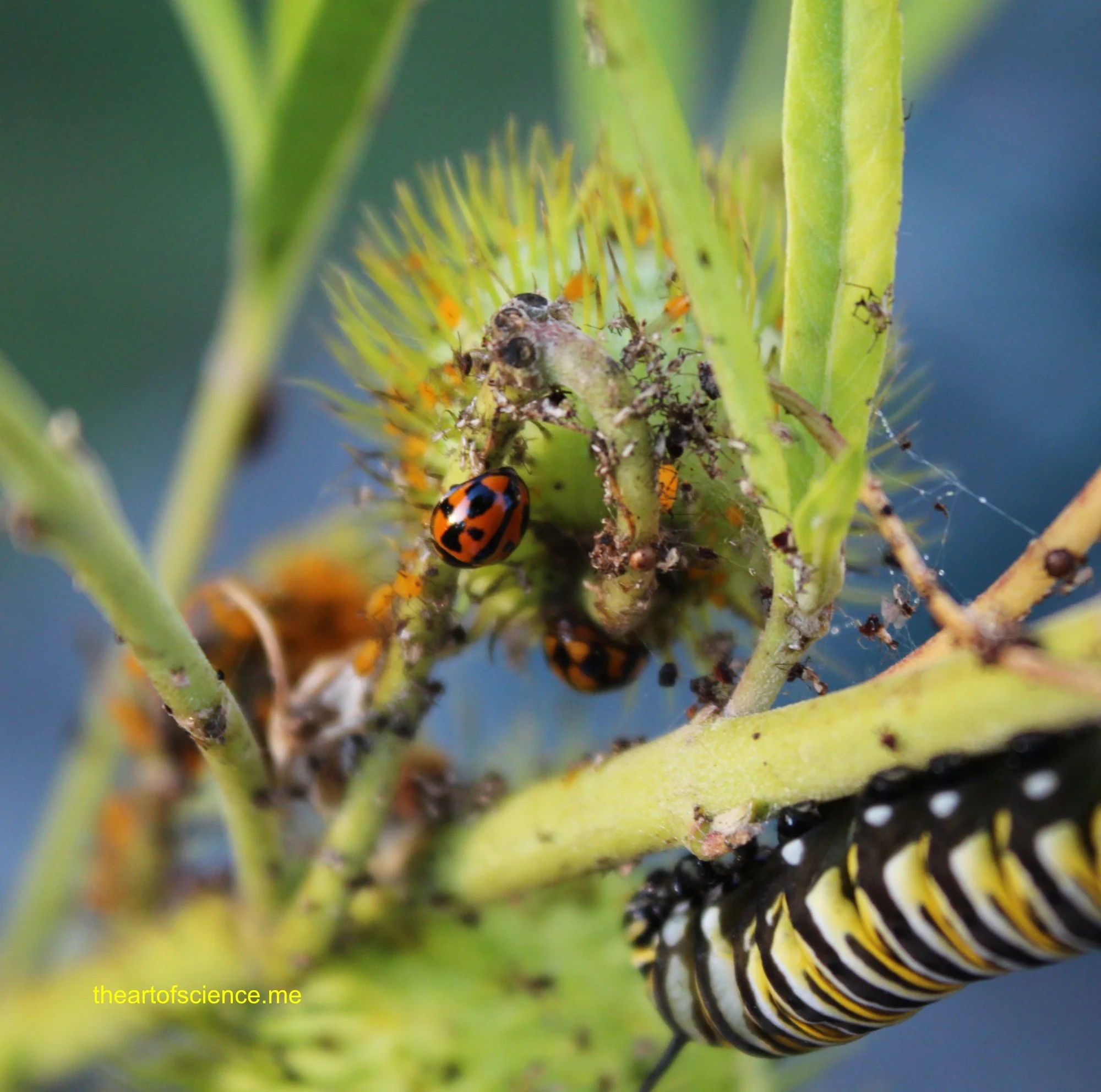
They have destroyed their plant. The only way off is to sprout wings and fly. The ladybird will leave soon but the caterpillar has run out of leaves.
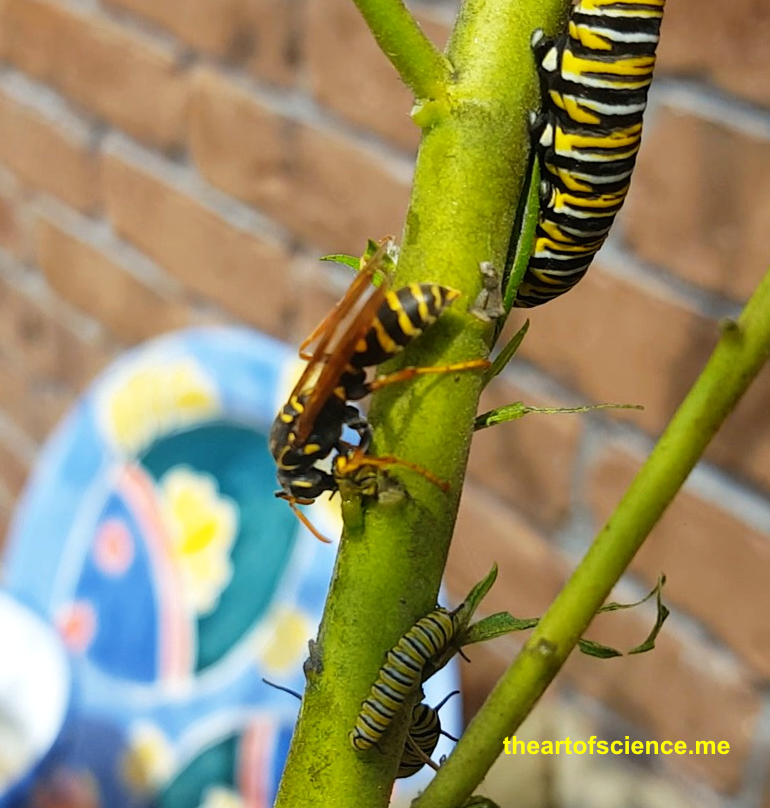
Wasps need protein for nest building early in the season. A baby monarch caterpillar, sliced and diced, will do nicely.
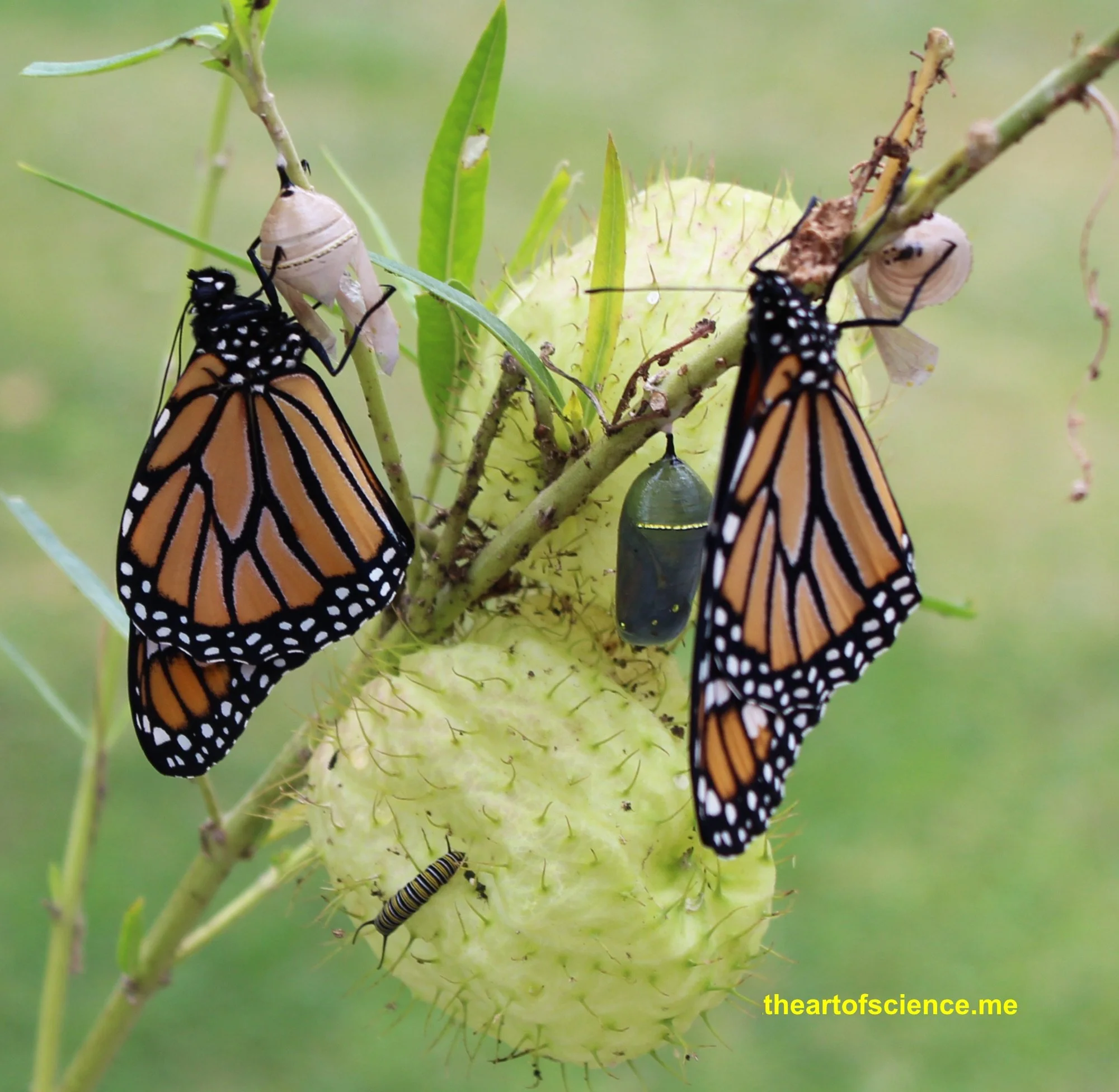
Two monarch butterflies fresh out of their chrysalis. A third monarch is nearly ready to push out and pump up its wings. The outlook for the baby caterpillar is not good. There are insufficient leaves on the plant to support its development.