
Stand inside a section through a volcano at Karekare and look around.
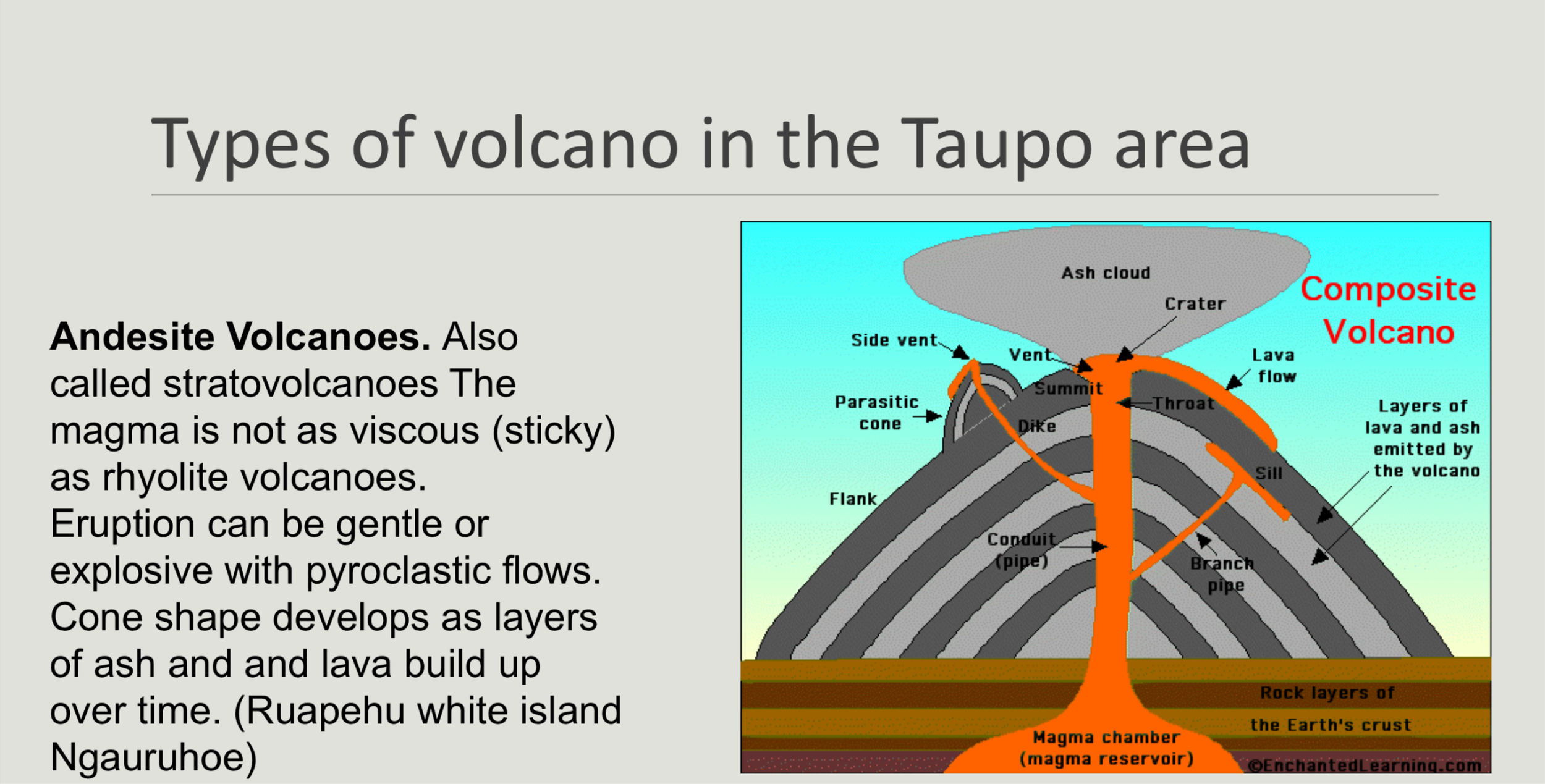
Stand inside the section through a volcano at Karekare and look around.
The diagram is generic and parts don’t apply to Karekare, The main features on view at Karekare include:
the rim of volcano formed from an eruption 16 million years ago
A large conduit taking lava to the surface
Dikes and sills
Layers of conglomerate and ash. The original volcano at Karekare was marine, surrounded by ocean. Volcanic debris from eruptions were washed down the flanks forming layers of volcanic conglomerate.
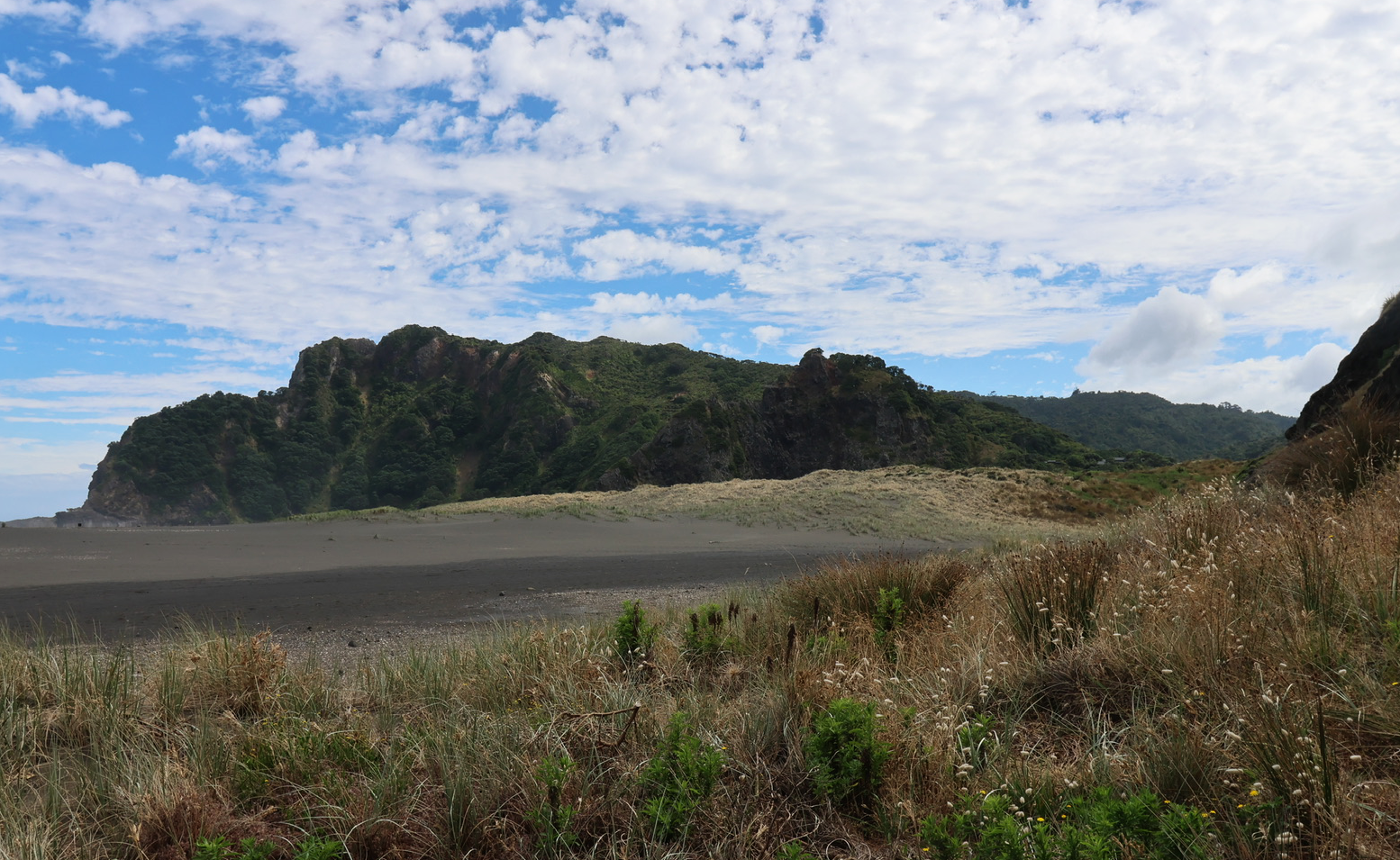
Auckland’s West Coast.
The rugged coastline in these parts is stunning.
Volcanic construction and erosional destruction have shaped and reshaped this landscape over millions of years.
The North Island of New Zealand sits on a shaky plate boundary while Auckland is the only city in the world built on an active volcanic field. The twin geological hazards are very real.
Two roads, badly damaged during storms a few years back, take you down to Karekare. They are hazards of a different kind.
The app on my phone directed me down Lone Kauri Road. This road is narrow, long, and I’ll probably never use it again. I left Karekare on the other road which is 6 inches wider and easier on the nerves.
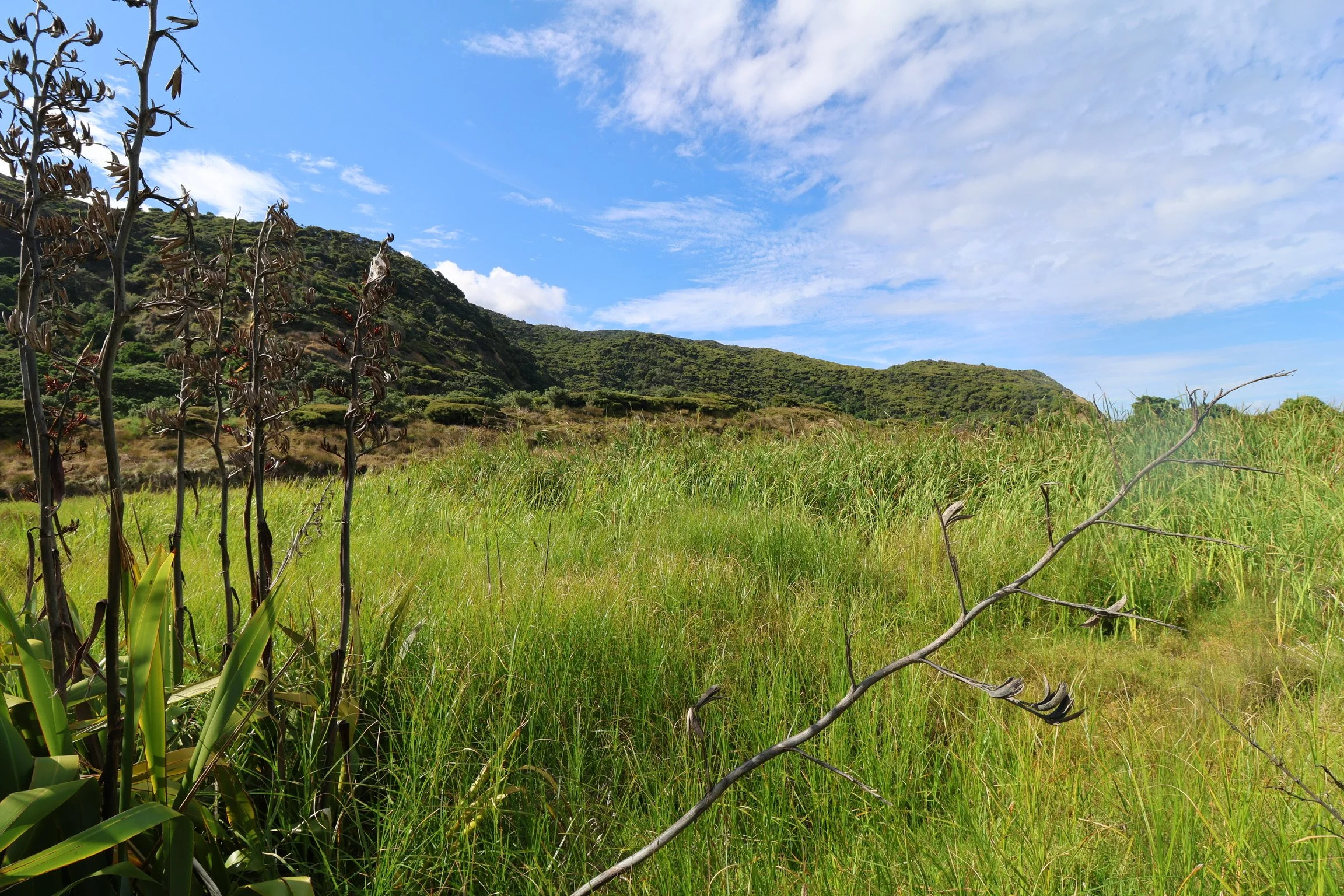
This picture doesn’t illustrate anything important, I like the view.
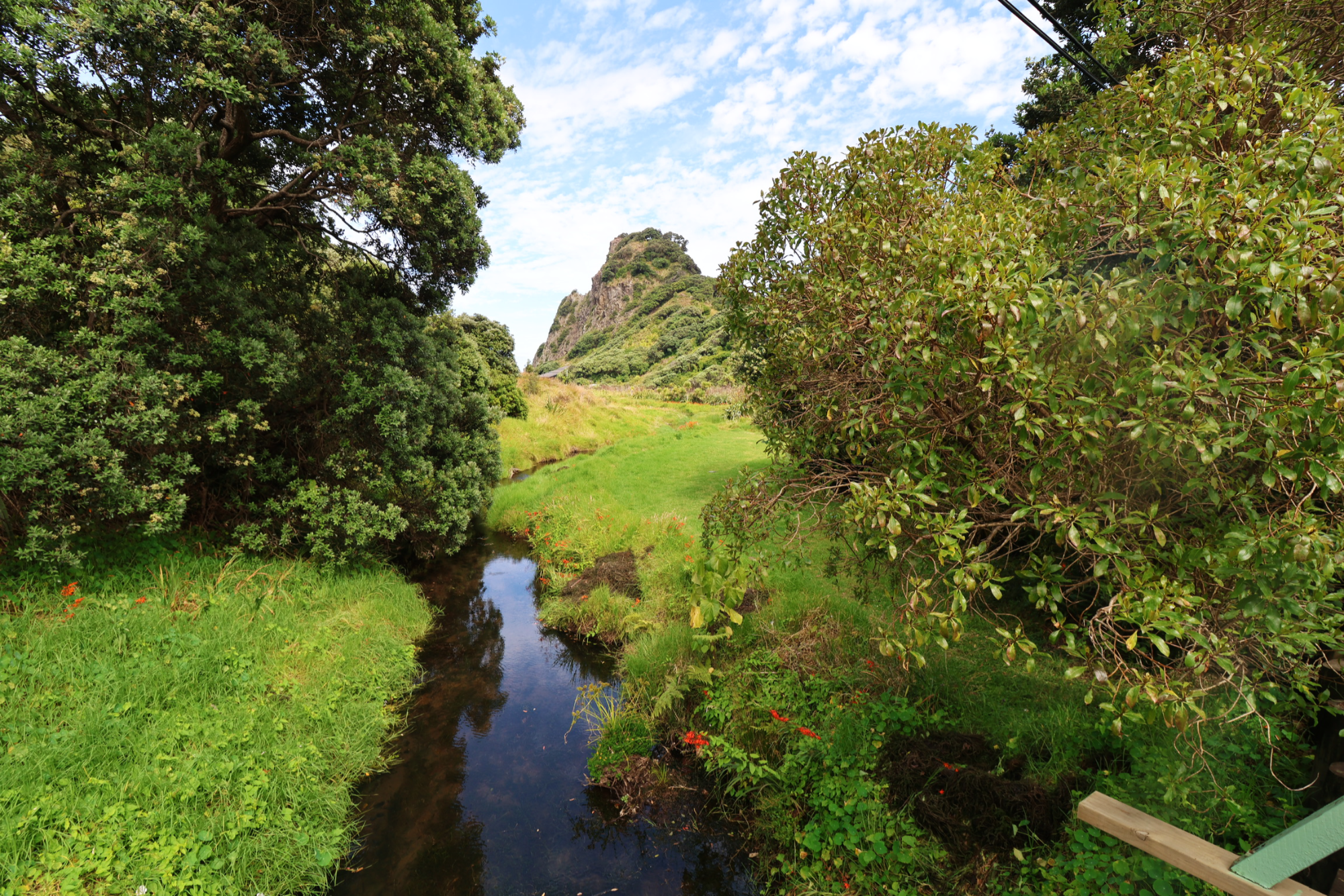
The Watchman
Rounded bumps like this are found all over the North Island of New Zealand. Usually they are much larger. The remnants of a dacite dome. Dacite is the name geologists give to rocks with a high silica content. Rhyollite results when the silica content is lifted a notch..
Dacite lava has the consistency of molten glass. Lava extrusions, which ultimately formed The Watchman, flowed slowly from a vent in the side of the ancient Waitakere Volcano. (See diagram if you must!)
Normally it would have the shape of an inverted bowl but time and tides have reduced it to a curved slice.
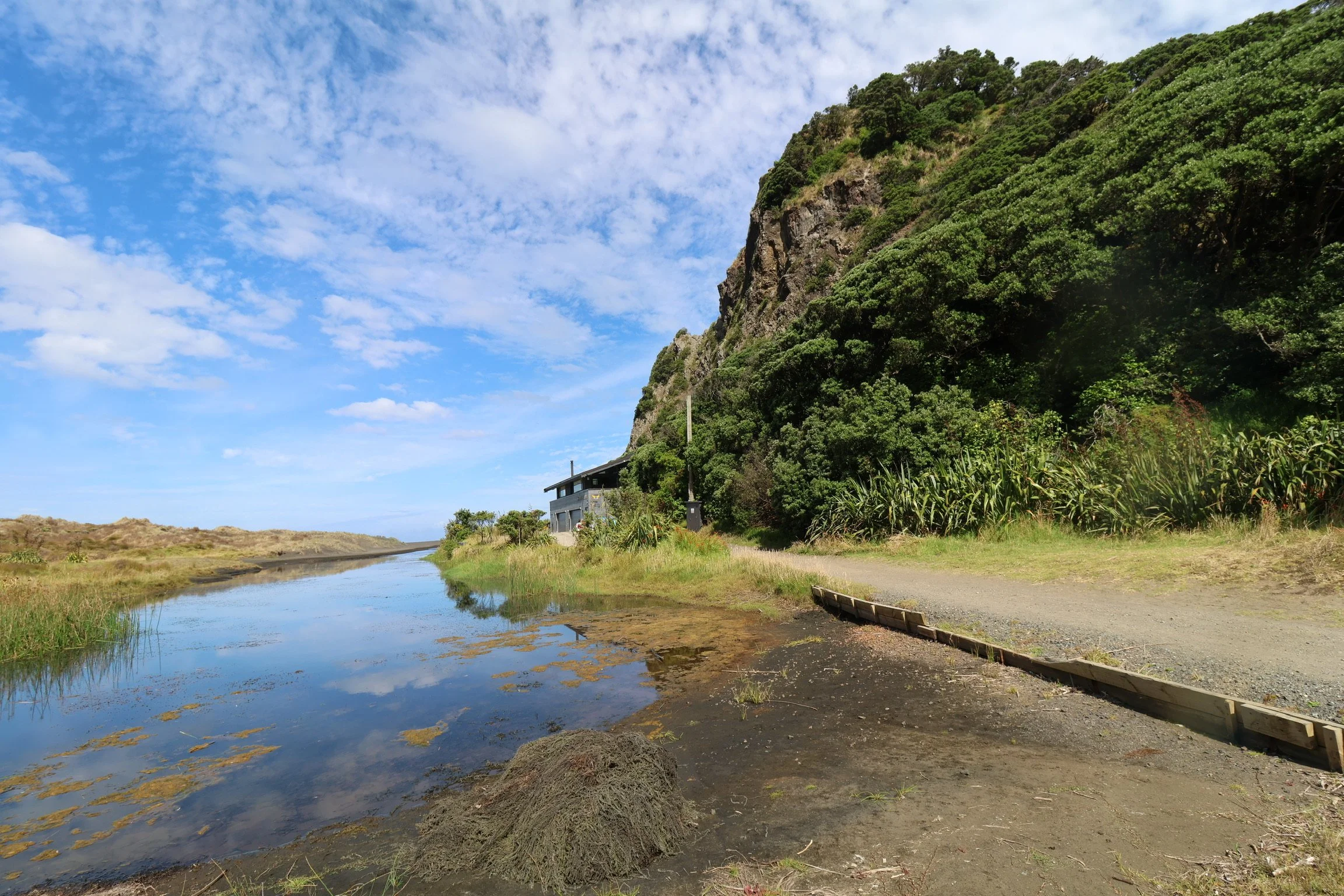
Karekare Surf Club with the remnants of a dacite dome watching over it. It’s called The Watchman. Somewhere between 19 and 16 million years ago a line of volcanoes began erupting from the sides of the existing Waitakere volcano (GeoTrips).
A huge explosive eruption created a 1 kilometre crater at Karekare. Under immense pressure lava flowed from a reservoir several kilometres below the present beach level. It pushed through conglomerate washed down the steep slopes of the marine Waitakere volcano.
Ok, neat story but where's your evidence? The story of a violent past is written in the rocks behind the club. Its also the story of the future.
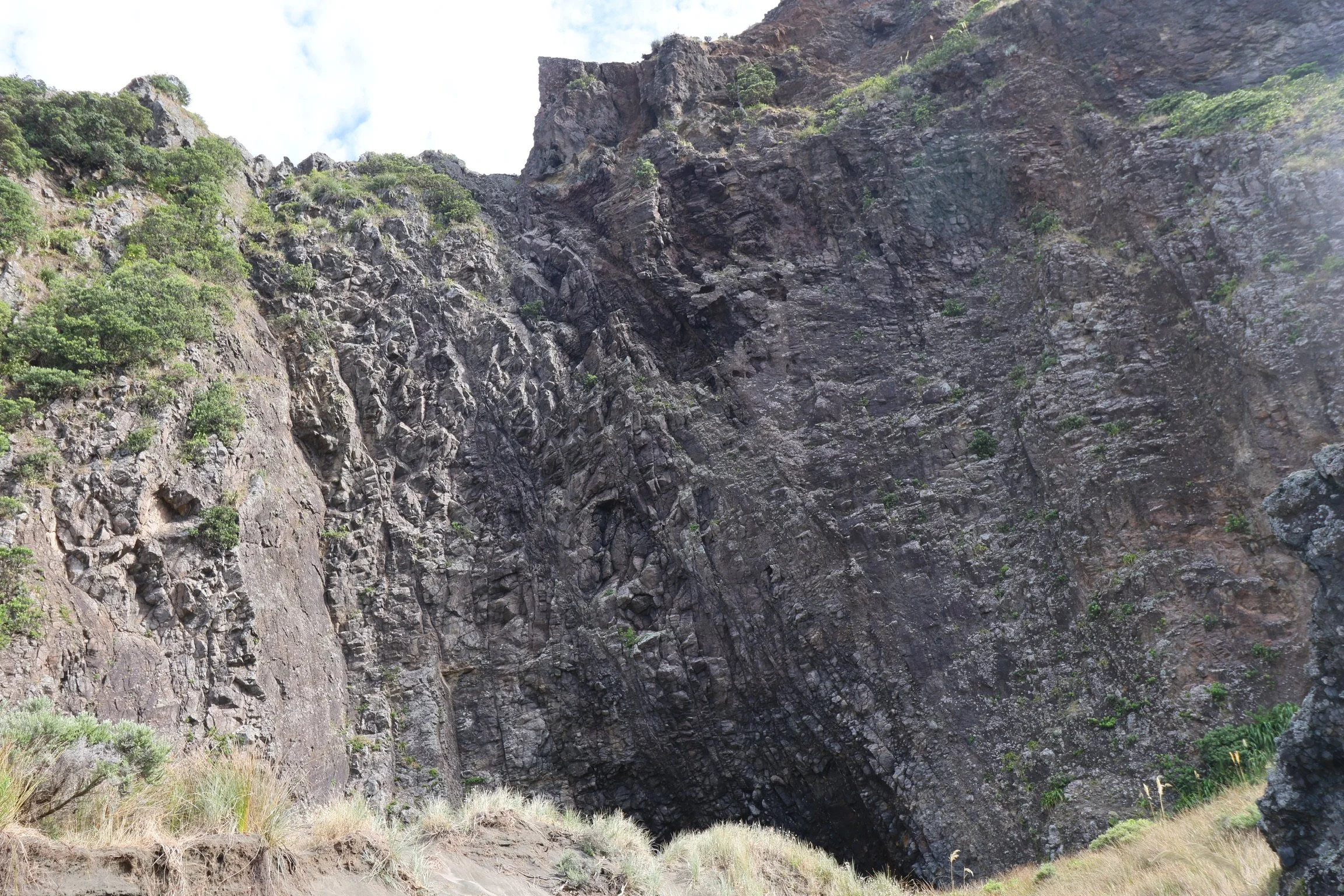
This unusual feature is near the surf club. Dacite lava flowed upwards through a vent and solidified before it reached the surface.
Closer inspection indicates the lava flowed up the vent then flopped over to the north east. (Bruce Hayward who has written practically everything we know about West Coast Geology).
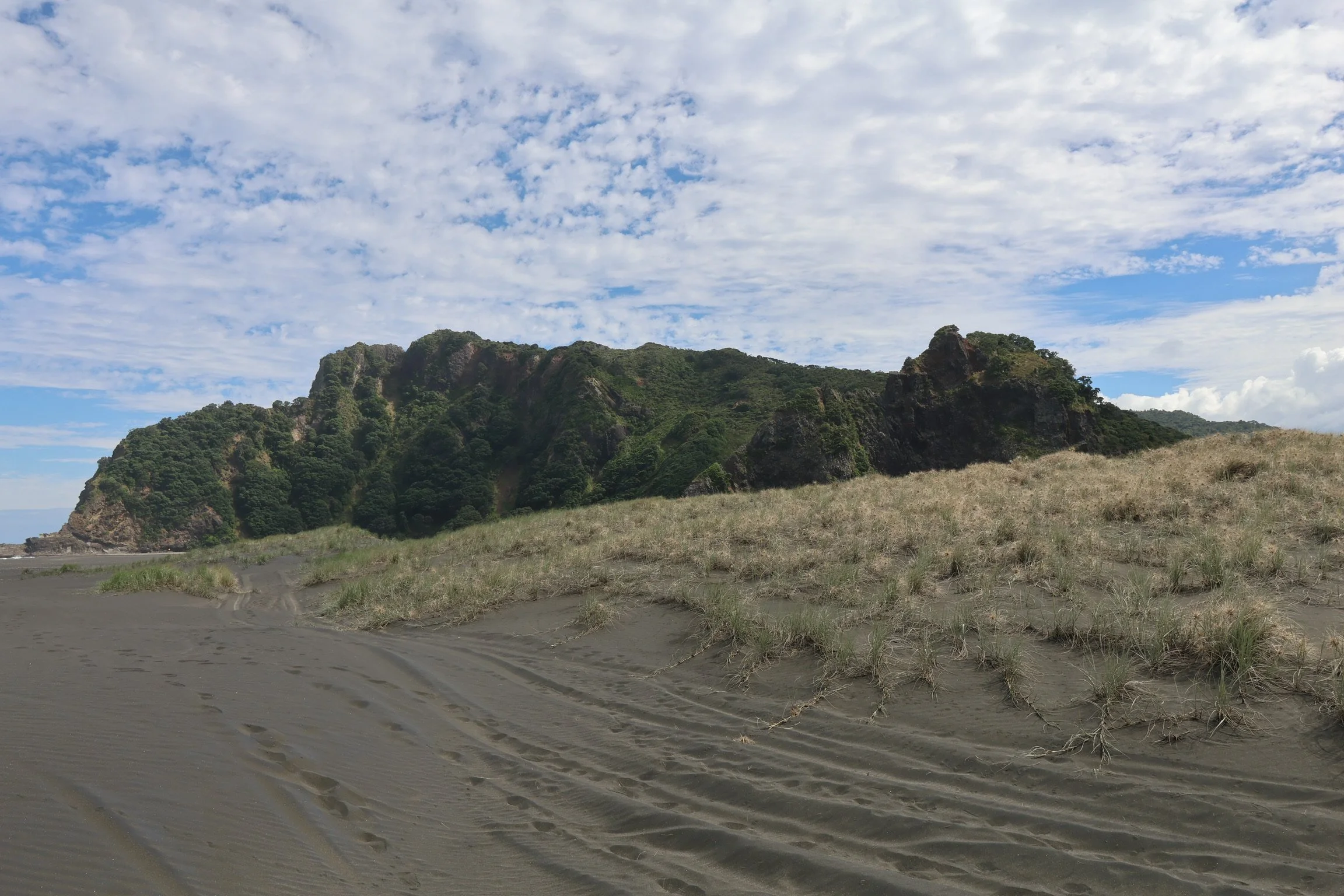
The Watchman with its volcanic vent stands behind the sand tunes. The high cliffs to the left are the remains of the original crater rim.
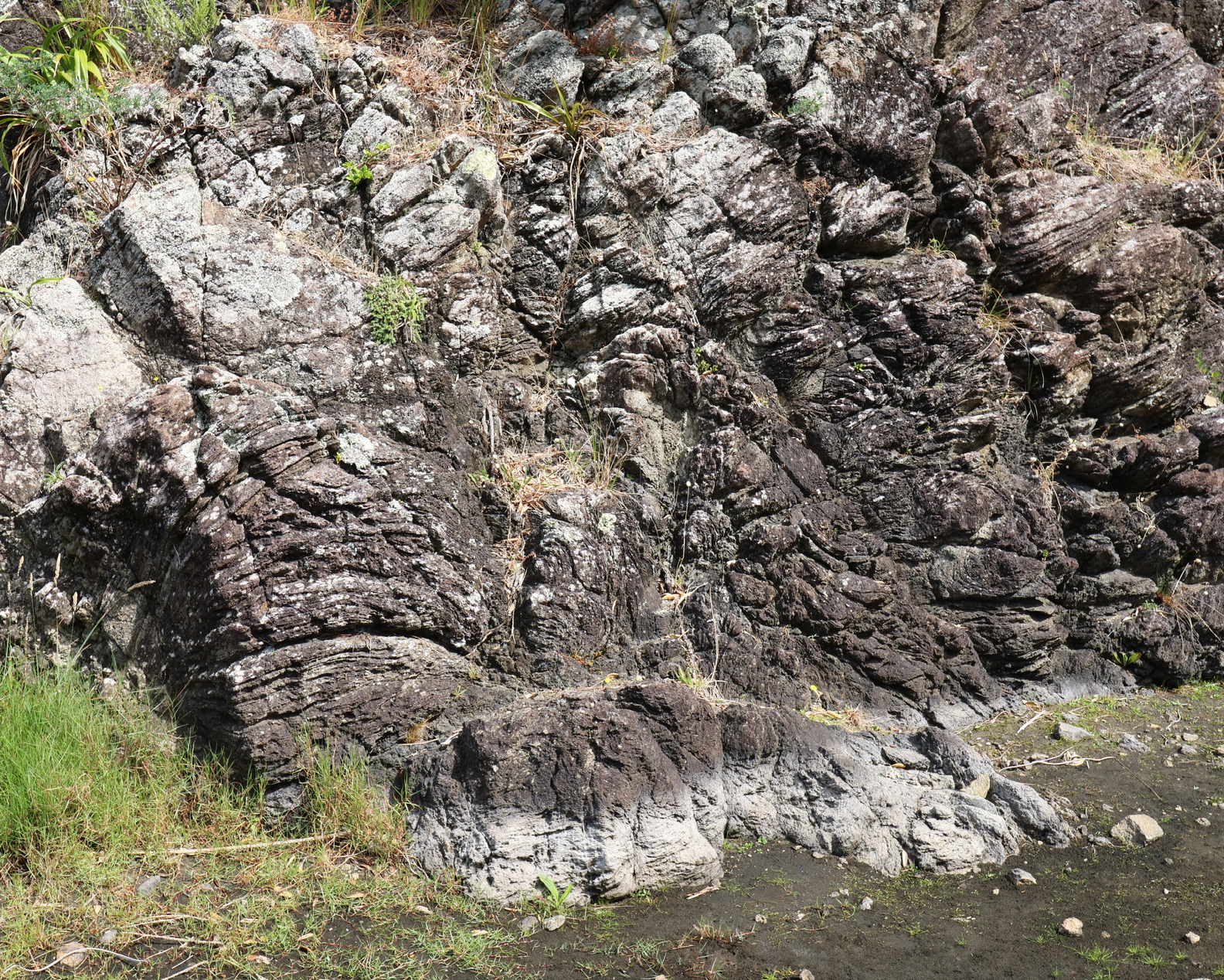
Glass is chemically pure silica. Molten dacite with its high silica content has the flow characteristics of molten glass.
Lava pushed up the vent flowed like toothpaste, squeezed from its tube. Flow banding in the rocks record movement of lava away from the vent. Also not far from the surf club.
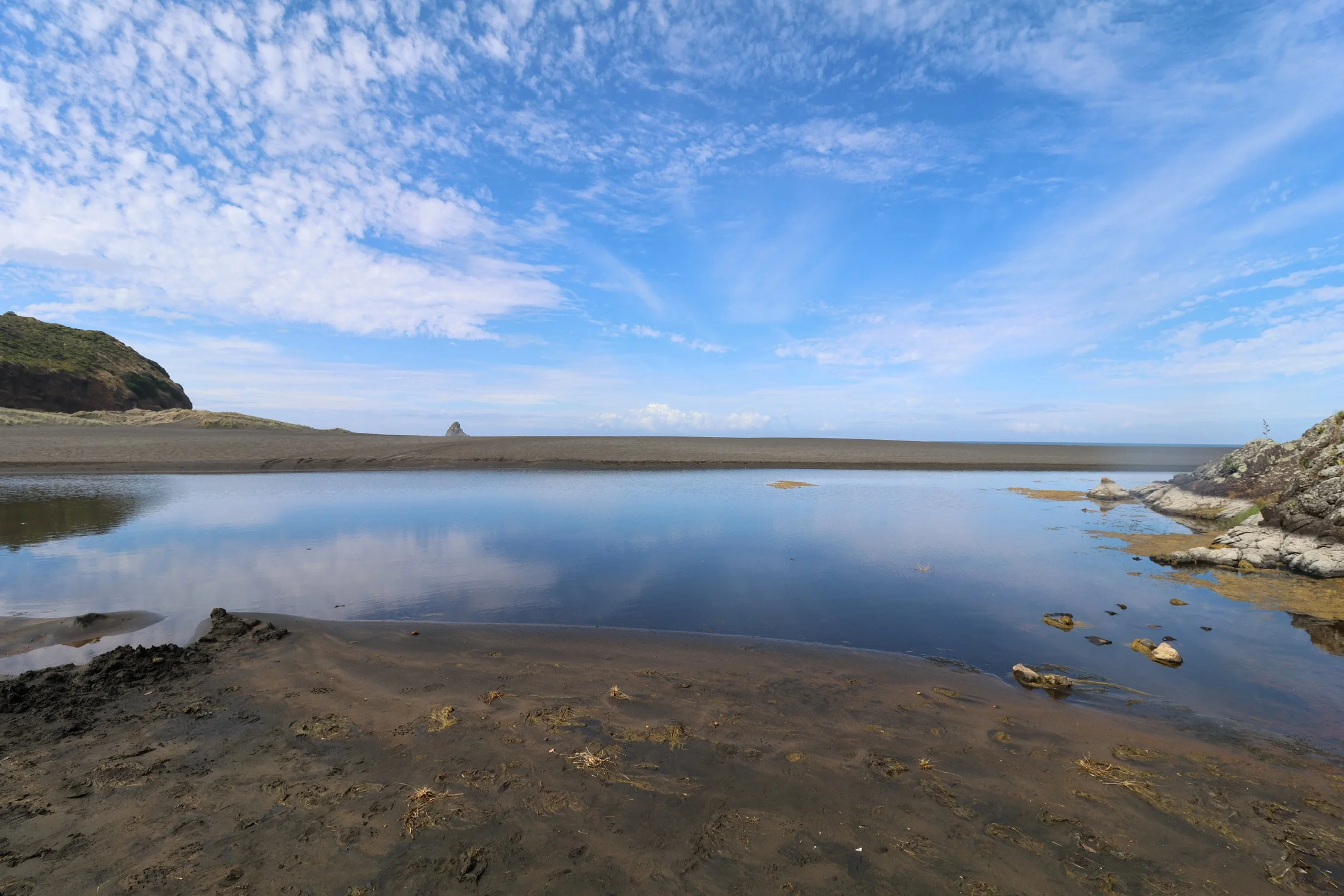
Side branches that squeezed through layers of overlying volcanic conglomerate have been uncovered in cliffs on the other side of the Karekare stream. Dikes and sills form when lava cools and becomes solid before it reaches the surface.
Luckily a large piece of the Karekare volcano has been washed out to sea as the land it sits on has been raised by plate movement. The internal plumbing is open for viewing again.
We need to head across the Karekare Stream towards the cliffs beyond the dunes.
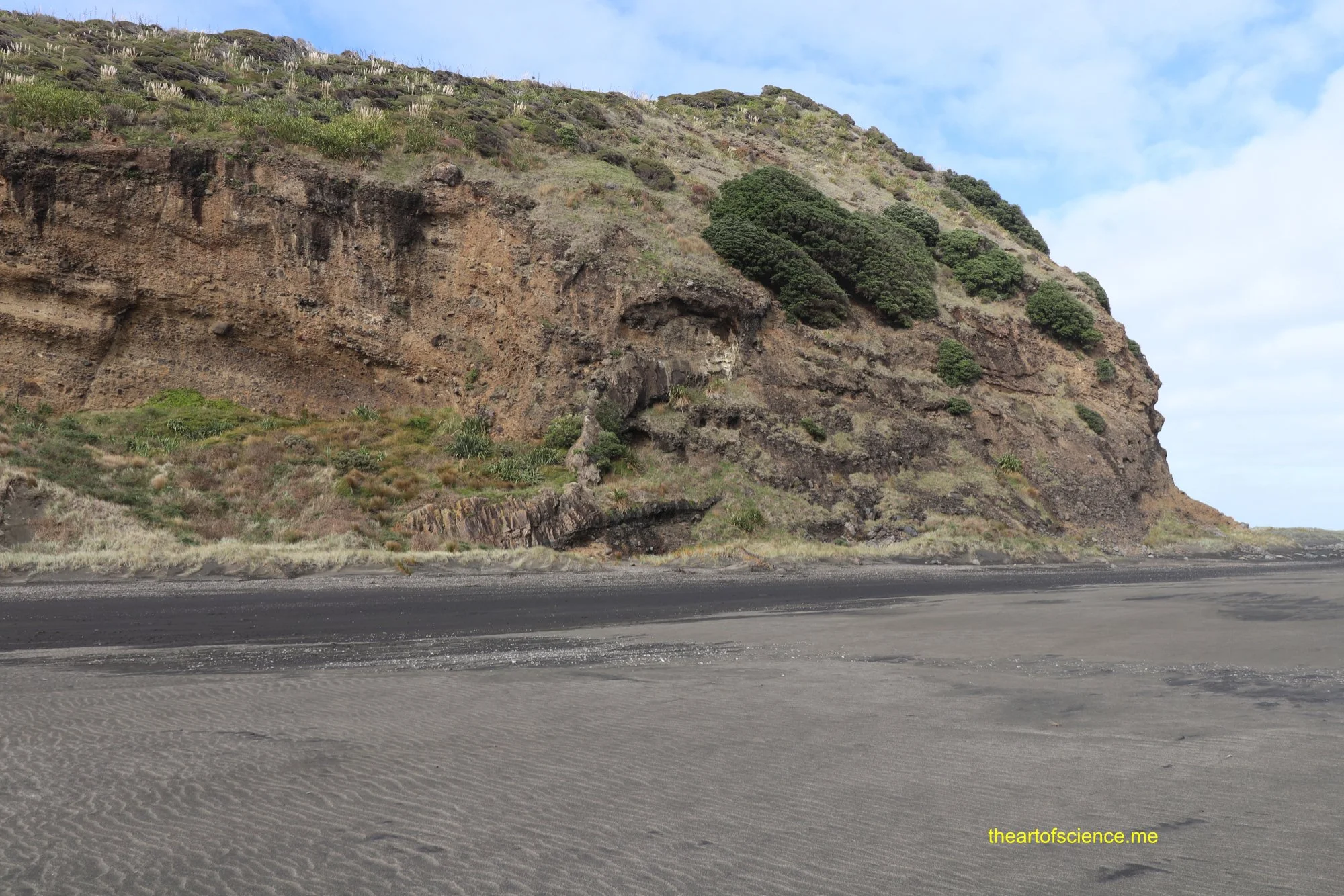
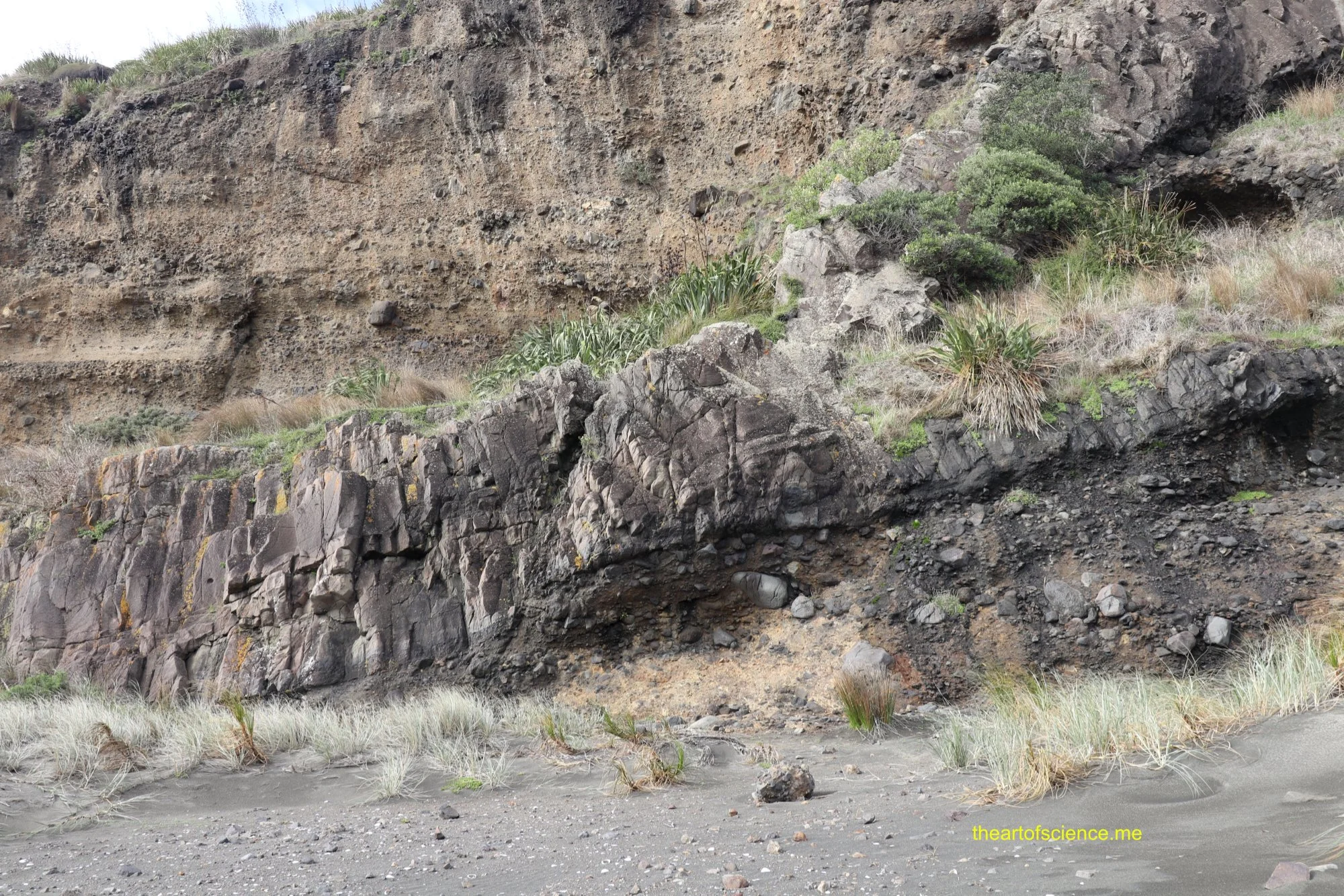
Layers of conglomerate and volcanic sandstone washed down the sides of the Waitakere volcanic form the cliffs. Another structure is visible here. A different type of rock is clearly visible, cutting across the conglomerate.
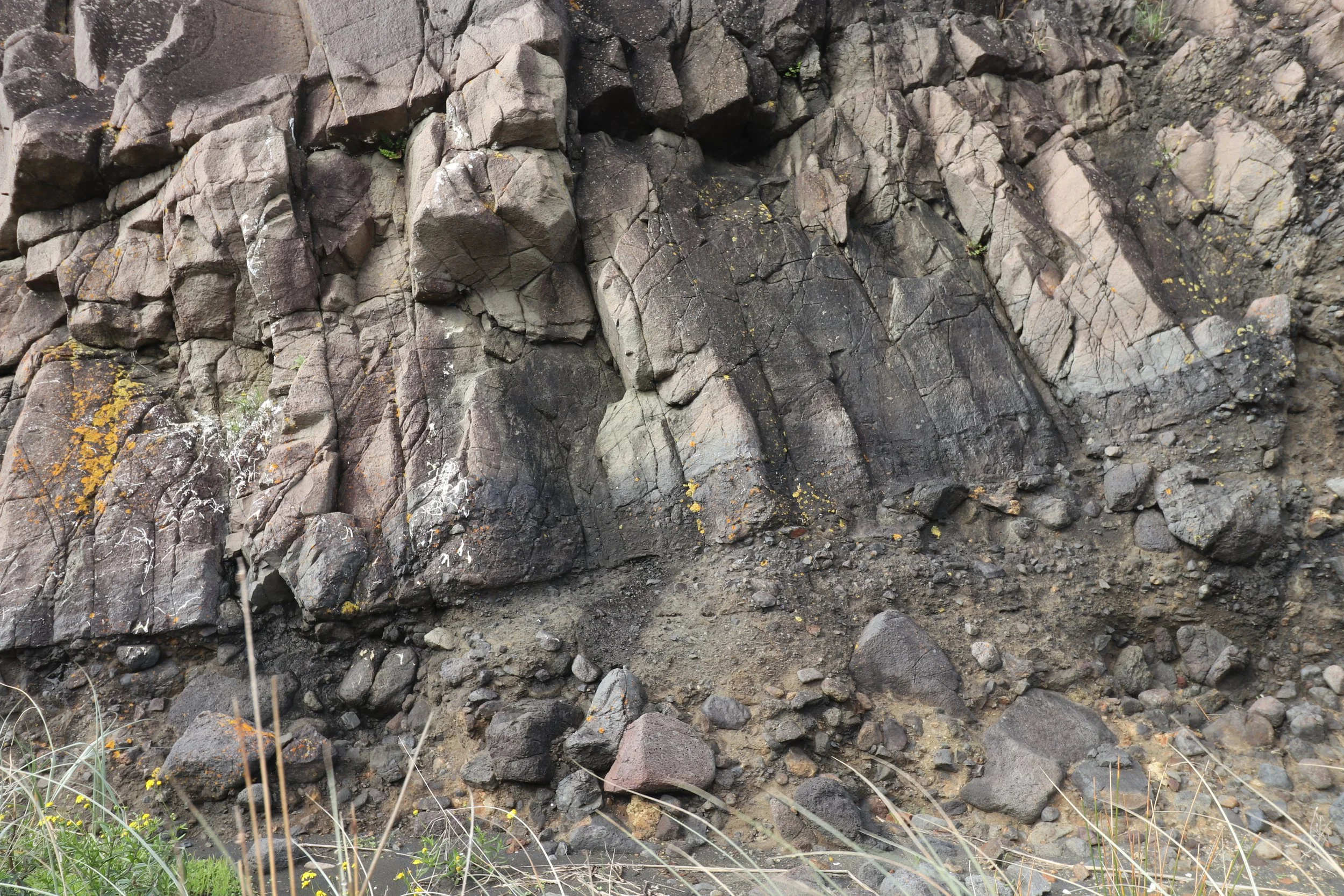
Vertical jointing is clearly visible.
Magma contracts at right angles to a cold surface, producing vertical jointing.
This rock was molten as it intruded through the conglomerate and cooled.
Magma at 1000 degrees, pushed from the magma chamber, will leave a trace when it contacts cold conglomerate.
You would expect signs of a chilled margin with some transfer of materials. The conglomerate looks slightly “baked” on the margin.
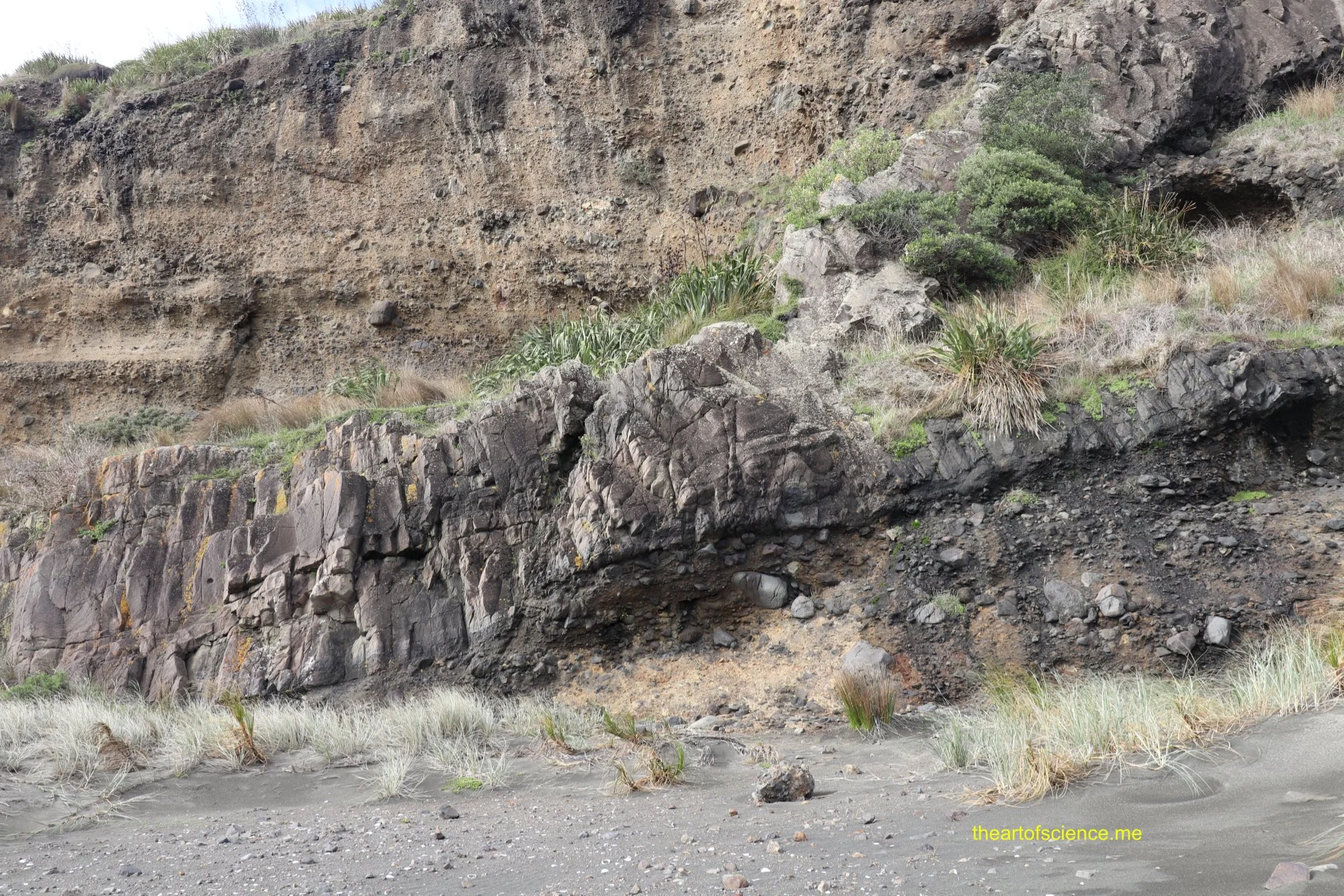
This is actually a sill, a horizontal sheet of magma. You can see it outcrop on the other side of the headland when you walk aroun the corner. The plumbing of the Karekare explosion crater and volcano is fully open to view thanks to 9 million years of uplift and erosion.
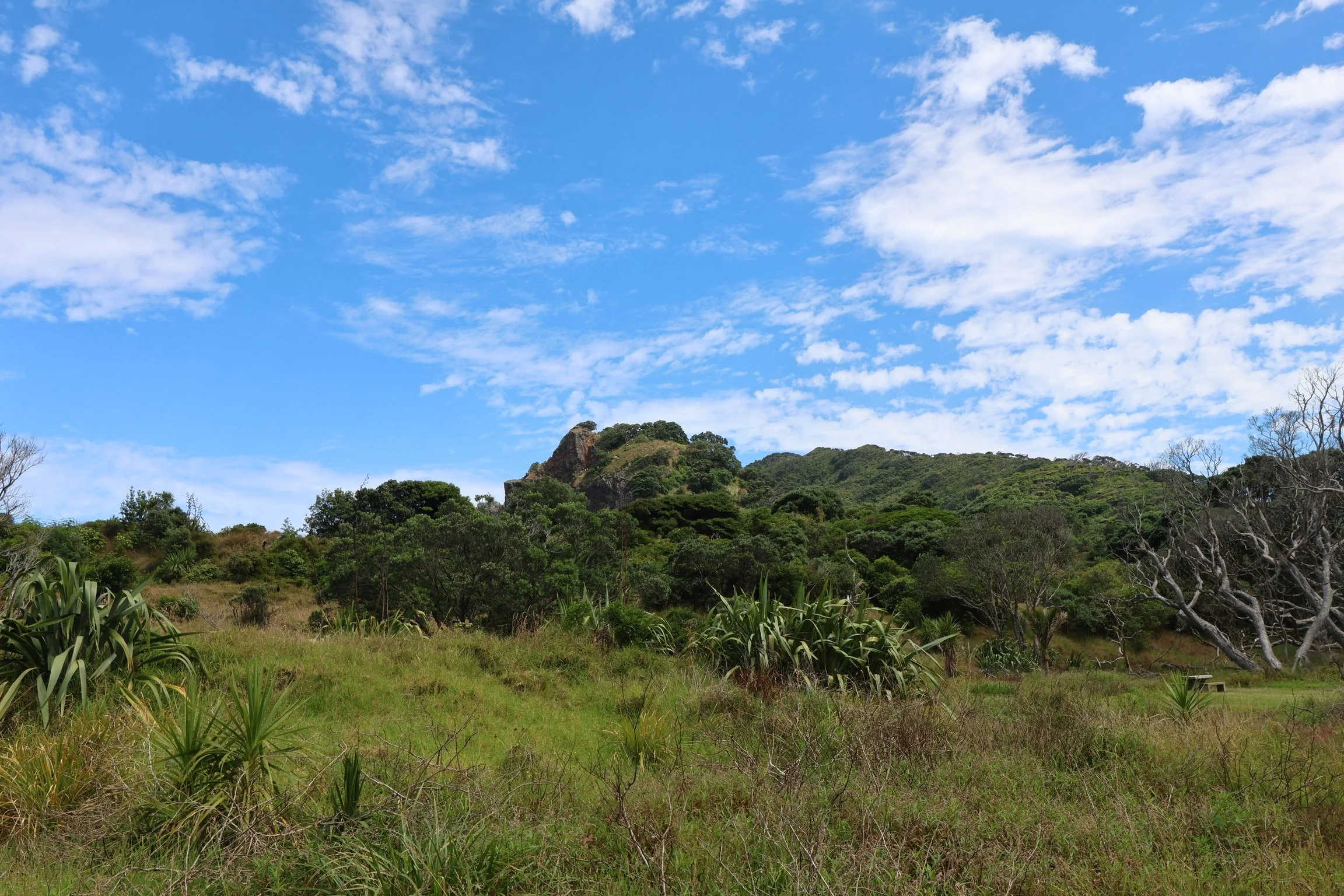
The Night Watchman again. I like taking pics of it. This is not the end of the story. It is the beginning.
Demolition work at Karekare releases sediments. Tides and tectonic plate movement transport them over millions of years.
Sediments are dragged into the crust and mantle when plates collide and subduct.
The planet’s internal nuclear reactor melts and reforms this material. It will move slowly back into the crust and find lines of weakness.
10 million years in the future reconstituted material from the Karekare volcano will explode on the surface without planning permission.
Karekare.2 has arrived.